



Relevant for Exams
Train-hit elephant calf dies at Kaziranga rescue centre, highlighting human-wildlife conflict.
Summary
An elephant calf, severely injured when a Rajdhani Express collided with its herd on December 20 in Assam's Hojai district, succumbed to its injuries at a Kaziranga rescue centre. This tragic incident, which also killed seven adult elephants, underscores the escalating human-wildlife conflict, particularly concerning railway infrastructure's impact on wildlife corridors. It is crucial for competitive exams focusing on environmental conservation, wildlife protection, and sustainable development challenges.
Key Points
- 1An elephant calf died after being severely injured by a Rajdhani Express train.
- 2The incident occurred on December 20 in Hojai district, Assam.
- 3The Rajdhani Express ploughed through an elephant herd, killing seven elephants on the spot.
- 4The injured calf was less than a week old at the time of the collision.
- 5The calf was being treated at a rescue centre near Kaziranga National Park.
In-Depth Analysis
The tragic death of an elephant calf, barely a week old, after being hit by a Rajdhani Express in Assam's Hojai district on December 20, serves as a stark and painful reminder of the escalating human-wildlife conflict in India. This incident, which also claimed the lives of seven adult elephants, is not an isolated event but a symptom of a larger, systemic challenge arising from rapid infrastructure development encroaching upon vital wildlife habitats and corridors.
**Background Context:** India is home to over 60% of the world's wild Asian elephant population, making their conservation a national priority. Elephants are keystone species, playing a crucial role in maintaining forest ecosystems. These majestic animals are migratory, traversing vast distances through established routes known as 'elephant corridors' in search of food and water. Assam, a biodiversity-rich state in Northeast India, is particularly significant as it harbours one of the largest elephant populations in the country. However, this region has also witnessed significant expansion of human settlements, agriculture, and infrastructure, including railway lines and highways, often cutting directly through these traditional elephant corridors. The construction of railway tracks without adequate consideration for wildlife movement forces elephants to cross these linear infrastructures, leading to frequent accidents, especially during nighttime or in areas with poor visibility.
**What Happened:** On December 20, a Rajdhani Express train tragically ploughed through a herd of elephants attempting to cross a railway track in Assam's Hojai district. Seven adult elephants were killed on the spot, and a less-than-a-week-old calf sustained severe injuries. Despite intensive care at a rescue centre near Kaziranga National Park, the calf succumbed to its injuries, highlighting the devastating impact of such collisions. The incident underscores the vulnerability of young and old elephants within a herd, who often cannot keep pace or react quickly enough to fast-moving trains.
**Key Stakeholders Involved:** Several entities bear responsibility and play a role in addressing this challenge. The **Ministry of Railways (Indian Railways)** is a primary stakeholder, responsible for track alignment, speed regulations, and implementing mitigation measures. The **Ministry of Environment, Forest and Climate Change (MoEFCC)**, along with the **State Forest Departments** (like Assam's), are crucial for formulating and implementing wildlife protection policies, identifying and securing corridors, and managing rescue and rehabilitation efforts. **Wildlife conservation organizations and NGOs** work on the ground, conducting research, raising awareness, and assisting in rescue operations. Lastly, **local communities** living near these corridors are also stakeholders, often facing direct consequences of human-wildlife interactions and playing a role in reporting incidents or participating in mitigation efforts.
**Why This Matters for India:** This incident carries significant implications for India. Firstly, it represents a substantial loss to India's biodiversity, particularly for a Schedule I protected species under the **Wildlife (Protection) Act, 1972**. The continuous loss of elephants not only depletes their numbers but also disrupts ecological balance. Secondly, it highlights the severe challenge of human-wildlife conflict, which is a growing concern across the country, affecting not just elephants but also other species like tigers, leopards, and wild boars. Such conflicts often lead to economic losses for farmers, human casualties, and sometimes retaliatory killings of wildlife. Thirdly, it raises questions about the efficacy of existing conservation policies and the implementation of mitigation strategies. India's commitment to sustainable development, articulated through national policies and international agreements like the Convention on Biological Diversity (CBD) and the Sustainable Development Goals (SDGs), is tested by such repeated incidents. The cultural significance of elephants in India also adds an emotional and ethical dimension to their protection.
**Historical Context and Policies:** Recognising the importance of elephants, the Indian government launched **Project Elephant in 1992**. This centrally sponsored scheme aims to protect elephants, their habitats, and corridors, address human-elephant conflict, and ensure the welfare of captive elephants. The project has identified various elephant corridors across the country. The **Wildlife (Protection) Act, 1972**, places elephants in Schedule I, affording them the highest level of legal protection. Furthermore, the **Constitution of India** mandates environmental protection through **Article 48A**, a Directive Principle of State Policy, which states that "The State shall endeavour to protect and improve the environment and to safeguard the forests and wild life of the country." Additionally, **Article 51A(g)** imposes a Fundamental Duty on every citizen "to protect and improve the natural environment including forests, lakes, rivers and wild life, and to have compassion for living creatures." These constitutional provisions underscore the state's and citizens' responsibility towards wildlife conservation.
**Future Implications:** The repeated incidents necessitate a more robust and integrated approach. Future efforts must focus on enhanced coordination between the Ministry of Railways and the MoEFCC. This includes joint surveys to identify critical elephant crossing points, implementation of speed restrictions in identified zones, construction of animal-friendly underpasses and overpasses (eco-bridges), and deployment of early warning systems. The 'Plan B' initiative by Indian Railways, which uses honeybee sounds to deter elephants, is an innovative step, but its widespread implementation and effectiveness need continuous evaluation. There's also a need for greater community involvement, awareness campaigns, and sustainable land-use planning to minimize habitat fragmentation. Ignoring these issues will not only lead to further loss of precious wildlife but also undermine India's global image as a leader in conservation efforts. The long-term survival of Asian elephants in India depends on a concerted effort to create a safe passage for them through an increasingly human-dominated landscape.
Exam Tips
This topic falls under 'Environment & Ecology' for UPSC Civil Services (GS Paper III), 'General Awareness' for SSC/Railway/State PSC exams. Focus on government schemes, constitutional provisions, and international conventions.
Study related topics like Project Elephant, Wildlife (Protection) Act, 1972, and the concept of 'elephant corridors' in detail. Understand the causes and mitigation strategies for human-wildlife conflict.
Common question patterns include: factual questions on Project Elephant's year, Schedule I animals, or specific constitutional articles; analytical questions on the causes and consequences of human-wildlife conflict; and policy-oriented questions on government initiatives and potential solutions to such conflicts.
Related Topics to Study
Full Article
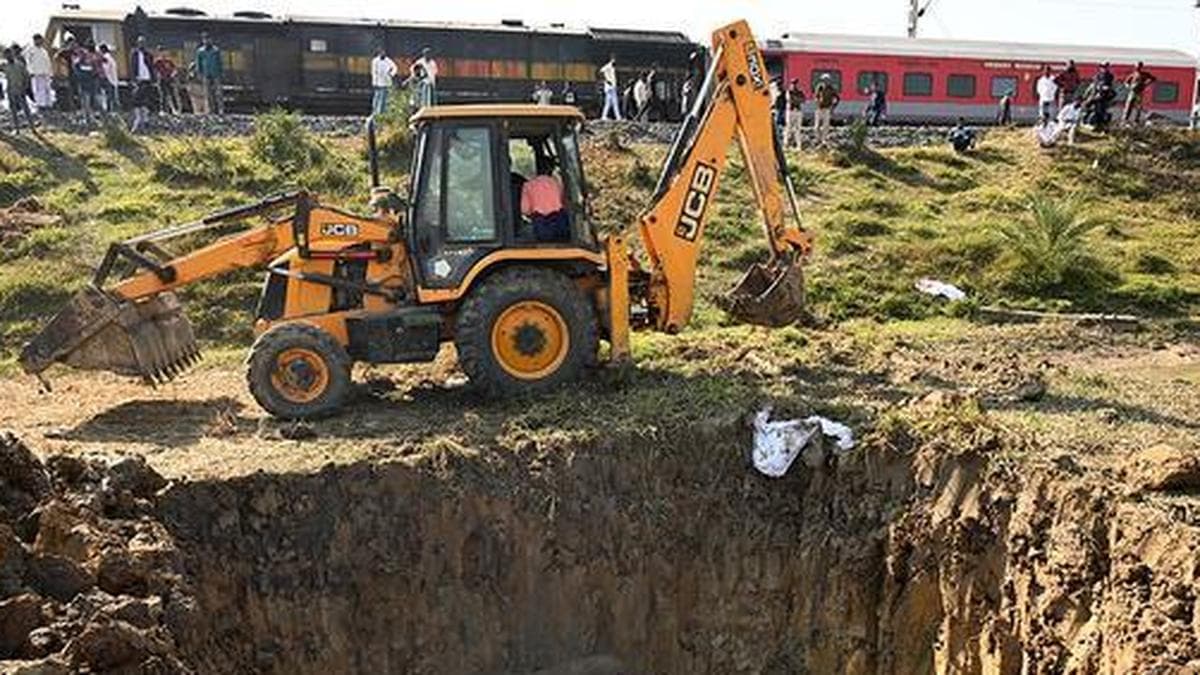
Less than a week old, the calf was severely injured when a Rajdhani Express ploughed through a herd crossing the track in Hojai district on December 20, killing seven elephants on the spot