



Relevant for Exams
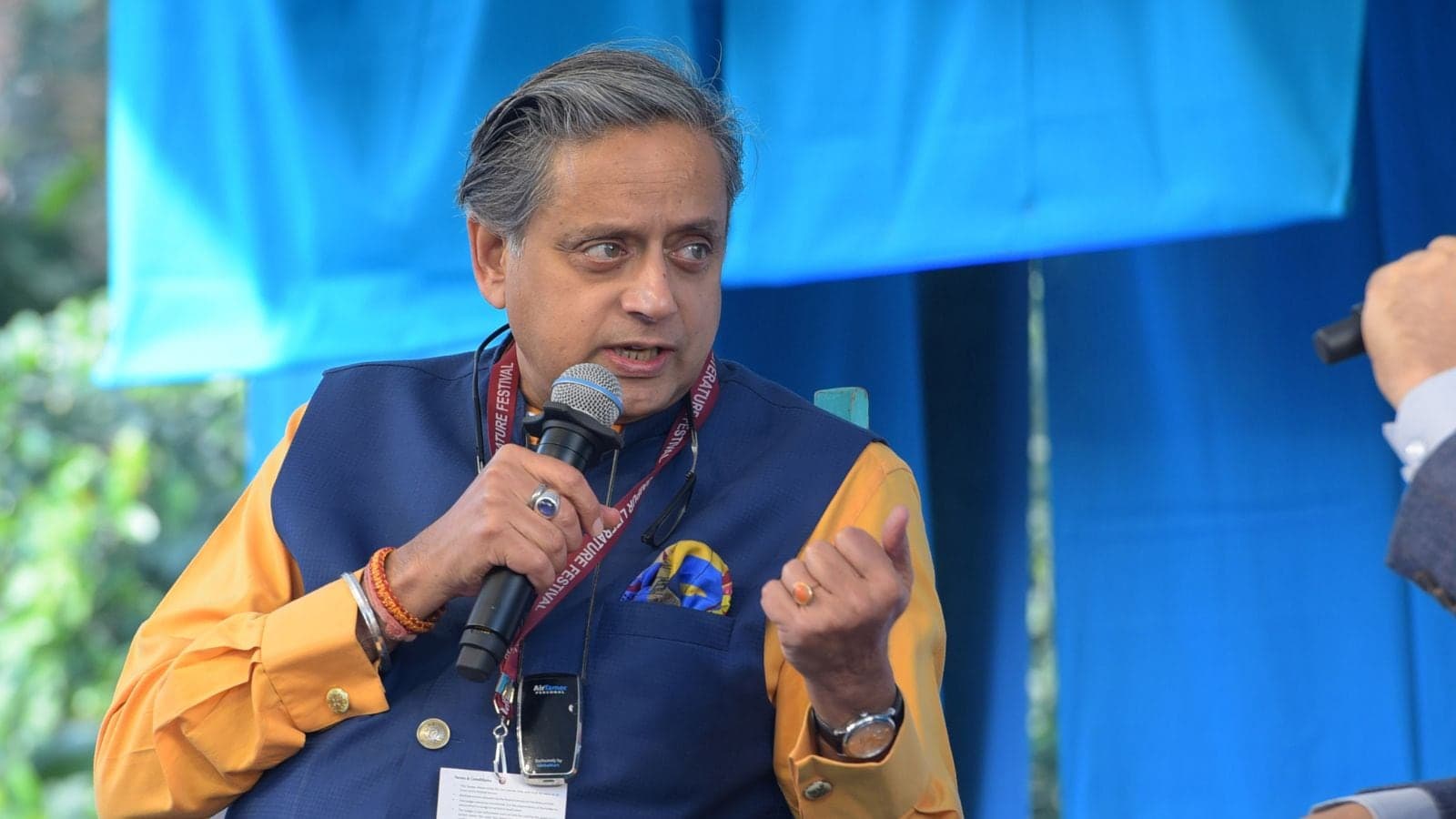
Shashi Tharoor calls on Md Yunus to tackle 'unruly elements' in Bangladesh.
Summary
The article's title indicates Shashi Tharoor commented on 'unruly elements' in Bangladesh, urging Md Yunus to take decisive action. However, with no content provided, the specific context, nature of the 'unruly elements,' or the implications of Tharoor's statement for India-Bangladesh relations remain unknown. This lack of detail significantly limits its value for competitive exam preparation, as no concrete facts can be extracted.
Key Points
- 1Indian politician Shashi Tharoor made a public statement concerning Bangladesh.
- 2Tharoor's statement referenced the presence of "unruly elements" within Bangladesh.
- 3The remarks were directed towards Md Yunus, urging him to act.
- 4Tharoor emphasized the need for Md Yunus to take "decisive steps" against these elements.
- 5Due to "No content available" in the article, specific details, context, or implications of the statement are not provided.
In-Depth Analysis
The statement by Shashi Tharoor, though presented without accompanying article content, provides a crucial lens through which to examine the complex and vital India-Bangladesh relationship. The title itself, mentioning "unruly elements running amok in Bangladesh" and urging Md Yunus to take "decisive steps," signals concerns about internal stability in Bangladesh and its potential spillover effects on India. While the specific nature of these 'unruly elements' remains undefined without the article's body, such statements from prominent Indian politicians often reflect broader diplomatic or security anxieties.
**Background Context:** India and Bangladesh share a 4,096-kilometer-long border, the fifth-longest land border in the world. Their relationship is rooted in the 1971 Liberation War, where India played a pivotal role in Bangladesh's independence. This shared history forms the bedrock of their ties, but the relationship has also seen periods of strain. Common challenges include illegal immigration, cross-border smuggling, human trafficking, and the presence of insurgent groups operating along the porous border. Bangladesh's internal political stability is of paramount concern to India, given its strategic location and demographic importance. The country has a history of political volatility, with periods of military rule and intense rivalry between the Awami League (currently in power under Sheikh Hasina) and the Bangladesh Nationalist Party (BNP). The rise of extremist and fundamentalist groups has also been a recurring concern, often linked to cross-border terrorism and radicalization, which directly impacts India's security, particularly in its northeastern states.
**What Happened (Interpreted):** Shashi Tharoor, a distinguished Indian politician, author, and former international diplomat, made a public comment indicating concern over disruptive elements within Bangladesh. His call for Md Yunus to take "decisive steps" is particularly noteworthy. Md Yunus, a Nobel Peace Prize laureate and pioneer of microfinance through Grameen Bank, is a globally recognized figure. While he holds no formal political office, his moral authority and international stature are immense. Tharoor's appeal to Yunus could be interpreted in several ways: it might be a direct call to a respected civil society leader to exert his influence against destabilizing forces, or a rhetorical device to highlight a perceived inaction by the broader Bangladeshi establishment, using Yunus as a symbol of responsible leadership. Given Yunus's recent legal troubles and perceived marginalization by the current Bangladeshi government, Tharoor's statement could also be subtly urging a more inclusive approach to national stability, involving all influential figures.
**Key Stakeholders Involved:** The primary stakeholders include **India** (represented by its government, Ministry of External Affairs, and influential voices like Shashi Tharoor) and **Bangladesh** (its government, security agencies, and prominent civil society figures like Md Yunus). The "unruly elements" themselves are a crucial, albeit undefined, stakeholder – they could be Islamist extremist groups (e.g., Jamaat-ul-Mujahideen Bangladesh - JMB, Ansarullah Bangla Team), criminal syndicates involved in cross-border illicit activities, or political agitators. Their actions directly impinge on the security and stability of both nations.
**Why This Matters for India:** For India, a stable and friendly Bangladesh is critical to its 'Neighbourhood First' policy and its broader strategic interests. Instability in Bangladesh can lead to: **1. Security Threats:** Increased cross-border terrorism, radicalization, and safe havens for anti-India insurgent groups. **2. Migration Issues:** Potential influx of illegal immigrants and refugees, exacerbating social and economic pressures in Indian border states. **3. Economic Impact:** Disruptions to trade, connectivity projects (e.g., BBIN Motor Vehicle Agreement), and regional economic integration initiatives like BIMSTEC. **4. Geopolitical Balance:** A strong relationship with Bangladesh is vital for India to maintain its regional influence and counter the growing presence of other global powers, notably China, in South Asia. India has invested heavily in connectivity projects, energy cooperation, and defense ties with Bangladesh, making its stability paramount.
**Historical Context:** India's involvement in the 1971 Liberation War cemented a bond, but the relationship has been shaped by various factors over decades. Periods under BNP rule in Bangladesh often saw a less cooperative stance towards India, particularly on security issues and transit rights. In contrast, the Awami League government under Sheikh Hasina has generally fostered closer ties, leading to significant cooperation on security, trade, and connectivity. However, issues like water sharing (e.g., Teesta River dispute) and the implementation of India's National Register of Citizens (NRC) have sometimes created diplomatic friction. The current concerns about "unruly elements" echo past anxieties regarding cross-border extremism and the need for robust security cooperation.
**Future Implications:** Tharoor's statement could signify India's continued vigilance regarding internal security dynamics in Bangladesh. It might lead to renewed diplomatic engagement on security cooperation, intelligence sharing, and border management. If the "unruly elements" refer to extremist groups, it could prompt further joint counter-terrorism efforts. Conversely, a perceived interference in internal affairs could, if not handled delicately, create diplomatic ripples. The long-term stability of Bangladesh is crucial for regional peace, economic development, and the success of India's 'Act East' policy, which relies heavily on connectivity through Bangladesh.
**Related Constitutional Articles, Acts, or Policies:** India's foreign policy, including its engagement with Bangladesh, is guided by principles enshrined in the **Directive Principles of State Policy**, particularly **Article 51**, which mandates the state to promote international peace and security, maintain just and honourable relations between nations, foster respect for international law, and encourage settlement of international disputes by arbitration. On the security front, the **Border Security Force Act** (1968) governs India's primary border guarding force, which plays a crucial role along the Bangladesh border. Various counter-terrorism legislations like the **Unlawful Activities (Prevention) Act (UAPA)** are relevant in addressing cross-border terrorism. Furthermore, India's **'Neighbourhood First' policy** explicitly prioritizes friendly and cooperative relations with its neighbors, making Bangladesh a cornerstone of this diplomatic strategy. Bilateral agreements and Memorandums of Understanding (MoUs) on security cooperation, extradition, and border management are also vital policy instruments in this context.
Exam Tips
This topic falls under the 'International Relations' and 'Internal Security' sections of the UPSC Civil Services Exam (General Studies Paper-II and Paper-III, respectively), and similarly for State PSCs. For SSC, it relates to 'Current Affairs' and 'General Knowledge' on India's foreign policy.
Study India-Bangladesh relations comprehensively: focus on bilateral agreements (e.g., Land Boundary Agreement 2015), water sharing disputes (Teesta), trade and connectivity projects (BBIN, BIMSTEC, transit routes), security cooperation (counter-terrorism), and historical context (1971 Liberation War).
Common question patterns include: analytical questions on the significance of Bangladesh for India's security and economic interests, challenges in bilateral relations, and the effectiveness of India's 'Neighbourhood First' policy. Be prepared for questions on specific cross-border issues like illegal immigration or drug trafficking.
Understand the roles of key personalities like Sheikh Hasina and Md Yunus in Bangladesh's political and social landscape, and how their actions or perceived influence can impact international discourse.