



Relevant for Exams
Searches underway in J&K's Udhampur after terrorists take food from a house, sparking combing operation.
Summary
Security forces launched a combing operation in the forest belt near a village in Udhampur, Jammu & Kashmir, on Sunday morning. This action followed reports of terrorists taking food from a house in the area. The incident highlights ongoing security challenges in the region, relevant for understanding internal security dynamics for competitive exams, particularly concerning J&K.
Key Points
- 1The incident occurred in the Udhampur district of Jammu & Kashmir.
- 2Terrorists reportedly took food from a house, prompting a security response.
- 3A large-scale combing operation was launched by security forces.
- 4The operation focused on the forest belt near the affected village.
- 5The search and neutralisation efforts began with the first light on Sunday.
In-Depth Analysis
The recent incident in Udhampur, Jammu & Kashmir, where terrorists reportedly took food from a house, triggering a large-scale combing operation by security forces, underscores the persistent and complex internal security challenges faced by India in the region. This event, while seemingly minor in isolation, is a critical indicator of the ongoing efforts by inimical elements to disrupt peace and stability, and the robust counter-insurgency posture maintained by the Indian state.
**Background Context and Historical Overview:**
Jammu & Kashmir (J&K) has been a hotbed of insurgency and cross-border terrorism since the late 1980s, largely fueled by external actors. The region's strategic location, its shared border with Pakistan, and historical grievances have been exploited to foment unrest. While the intensity of major terror attacks has significantly decreased over the years, largely due to sustained counter-terrorism operations, incidents like the one in Udhampur highlight that the threat of infiltration and local support networks, however diminished, still exists. Udhampur, located in the Jammu division, is strategically important due to its connectivity and presence of major defence installations, making it a target for terrorists seeking to create a wider impact beyond the Kashmir Valley. The abrogation of Article 370 and 35A in August 2019 and the reorganisation of J&K into two Union Territories (J&K and Ladakh) marked a significant shift in India's policy, aiming to integrate the region more fully with the Indian mainstream, foster development, and address security concerns more directly. This move, while largely successful in curbing street violence and separatist activities, also led to renewed attempts by terror groups to destabilize the region.
**What Happened and Key Stakeholders:**
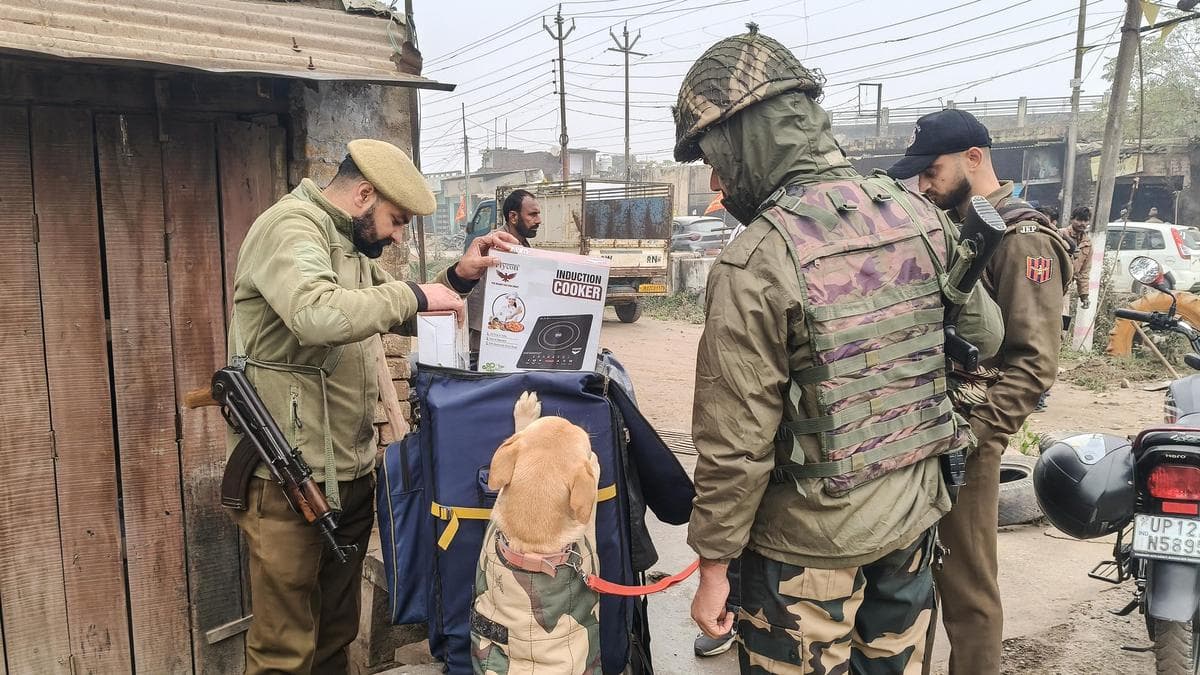
Following reports of terrorists taking food from a house, the Indian Army, along with paramilitary forces like the CRPF and J&K Police, swiftly launched a 'cordon and search operation' (CASO) in the forest belt near the affected village. This immediate and coordinated response is standard operating procedure in counter-terrorism efforts, aimed at tracking down and neutralizing the perpetrators before they can establish a foothold or carry out further attacks. The key stakeholders involved are:
1. **Indian Security Forces (Army, CRPF, J&K Police):** Their primary role is to maintain law and order, conduct counter-insurgency operations, protect civilians, and secure India's borders. Their presence is crucial for stability and deterrence.
2. **Local Population:** They are often caught in the crossfire. Their cooperation, through intelligence sharing, is vital for successful operations. Conversely, any perceived grievances can be exploited by terrorists.
3. **Terrorist Groups:** These are non-state actors, often sponsored by external forces, whose objective is to disrupt peace, instill fear, challenge the authority of the state, and propagate separatist agendas.
4. **Government of India (GoI):** The central government sets the strategic direction, allocates resources, and formulates policies for J&K's security and development.
**Significance for India and Broader Themes:**
This incident is significant for India's internal security matrix. It underscores that despite significant successes, the battle against terrorism in J&K is far from over. It highlights the continued challenge of cross-border infiltration and the need for constant vigilance. Economically, such incidents deter investment and tourism, hampering J&K's development prospects. Politically, they test the resolve of the administration and underscore the need for sustained efforts to win the 'hearts and minds' of the local populace. Socially, terrorism creates fear, disrupts daily life, and can lead to radicalization. The incident also touches upon broader themes of national security, governance, and the delicate balance between security imperatives and human rights in conflict zones.
**Constitutional and Policy References:**
Several constitutional provisions and legislative acts are relevant here. The **Armed Forces (Special Powers) Act (AFSPA), 1958**, grants special powers to the armed forces in 'disturbed areas' for maintaining public order. While controversial, it remains a critical tool for counter-insurgency operations. The **Unlawful Activities (Prevention) Act (UAPA), 1967**, is India's primary anti-terrorism law, providing for stringent measures against individuals and organizations involved in terrorist activities. The **Jammu and Kashmir Reorganisation Act, 2019**, fundamentally altered the administrative and constitutional status of the region, placing greater emphasis on direct central governance and integration. Furthermore, **Article 355** of the Constitution places a duty on the Union to protect every State against external aggression and internal disturbance, a principle that extends to Union Territories like J&K.
**Future Implications:**
Such incidents suggest that security forces will continue to maintain a high level of operational readiness. There will be an increased focus on intelligence gathering, technological surveillance, and community policing to pre-empt and neutralize threats. Efforts to strengthen border management to prevent infiltration will intensify. Simultaneously, the government is likely to push forward with development initiatives and outreach programs to address local grievances and counter radicalization. The long-term goal remains to create an environment conducive to holding assembly elections and restoring statehood to J&K, which requires a sustained period of peace and stability. However, isolated incidents of militancy indicate that the path to complete normalcy will require continued vigilance and a multi-pronged strategy encompassing security, development, and political engagement.
Exam Tips
This topic primarily falls under **UPSC GS Paper III (Internal Security)** and is also relevant for State PSC General Studies papers. Focus on the causes, consequences, and government responses to terrorism in J&K.
Study related topics like cross-border terrorism, proxy wars, radicalization, the role of intelligence agencies, border management, and the socio-economic development initiatives in J&K. Understand the provisions of AFSPA, UAPA, and the J&K Reorganisation Act.
Common question patterns include analytical questions on the challenges of maintaining internal security in J&K, the effectiveness of various counter-terrorism strategies, the impact of Article 370 abrogation, and the role of local populace in combating terrorism. Be prepared to discuss both security and development aspects.
For preliminary exams, remember facts like the location (Udhampur), the nature of the incident (terrorists taking food, leading to CASO), and the key forces involved. For mains, focus on the 'why' and 'how' – the underlying causes, government policies, and their implications.
Practice writing answers that balance the security perspective with human rights concerns and developmental aspirations for the region. Avoid taking extreme stances and present a nuanced view supported by facts and policy references.
Related Topics to Study
Full Article
The forest belt near the village was cordoned off, and a combing operation was launched simultaneously from different sides with the first light of the day on Sunday to track down and neutralise the terrorists, the officials said.