



Relevant for Exams
Western Disturbance raises Rajasthan's night temperatures, easing cold; vital for exam geography.
Summary
Rajasthan experienced a rise in night temperatures, easing intense cold, due to the influence of a Western Disturbance. This meteorological event is crucial for understanding North India's winter weather patterns. Its impact on regional climate and agriculture makes it a significant topic for competitive exam geography and environment sections.
Key Points
- 1The meteorological phenomenon responsible for the temperature change in Rajasthan is a "Western Disturbance".
- 2Western Disturbances are non-tropical storm systems originating in the "Mediterranean region".
- 3These disturbances bring sudden "winter rain and snow" to the northwestern parts of the Indian subcontinent.
- 4The immediate effect reported in Rajasthan was a "rise in night temperatures", reducing the intensity of the cold wave.
- 5Western Disturbances are crucial for "rabi crop" cultivation in North India, providing essential winter precipitation.
In-Depth Analysis
The recent report of rising night temperatures in Rajasthan, attributed to a Western Disturbance (WD), offers a crucial lens through which to understand India's complex winter weather patterns and their profound impact on various facets of national life. After enduring days of intense cold, this meteorological event brought a much-needed respite, highlighting the significant role WDs play in shaping the climate of North India.
Western Disturbances are extratropical storms originating in the Mediterranean region. Unlike tropical cyclones, these systems form due to temperature differences between air masses and move eastward across Iran, Afghanistan, and Pakistan before entering the Indian subcontinent. They are essentially low-pressure systems that bring sudden winter rain and snow to the northwestern parts of India, including Jammu & Kashmir, Himachal Pradesh, Uttarakhand, Punjab, Haryana, Uttar Pradesh, and Rajasthan. The moisture picked up from the Mediterranean Sea, Black Sea, and Caspian Sea is crucial to their precipitation-bearing capacity. When a WD approaches, it typically leads to an increase in cloud cover, which traps outgoing longwave radiation from the Earth's surface, thus raising night temperatures and reducing the intensity of cold waves, as observed in Rajasthan.
Several key stakeholders are directly influenced by Western Disturbances. Farmers across North India are perhaps the most significant, as winter precipitation is vital for the successful cultivation of Rabi crops. The general populace is also a major stakeholder, as extreme cold conditions pose health risks, disrupt daily life, and increase energy consumption for heating. The India Meteorological Department (IMD) acts as a critical stakeholder by monitoring these systems, forecasting their movement and intensity, and issuing timely warnings. State governments, particularly those in the affected regions, play a crucial role in disaster preparedness, agricultural planning, and ensuring public safety during extreme weather events.
The significance of Western Disturbances for India cannot be overstated. Economically, they are a lifeline for Rabi crops, particularly wheat, barley, and mustard, which are predominantly grown in the northern plains. Adequate winter rainfall ensures good yields, contributing directly to India's food security and the livelihoods of millions of farmers. In the Himalayan regions, WDs bring snow, which is essential for replenishing glaciers and feeding perennial rivers like the Indus, Ganga, and Yamuna, thereby contributing to the nation's water security. Historically, variations in WD activity have been linked to periods of agricultural prosperity or distress in North India. For instance, a strong WD season often correlates with a bountiful wheat harvest, while a deficient one can lead to drought-like conditions in winter.
From a policy perspective, understanding WDs is integral to India's disaster management framework. The **Disaster Management Act, 2005**, provides the legal and institutional framework for disaster management, including dealing with extreme weather events like cold waves or excessive rainfall/snowfall caused by WDs. The National Disaster Management Authority (NDMA) and State Disaster Management Authorities (SDMAs) are tasked with preparing for and responding to such events. Furthermore, the **National Food Security Act, 2013**, implicitly relies on stable agricultural production, which is heavily influenced by meteorological phenomena like WDs. Policies under the **National Action Plan on Climate Change (NAPCC)**, particularly those related to sustainable agriculture and water mission, aim to build resilience against climate variability, including changes in WD patterns.
The future implications of Western Disturbances are closely tied to the broader challenge of climate change. Scientific studies suggest that climate change could alter the frequency, intensity, and trajectory of WDs, potentially leading to more erratic precipitation patterns. This could have profound consequences for India's water resources, agricultural productivity, and the frequency of extreme weather events. Therefore, enhanced meteorological forecasting capabilities, climate-resilient agricultural practices, and robust water management strategies will be crucial. Research into the long-term trends of WDs and their interaction with other global phenomena like the Arctic Oscillation or El Niño Southern Oscillation (ENSO) is vital for developing effective adaptation and mitigation strategies, ensuring India's continued progress and well-being in the face of a changing climate.
Exam Tips
This topic primarily falls under the 'Geography' section of competitive exams, specifically 'Physical Geography' and 'Climatology of India'. Students should focus on the origin, characteristics, and seasonal impact of Western Disturbances.
Related topics to study alongside include the Indian Monsoon (Southwest and Northeast Monsoons), Jet Streams (especially the Subtropical Westerly Jet Stream which influences WDs), and major crop seasons (Rabi, Kharif) and their water requirements. Understanding the broader atmospheric circulation is key.
Common question patterns include direct questions on the definition and origin of WDs, their role in winter precipitation, their impact on Rabi crops, and the regions most affected. Comparative questions contrasting WDs with the monsoon or questions on the effects of climate change on WD patterns are also common.
Be prepared for map-based questions identifying regions influenced by WDs or questions on the associated weather phenomena (e.g., cold waves, fog, snowfall).
Memorize key facts: origin (Mediterranean), direction of movement (west to east), associated precipitation (winter rain/snow), and economic significance (Rabi crops, water resources).
Related Topics to Study
Full Article
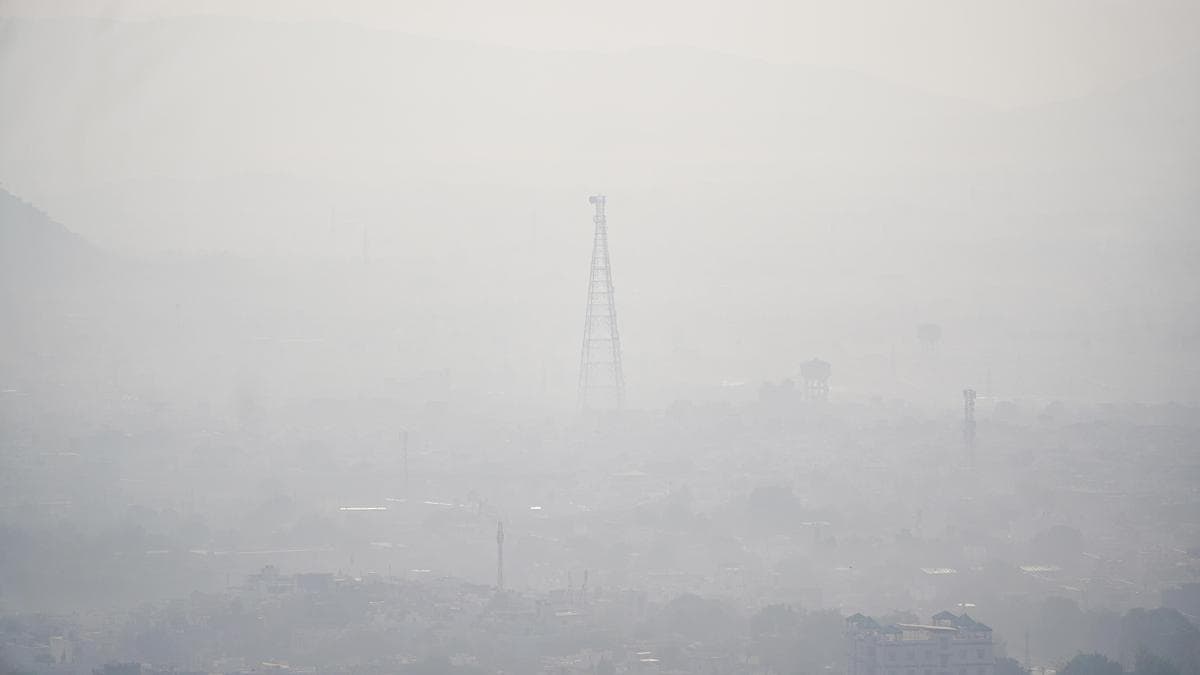
After several days of intense cold, the State saw a drop in temperatures due to the impact of a western disturbance