



Relevant for Exams
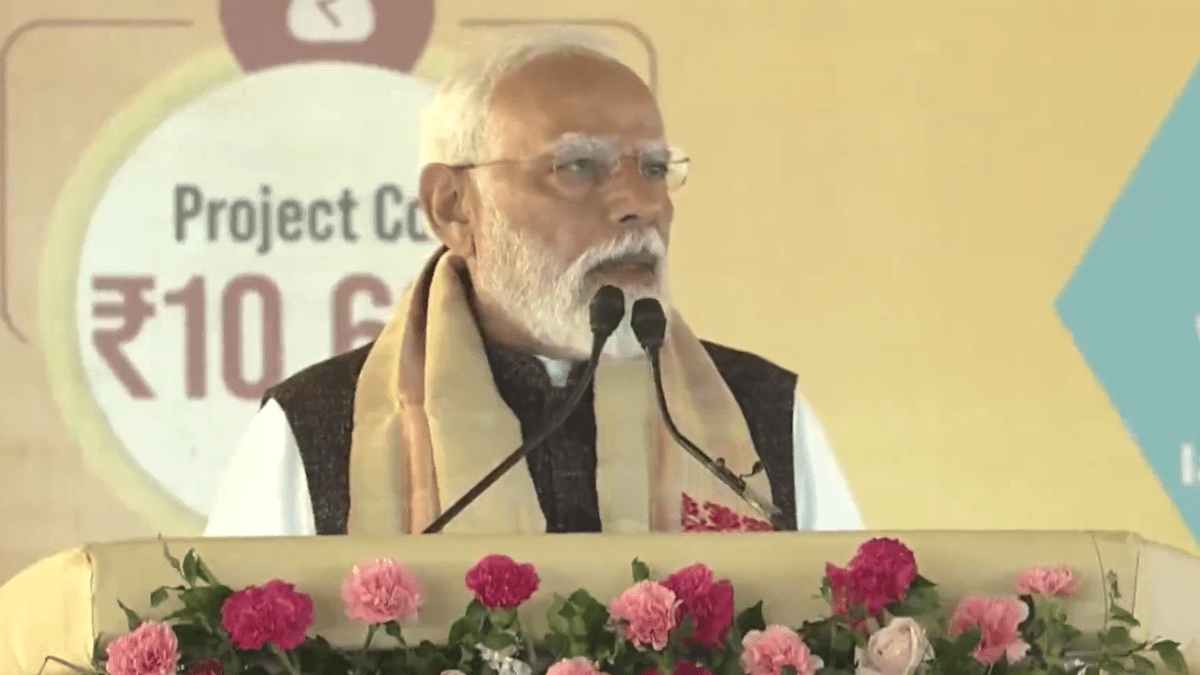
PM unveils ₹10,601-cr Assam fertiliser plant (AVFCCL) with 12.7 lakh MT urea capacity by 2030.
Summary
The Prime Minister unveiled a new fertiliser plant project in Assam, valued at ₹10,601 crore, under the Assam Valley Fertiliser and Chemical Company Ltd (AVFCCL). This significant infrastructure development aims to boost domestic urea production with an annual capacity of 12.7 lakh metric tonnes, enhancing agricultural self-sufficiency. Its commissioning by 2030 is crucial for regional economic growth and national fertiliser security, making it important for competitive exams focusing on government initiatives and economic development.
Key Points
- 1Prime Minister unveiled a new fertiliser plant project in Assam.
- 2The project is valued at ₹10,601 crore.
- 3The plant will operate under the Assam Valley Fertiliser and Chemical Company Ltd (AVFCCL).
- 4It will have an annual urea production capacity of 12.7 lakh metric tonnes.
- 5The fertiliser plant is scheduled for commissioning by the year 2030.
In-Depth Analysis
India's journey towards agricultural self-sufficiency has been marked by significant policy interventions, particularly in the fertiliser sector. For decades, the nation has grappled with the challenge of meeting the burgeoning demand for fertilisers, crucial for enhancing agricultural productivity and ensuring food security for its vast population. This often led to substantial import dependence, making the agricultural sector vulnerable to global price fluctuations and supply chain disruptions. The government's push for 'Aatmanirbhar Bharat' (self-reliant India) has reignited focus on boosting domestic manufacturing across critical sectors, with fertilisers being a prime candidate.
The recent unveiling by the Prime Minister of a new fertiliser plant project in Assam, under the banner of the Assam Valley Fertiliser and Chemical Company Ltd (AVFCCL), is a monumental step in this direction. Valued at a substantial ₹10,601 crore, this project is not merely an industrial undertaking but a strategic investment in India's agricultural future and regional development. The plant is envisioned to have an impressive annual urea production capacity of 12.7 lakh metric tonnes, with its commissioning targeted for 2030. This initiative is designed to significantly reduce India's reliance on imported urea, thereby strengthening the nation's food security matrix and saving precious foreign exchange.
Several key stakeholders are integral to the success of this ambitious project. At the forefront is the **Government of India**, primarily through the Ministry of Chemicals and Fertilizers, which formulates policies and provides financial and regulatory support for the fertiliser sector. The Ministry of Finance also plays a crucial role in allocating funds for such large-scale infrastructure projects. The **Assam State Government** is another vital stakeholder, responsible for facilitating land acquisition, ensuring necessary infrastructure (like power and water supply), and maintaining law and order, creating a conducive environment for industrial development. Public Sector Undertakings (PSUs) often collaborate in such ventures, bringing technical expertise and financial muscle. Ultimately, **Indian farmers** are the primary beneficiaries, as increased domestic production promises timely availability and potentially more stable prices of urea, directly impacting their crop yields and incomes. The **local communities and workforce** in Assam will also benefit immensely through direct and indirect employment generation, skill development, and overall economic upliftment.
This project holds profound significance for India. Firstly, it directly contributes to **food security and the Aatmanirbhar Bharat Abhiyan** by reducing import dependency. Urea is a vital nitrogenous fertiliser, and its consistent supply is paramount for agricultural output. Secondly, it promises a massive **economic boost to the North Eastern Region (NER)**. Historically, the NER has lagged in industrial development, and projects like AVFCCL inject much-needed capital, create jobs, and stimulate ancillary industries, aligning perfectly with the government's 'Act East Policy' which seeks to integrate the region with Southeast Asian economies. Thirdly, from a fiscal perspective, reducing fertiliser imports will **alleviate the burden of fertiliser subsidies** on the national exchequer and save valuable foreign exchange. Lastly, it represents a step towards **diversifying India's industrial base** and ensuring a more balanced regional development.
Historically, India's fertiliser sector has seen cycles of growth and stagnation. Post-Green Revolution (late 1960s onwards), the demand for chemical fertilisers skyrocketed, leading to the establishment of numerous fertiliser plants. However, many older plants faced issues of technology obsolescence and financial viability. In recent years, the government has focused on reviving closed fertiliser plants (e.g., at Gorakhpur, Sindri, Barauni, Ramagundam, Talcher) and establishing new ones to bridge the demand-supply gap. The Assam plant is a continuation of this renewed national strategy.
Looking ahead, the commissioning of the AVFCCL plant by 2030 carries significant future implications. It is expected to stabilize urea prices, ensure supply availability, and contribute to the overall resilience of India's agricultural sector. Furthermore, the establishment of such a large industrial unit in Assam could act as a catalyst for further investments, promoting industrialization and urban development in the region. This aligns with broader themes of **inclusive growth and regional parity** in India's economic development trajectory. The project's reliance on natural gas as feedstock also underscores its connection to India's energy security strategy, as natural gas infrastructure is being expanded across the country.
From a constitutional perspective, this initiative finds its roots in the **Directive Principles of State Policy (DPSP)**, particularly Article 38, which mandates the state to secure a social order for the promotion of the welfare of the people, and Article 39(b) and (c), which direct the state to ensure that the ownership and control of the material resources of the community are so distributed as best to subserve the common good, and that the operation of the economic system does not result in the concentration of wealth and means of production to the common detriment. Large public sector projects like AVFCCL directly contribute to these goals by fostering economic development and equitable distribution of resources. Furthermore, the subject of 'Industries' falls under the **Seventh Schedule of the Constitution**, specifically Entry 52 of the Union List (Industries, the control of which by the Union is declared by Parliament by law to be expedient in the public interest) and Entry 24 of the State List (Industries, subject to the provisions of entries 7 and 52 of List I). The **Industries (Development and Regulation) Act, 1951** provides the legal framework for the government to regulate industrial development, including the establishment of new plants. The project also aligns with the broader objectives of the **New Investment Policy (NIP) for Urea** which aims to attract investments in the fertiliser sector and the overarching **Aatmanirbhar Bharat Abhiyan**.
Exam Tips
This topic falls under the 'Indian Economy' section of the UPSC Civil Services Exam (GS Paper III), specifically under Agriculture, Industrial Policy, and Infrastructure. For SSC, Banking, and State PSCs, it's relevant for General Awareness, Economy, and Current Affairs.
Study related topics such as India's fertiliser subsidy policy, the Green Revolution, the 'Aatmanirbhar Bharat' initiative, and government policies aimed at developing the North Eastern Region. Understand the broader context of India's import dependence and efforts towards self-reliance.
Common question patterns include factual questions (e.g., project cost, production capacity, location, commissioning year), analytical questions (e.g., impact on food security, regional development, fiscal implications), and policy-based questions (e.g., which government policy does this project align with?). Be prepared to discuss the strategic importance of such projects.
Related Topics to Study
Full Article
Assam Valley Fertiliser and Chemical Company Ltd (AVFCCL) will have an annual urea production capacity of 12.7 lakh metric tonnes, and the project is scheduled for commissioning in 2030