


Relevant for Exams
Cambodia-Thailand border clashes displace over 500,000, causing 41+ casualties.
Summary
Renewed border clashes between Southeast Asian neighbours Cambodia and Thailand this month have led to significant displacement and casualties. Over 500,000 people have been displaced in Cambodia, as reported by its Interior Ministry, highlighting the humanitarian impact of regional conflicts. The fighting, involving tanks, drones, and artillery, resulted in at least 22 deaths in Thailand and 19 in Cambodia, making it relevant for competitive exams focusing on international relations, geopolitics, and regional conflicts.
Key Points
- 1Over 500,000 people have been displaced in Cambodia due to renewed border clashes with Thailand.
- 2The displacement figure was reported by Cambodia's Interior Ministry.
- 3The conflict is between the Southeast Asian neighbours Cambodia and Thailand.
- 4At least 22 people have been killed in Thailand due to the renewed fighting this month.
- 5At least 19 people have been killed in Cambodia due to the renewed fighting this month.
In-Depth Analysis
The recent escalation of border clashes between Cambodia and Thailand, leading to significant displacement and casualties, underscores the fragility of peace in Southeast Asia and carries implications for regional stability and international relations. This conflict, rooted in a long-standing territorial dispute, demands a comprehensive understanding for competitive exam aspirants.
**Background Context and Historical Roots:**
At the heart of the Cambodia-Thailand border dispute is the 11th-century Preah Vihear temple, a UNESCO World Heritage site perched atop a cliff in the Dângrêk Mountains. While the International Court of Justice (ICJ) ruled in 1962 that the temple itself belonged to Cambodia, the precise demarcation of the surrounding border area remained contentious. This ambiguity has been a persistent source of tension, leading to numerous skirmishes over the decades. The 1962 ruling was reaffirmed by the ICJ in 2013, which clarified that Cambodia had sovereignty over the entire promontory of Preah Vihear, including the area around the temple. Despite these rulings, both nations have differing interpretations of the exact boundary line, particularly concerning a 4.6 sq km area adjacent to the temple, leading to intermittent military confrontations.
**What Happened:**
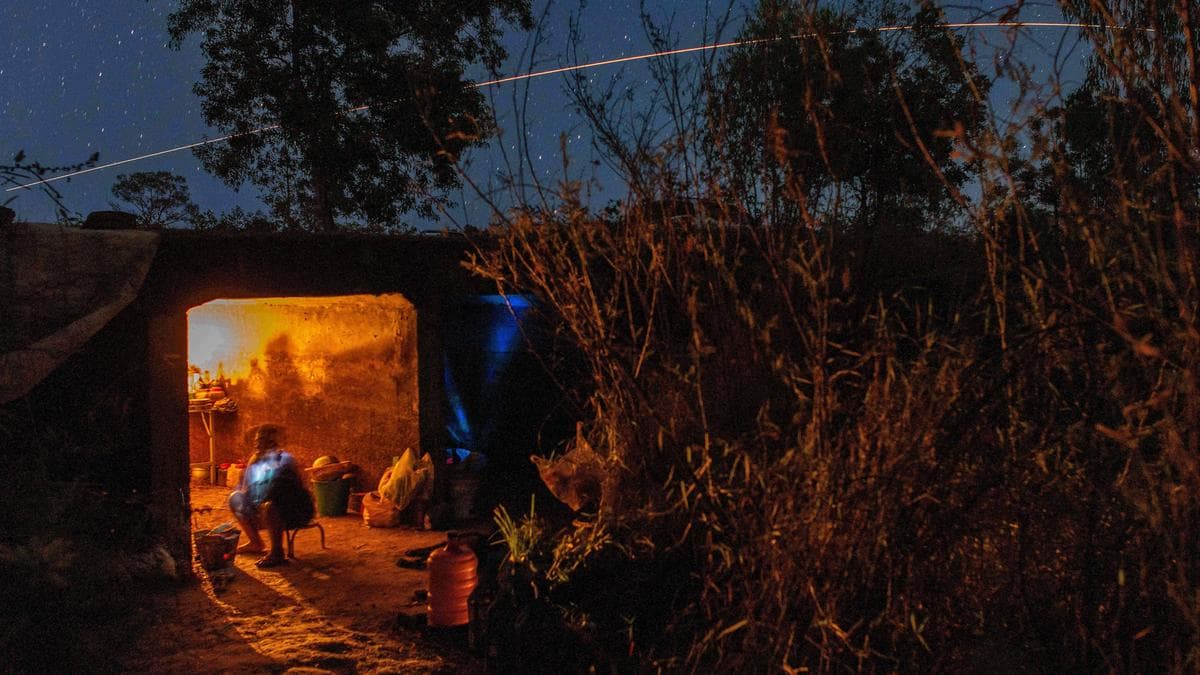
This month, the dispute flared into renewed heavy fighting, marking a significant escalation not seen in recent years. Reports indicate the use of advanced military hardware, including tanks, drones, and artillery, by both sides. The humanitarian toll has been severe, with Cambodia's Interior Ministry reporting over 500,000 people displaced from border areas. The conflict has also resulted in tragic loss of life, with at least 22 fatalities in Thailand and 19 in Cambodia, highlighting the destructive nature of the renewed hostilities. Such large-scale displacement and casualties underscore the urgent need for de-escalation and a lasting resolution.
**Key Stakeholders Involved:**
* **Cambodia and Thailand:** The primary belligerents, their respective governments, military forces, and affected civilian populations are the most direct stakeholders. Their political will and diplomatic efforts are crucial for any resolution.
* **ASEAN (Association of Southeast Asian Nations):** As the regional bloc, ASEAN has a vested interest in maintaining peace and stability among its member states. Its role as a mediator and facilitator of dialogue is paramount, though its principle of non-interference often limits its proactive intervention.
* **United Nations (UN):** The UN, particularly through its humanitarian agencies like UNHCR, is a key stakeholder in addressing the large-scale displacement and providing aid. The UN Security Council could also become involved if the conflict threatens wider regional peace.
* **International Community:** Various countries and international organizations are concerned about the humanitarian crisis and regional stability, urging peaceful resolution and offering support for mediation.
**Why This Matters for India:**
This conflict holds significant implications for India, especially in the context of its 'Act East Policy'. Launched in 2014 (evolving from the 'Look East Policy' of the early 1990s), this policy aims to enhance India's economic, strategic, and cultural ties with Southeast Asian nations. Instability in a key ASEAN region directly impedes the policy's objectives, affecting trade routes, investment flows, and India's overall geopolitical influence. India has substantial economic interests in the region, including trade volumes with ASEAN exceeding $100 billion. Disruptions like these can impact supply chains, maritime security, and the safety of Indian expatriates in the region. Furthermore, a stable Southeast Asia is vital for India's broader strategic calculus, especially in balancing the growing influence of other major powers in the Indo-Pacific.
**Future Implications:**
The immediate implication is a deepening humanitarian crisis, requiring sustained international attention and aid. For the region, continued conflict could test ASEAN's unity and effectiveness, potentially undermining its credibility as a regional peace broker. Economically, prolonged instability could deter foreign investment and disrupt tourism, a vital sector for both Cambodia and Thailand. Diplomatically, there will be increased pressure on both nations to engage in constructive dialogue, possibly with ASEAN or UN mediation. The situation also presents a complex geopolitical challenge, as external powers might seek to leverage the conflict to further their own interests, necessitating a cautious approach from all parties.
**Related Constitutional Articles, Acts, or Policies:**
While there are no direct Indian constitutional articles pertaining to this specific international dispute, India's foreign policy is guided by the Directive Principles of State Policy (DPSP) under **Article 51** of the Constitution, which mandates the state to 'promote international peace and security,' 'maintain just and honourable relations between nations,' 'foster respect for international law and treaty obligations,' and 'encourage settlement of international disputes by arbitration.' India's **Act East Policy** is the primary foreign policy framework through which it engages with Southeast Asia, making regional stability a core interest. Internationally, the **UN Charter** emphasizes the peaceful resolution of disputes and non-use of force, principles that are relevant to this conflict. The **ASEAN Charter** also outlines principles of non-interference and peaceful dispute settlement among its members, though its implementation in practice can be challenging during active conflicts.
Exam Tips
**GS Paper 2 (International Relations) & GS Paper 1 (Geography):** This topic falls under International Relations, specifically India's foreign policy (Act East Policy) and regional groupings (ASEAN). For Geography, be prepared for map-based questions on the location of Cambodia, Thailand, the Preah Vihear temple, and the disputed border region.
**Related Topics to Study:** Focus on the history of the Preah Vihear dispute, the role and effectiveness of the International Court of Justice (ICJ) in resolving international disputes, the structure and functions of ASEAN, and the objectives and impact of India's Act East Policy. Also, review global refugee crises and international humanitarian law.
**Common Question Patterns:** Expect analytical questions on the causes and consequences of such border disputes, the role of regional organizations like ASEAN in conflict resolution, and the implications of regional instability for India's foreign policy goals. Questions may also test your knowledge of key dates (e.g., 1962, 2013 ICJ rulings) and specific policies (Act East Policy).
Related Topics to Study
Full Article
The renewed fighting between the Southeast Asian neighbours this month, including with tanks, drones and artillery, has killed at least 22 people in Thailand and 19 in Cambodia, according to officials