



Relevant for Exams
Yunus's adviser: No favoritism or pressure on Bangladesh political parties amid 'hunger for change'.
Summary
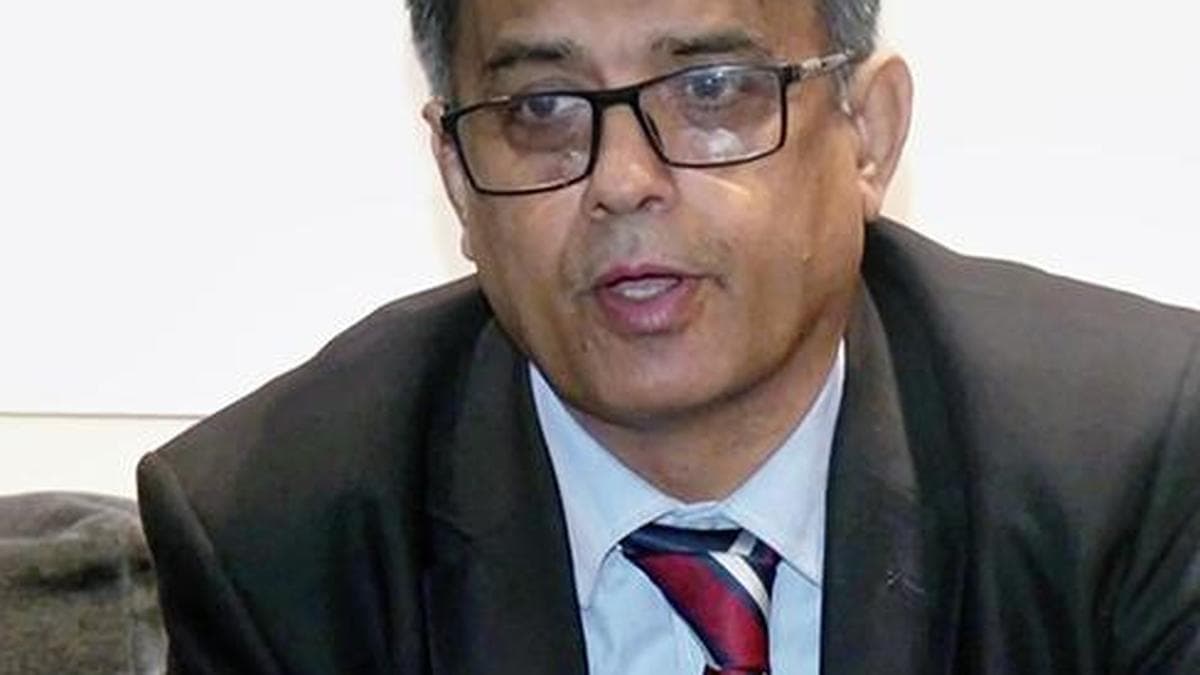
Shafiqul Alam, press adviser to Yunus, stated that no political party in Bangladesh is favored or under pressure, despite a palpable "hunger for change" on the streets. He added that political parties are reflecting this public sentiment. This news offers insight into the current political climate in Bangladesh, which is crucial for understanding India's neighborhood dynamics and regional geopolitics for competitive exams.
Key Points
- 1Shafiqul Alam serves as the press adviser to Yunus.
- 2Alam stated that no political party in Bangladesh is currently 'favoured' or 'under pressure'.
- 3He acknowledged a widespread 'hunger for change' among the public in Bangladesh.
- 4Alam noted that political parties in Bangladesh are reportedly 'reflecting' this public sentiment.
- 5The context of the statement is the general political situation and public opinion within Bangladesh.
In-Depth Analysis
The statement by Shafiqul Alam, press adviser to Nobel laureate Muhammad Yunus, indicating that no political party in Bangladesh is currently 'favoured' or 'under pressure' while acknowledging a widespread 'hunger for change' among the public, offers a nuanced perspective on Bangladesh's complex political landscape. This statement is crucial for understanding the evolving dynamics in India's eastern neighbourhood.
**Background Context and What Happened:**
Bangladesh's political history since its independence in 1971 has been marked by a fierce rivalry between two dominant political blocs: the Awami League (AL), led by Prime Minister Sheikh Hasina, and the Bangladesh Nationalist Party (BNP), historically led by Khaleda Zia. This rivalry has often led to political instability, boycotts, and allegations of electoral irregularities. The AL, currently in power, has been credited with significant economic growth and infrastructure development, but it faces criticism for perceived authoritarian tendencies, suppression of dissent, and weakening democratic institutions. The BNP, on the other hand, often boycotts general elections, demanding a non-partisan caretaker government to oversee polls – a system briefly in place but abolished by the AL government in 2011. The 2014 elections were largely boycotted by the BNP, and the 2018 elections were marred by widespread allegations of vote rigging and intimidation. This long history of political polarization and questions over electoral fairness has fueled public discontent, leading to the 'hunger for change' that Alam refers to. Muhammad Yunus, renowned for his pioneering work in microfinance and founder of Grameen Bank, is a Nobel Peace Prize laureate whose stature lends significant weight to statements made by his associates. His camp is often seen as distinct from the traditional AL-BNP dichotomy, and Alam's statement can be interpreted as an attempt to project neutrality while reflecting the underlying public sentiment for a fresh political direction or reform.
**Key Stakeholders Involved:**
1. **Awami League (AL):** The ruling party, focused on development and maintaining power, often accused of stifling opposition. Their continued dominance is a key factor in the political stability of Bangladesh.
2. **Bangladesh Nationalist Party (BNP):** The main opposition party, struggling to regain political footing, demanding free and fair elections under a neutral administration. Their future participation in elections is critical.
3. **Muhammad Yunus and his associates (e.g., Shafiqul Alam):** While not a direct political party, Yunus's moral authority and international recognition mean that statements from his camp are closely watched, often seen as reflecting an independent view or a potential third force.
4. **The People of Bangladesh:** The ultimate stakeholders. Their 'hunger for change' signifies widespread dissatisfaction with the current political climate, governance issues, economic disparities, and lack of genuine democratic participation.
5. **India:** As Bangladesh's most important neighbour, India is a significant stakeholder due to shared borders, economic ties, and security concerns.
**Significance for India:**
Bangladesh is a crucial component of India's 'Neighborhood First' policy. A stable, democratic, and prosperous Bangladesh is in India's strategic interest. Political instability in Bangladesh can have several implications for India:
* **Security Concerns:** Increased instability could lead to cross-border migration, radicalization, and a rise in extremist activities, impacting India's eastern and northeastern states. India and Bangladesh have robust cooperation on counter-terrorism, which could be jeopardized.
* **Economic Impact:** Bilateral trade, which stood at approximately $18.2 billion in FY 2022-23, and ongoing connectivity projects (like the BBIN Motor Vehicle Agreement, inland waterways, and port access) rely heavily on political stability. Uncertainty can deter Indian investment and disrupt supply chains.
* **Regional Cooperation:** Bangladesh is a key member of regional groupings like BIMSTEC and SAARC. Its internal political dynamics influence the effectiveness of these platforms, impacting India's regional leadership aspirations.
* **Geopolitical Balance:** Bangladesh's foreign policy choices, especially regarding relations with China, are closely watched by India. A stable Bangladesh allows India to pursue its strategic interests without undue external influence.
**Historical Context and Future Implications:**
The demand for a caretaker government system in Bangladesh has historical roots. Following years of political turmoil, a provision for a non-partisan caretaker government was introduced in 1996 through the 13th Amendment to the Bangladeshi Constitution to oversee general elections. However, it was abolished in 2011 by the Awami League government, leading to renewed calls for its reinstatement by the opposition. This historical cycle of political confrontation around electoral mechanisms underscores the current 'hunger for change'.
The future implications of this sentiment are significant. Leading up to future elections, there is a high potential for increased political unrest, street protests, and further polarization if the demands for electoral reform are not addressed. This could impact democratic institutions, human rights, and the business environment. India will need to carefully navigate its diplomatic engagement, advocating for stability and democratic processes without being perceived as interfering in Bangladesh's internal affairs. India's commitment to its 'Neighborhood First' policy and its efforts to enhance regional connectivity (e.g., through initiatives like the BBIN Motor Vehicle Agreement and various port access agreements) will be tested by the evolving political situation. Maintaining open channels with all major political actors in Bangladesh, while upholding the principles of non-interference and supporting democratic stability, will be paramount for India.
**Related Constitutional Articles, Acts, or Policies (Indian Context):**
While the political developments are internal to Bangladesh, India's approach is guided by its overarching foreign policy principles. Article 51 of the Indian Constitution directs the State to promote international peace and security, maintain just and honorable relations between nations, foster respect for international law, and encourage settlement of international disputes by arbitration. This article provides the constitutional framework for India's engagement with its neighbours, including Bangladesh, aiming for stability and regional harmony. India's 'Neighborhood First' policy, though not a constitutional article, is a key foreign policy doctrine that prioritizes friendly and cooperative relations with neighbouring countries. This policy drives India's initiatives in Bangladesh, such as extensive development assistance, connectivity projects, and security cooperation, all aimed at fostering a stable and prosperous partner on its eastern flank. India also adheres to principles of non-interference in the internal affairs of sovereign nations, balancing this with its strategic interests in regional stability.
Exam Tips
This topic falls under GS Paper 2 (International Relations) for UPSC, SSC, and State PSC exams. Focus on India's 'Neighborhood First' policy and its implications.
Study related topics like India-Bangladesh bilateral relations (trade, connectivity, security, water sharing), regional organizations (BIMSTEC, SAARC), and the geopolitical significance of Bangladesh for India.
Common question patterns include direct questions on challenges to India's 'Neighborhood First' policy, the impact of political instability in neighbouring countries on India, and analytical questions on the reasons for political unrest in Bangladesh and India's potential role.
Related Topics to Study
Full Article
There is a hunger for change on the streets of Bangladesh, and the political parties are reflecting that, says press adviser to Yunus