



Relevant for Exams
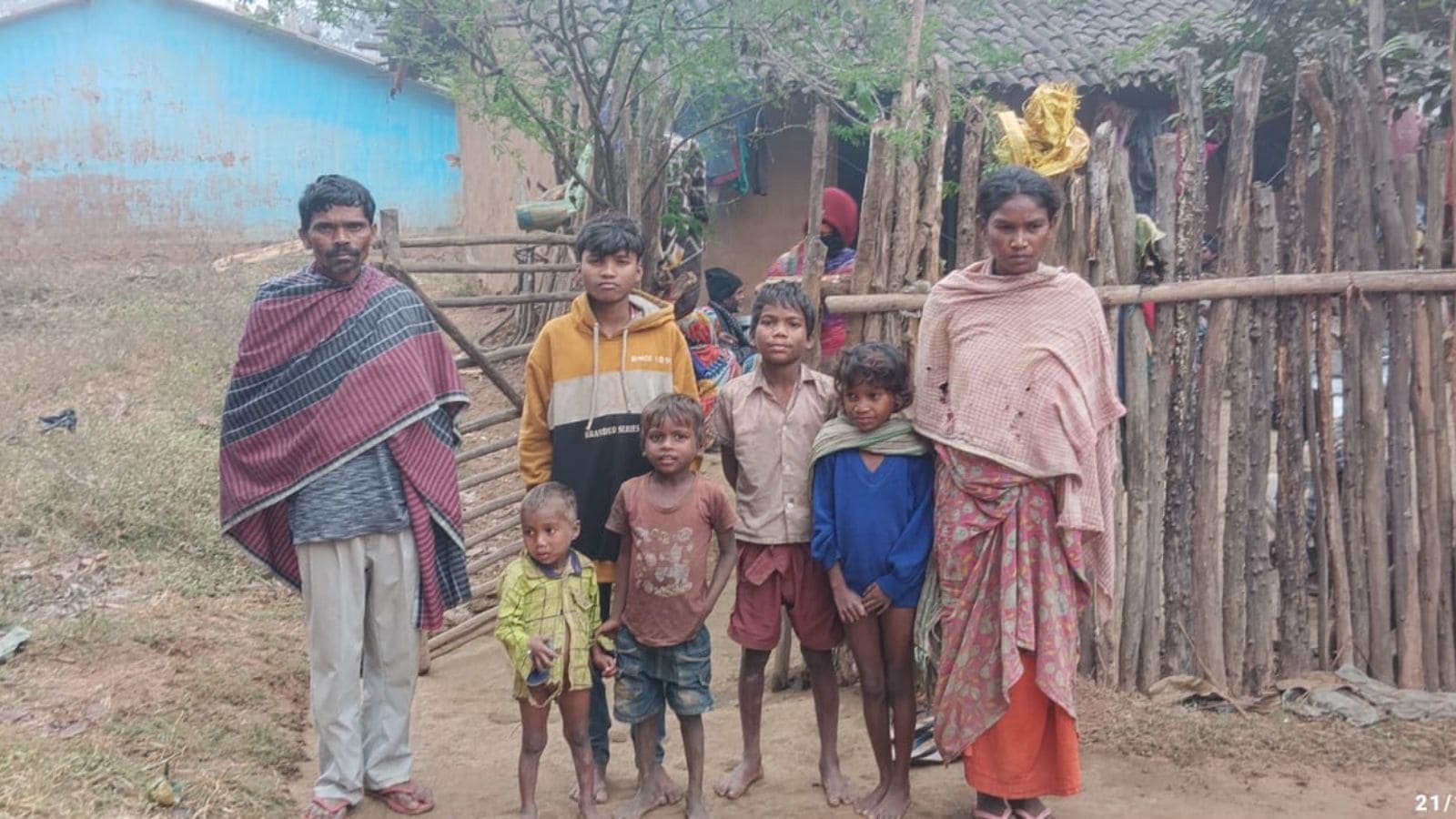
Adivasi family carries baby's body in vegetable bag due to mortuary van unavailability, exposing service gaps.
Summary
An Adivasi family was reportedly forced to carry their deceased infant's body in a vegetable bag due to the unavailability of a mortuary van. This incident highlights critical gaps in public health infrastructure and challenges faced by vulnerable communities in accessing dignified end-of-life services. It underscores issues of social justice and governance, which are crucial for competitive exam preparation, focusing on tribal welfare and public service delivery.
Key Points
- 1The incident highlights the critical lack of essential public health infrastructure, specifically mortuary vans, in certain regions.
- 2It underscores the challenges faced by vulnerable communities, such as Adivasi families, in accessing basic dignified services.
- 3The event raises concerns about the state of public service delivery and the implementation of welfare schemes for tribal populations.
- 4This situation points to potential systemic issues in governance and resource allocation for remote or marginalized areas.
- 5It reflects on the broader themes of social justice, human rights, and the right to dignity, even in death.
In-Depth Analysis
The harrowing incident where an Adivasi family was compelled to transport their deceased infant's body in a vegetable bag due to the absence of a mortuary van is not merely an isolated tragedy; it's a stark mirror reflecting deep-seated systemic failures in India's public health infrastructure, governance, and social justice framework. This event, occurring in a nation striving for global leadership, underscores the persistent marginalization faced by its most vulnerable communities, particularly the Adivasis.
To truly grasp the gravity of this situation, one must understand its background context. Adivasi communities, constitutionally recognized as Scheduled Tribes (STs), have historically been marginalized, facing socio-economic deprivation, geographical isolation, and cultural exploitation. Despite constitutional safeguards and numerous welfare schemes, these communities often reside in remote areas with minimal access to basic services, including healthcare. Decades of underinvestment in public health, especially in rural and tribal belts, have led to dilapidated infrastructure, chronic staff shortages, and a severe lack of essential facilities like mortuary vans, which are crucial for dignified last rites. This incident, therefore, is a symptom of a larger ailment: the persistent rural-urban divide in service delivery and the failure to extend the fruits of development equitably.
Key stakeholders in this tragedy include, first and foremost, the Adivasi family, who are the direct victims of systemic neglect and a profound lack of dignity. Their plight highlights the human cost of administrative apathy. The local administration, including district health officials and the hospital management, bears direct responsibility for the unavailability of a mortuary van. Their failure points to a lack of preparedness, resource allocation, and perhaps, accountability. The State Government, responsible for policy formulation and overall health infrastructure, must answer for the gaps in service delivery within its jurisdiction. Furthermore, the Central Government, through its various ministries for tribal affairs and health (like the Ministry of Tribal Affairs and the Ministry of Health and Family Welfare), is a stakeholder as it conceptualizes and funds national welfare schemes like Ayushman Bharat and the National Rural Health Mission (NRHM). Civil society organizations and media also play a crucial role in bringing such incidents to light, acting as watchdogs and advocates for the marginalized.
This incident carries immense significance for India. Socially, it's a grave violation of human dignity, a fundamental aspect of the Right to Life enshrined in Article 21 of the Indian Constitution, which has been interpreted by the Supreme Court to include the right to live with dignity and the right to a dignified death. It exposes the chasm between constitutional ideals and ground realities for tribal populations. Politically, it calls into question the efficacy of governance, particularly in delivering public services to the 'last mile'. It highlights a severe accountability deficit and raises concerns about the implementation of welfare schemes meant for Scheduled Tribes. Economically, the lack of basic infrastructure like mortuary vans in remote areas reflects a broader issue of skewed resource allocation, where developmental funds often fail to reach the most deserving, leading to persistent regional disparities.
Historically, the marginalization of Adivasis dates back to colonial times, exacerbated by their displacement for development projects post-independence. Despite the Fifth Schedule of the Constitution providing for the administration and control of Scheduled Areas and Scheduled Tribes, and Article 46 directing the State to promote with special care the educational and economic interests of the weaker sections of the people, and, in particular, of the Scheduled Castes and the Scheduled Tribes, and to protect them from social injustice and all forms of exploitation, such incidents demonstrate that these constitutional mandates are often poorly translated into effective action. Article 47, which mandates the State's duty to raise the level of nutrition and the standard of living and to improve public health, also stands violated when such basic services are absent. The Scheduled Castes and Scheduled Tribes (Prevention of Atrocities) Act, 1989, aims to prevent atrocities against these communities, but the denial of dignified services can also be seen as a form of systemic injustice.
Looking ahead, the future implications are critical. Such incidents serve as a potent reminder for policymakers to re-evaluate and strengthen public health infrastructure, especially in remote and tribal areas. There is an urgent need for dedicated budgetary allocations, transparent implementation mechanisms, and stringent accountability frameworks. The focus must shift from mere scheme formulation to effective last-mile delivery. This includes not just mortuary vans but also access to ambulances, primary healthcare centers, and essential medical personnel. Greater community participation in planning and monitoring health services, leveraging technology for better resource management, and fostering a culture of sensitivity and empathy within public service delivery are paramount. Addressing these systemic issues is crucial not only for upholding human dignity but also for achieving truly inclusive and equitable development in India, ensuring that no citizen, irrespective of their socio-economic background, is denied their fundamental right to a dignified existence, even in death.
Exam Tips
This topic primarily falls under UPSC GS Paper II (Governance, Social Justice, Welfare Schemes for Vulnerable Sections) and GS Paper I (Indian Society). Study tribal welfare policies, public health systems, and human rights alongside.
Be prepared for case studies or essay questions that ask you to analyze governance failures, ethical dilemmas in public administration, or the challenges of inclusive development in India, using such incidents as examples.
Focus on constitutional provisions related to Scheduled Tribes (Fifth Schedule, Articles 21, 46, 47), key government schemes for tribal welfare and health (e.g., Tribal Sub-Plan, Ayushman Bharat, NRHM), and their implementation challenges. Understand the difference between policy intent and ground reality.
Practice writing answers that connect specific incidents to broader themes like human rights, social justice, accountability, and federalism. For example, how does lack of a mortuary van reflect failure in federal health policy implementation?
Understand the role of various stakeholders – government bodies (central, state, local), civil society, and affected communities – and their responsibilities in ensuring dignified public service delivery.