



Relevant for Exams
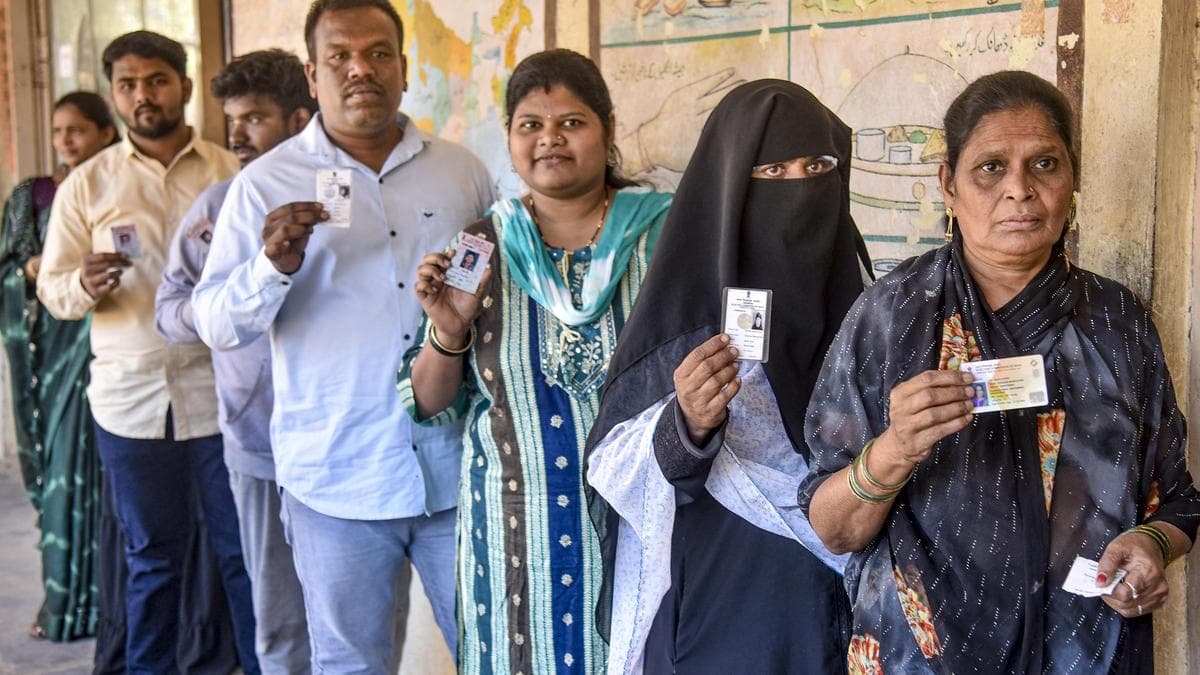
Maharashtra civic poll vote counting begins for 23 municipal councils and nagar panchayats.
Summary
Counting began for elections to 23 municipal councils and nagar panchayats across Maharashtra, with voting concluding on December 20. These local body polls are crucial for grassroots democracy and local self-governance, reflecting the political landscape at the regional level. For competitive exams, this highlights the functioning of the 74th Constitutional Amendment Act and the electoral processes for urban local bodies.
Key Points
- 1Counting of votes commenced for civic polls in Maharashtra.
- 2Voting for the elections concluded on December 20.
- 3Elections were held for posts in 23 municipal councils and nagar panchayats.
- 4A total of 143 vacant member posts in these local bodies were contested.
- 5The polls were conducted for both president and member positions in the municipal councils and nagar panchayats.
In-Depth Analysis
The commencement of vote counting for civic polls in 23 municipal councils and nagar panchayats across Maharashtra, following voting on December 20, represents a fundamental exercise in India's democratic framework. These local body elections, though seemingly regional, are deeply significant, embodying the spirit of decentralization and grassroots democracy envisioned by the Indian Constitution. Understanding these polls requires delving into their constitutional underpinnings, the roles of various stakeholders, and their broader implications for governance in India.
**Background Context and Historical Evolution:**
India's journey towards decentralized governance has been long and deliberate. While local self-governance existed in various forms historically, a structured approach began with the colonial administration (e.g., Madras Corporation in 1687, Calcutta and Bombay in 1726). Post-independence, the need to empower local bodies became a key focus. However, these institutions often suffered from irregular elections, inadequate funds, and limited powers. This changed dramatically with the 73rd and 74th Constitutional Amendment Acts of 1992, which granted constitutional status to Panchayati Raj Institutions (rural local bodies) and Urban Local Bodies (ULBs) respectively. The 74th Amendment Act, specifically, inserted Part IXA into the Constitution, dealing with ‘The Municipalities’ (Articles 243P to 243ZG), making it mandatory for states to constitute municipalities and hold regular elections.
**What Happened:**
The recent events involved the conclusion of voting on December 20 for various posts in 23 municipal councils and nagar panchayats in Maharashtra. These elections were held for both the positions of president and members, with a total of 143 vacant member posts being contested. The subsequent counting of votes determines the new representatives who will govern these urban local areas.
**Key Stakeholders Involved:**
Several crucial stakeholders are involved in this democratic process. Firstly, the **citizens (voters)** are the primary actors, directly electing their representatives who will address local issues. Secondly, various **political parties** – national players like the Bharatiya Janata Party (BJP), Indian National Congress, and Nationalist Congress Party (NCP), alongside regional forces like the Shiv Sena factions and Maharashtra Navnirman Sena (MNS) – actively contest these elections. For them, these polls are not just about local power but also serve as a crucial barometer of public sentiment, often influencing strategies for state assembly and national Lok Sabha elections. Thirdly, the **State Election Commission (SEC)**, a constitutional body established under Article 243ZA, plays an impartial and pivotal role in conducting, supervising, directing, and controlling the preparation of electoral rolls and the conduct of elections to municipalities. Fourthly, the **elected representatives** (presidents and members) become the direct implementers of local policies and service providers. Finally, the **State Government** provides the legislative framework, financial support, and administrative oversight for these urban local bodies, as well as influencing delimitation and reservation processes.
**Why This Matters for India and Future Implications:**
These local elections are profoundly significant for India. They reinforce **grassroots democracy** by bringing governance closer to the people, allowing for more direct participation and accountability. The newly elected bodies are responsible for vital **local governance** functions listed in the 12th Schedule of the Constitution (Article 243W), including urban planning, water supply, public health, sanitation, fire services, slum improvement, and street lighting. Their effective functioning is critical for the successful implementation of national urban development schemes like the Smart Cities Mission, Atal Mission for Rejuvenation and Urban Transformation (AMRUT), and Swachh Bharat Abhiyan (Urban).
Economically, efficient ULBs can attract investment and improve urban infrastructure, contributing to overall regional development. Politically, the results often provide insights into the shifting political landscape, acting as a feedback mechanism for state and national parties. The **fiscal decentralization** aspect is also crucial, with State Finance Commissions (Article 243Y) recommending the distribution of state taxes, duties, tolls, and fees between the state and the municipalities, ensuring their financial viability.
Looking ahead, the outcomes of these polls will determine the immediate direction of urban development and service delivery in these 23 municipal areas. They will also shape the local political dynamics, potentially leading to new alliances or strengthening existing ones, which could have ripple effects on future state and national elections in Maharashtra. The continuous strengthening of these local institutions is essential for deepening democratic roots and ensuring inclusive development across India.
**Related Constitutional Articles, Acts, and Policies:**
* **74th Constitutional Amendment Act, 1992**: The foundational act for urban local bodies.
* **Part IXA of the Constitution (Articles 243P to 243ZG)**: Specifically deals with Municipalities.
* **Article 243Q**: Mandates the constitution of three types of Municipalities: Nagar Panchayats (for transitional areas), Municipal Councils (for smaller urban areas), and Municipal Corporations (for larger urban areas).
* **Article 243ZA**: Defines the powers and responsibilities of the State Election Commission for municipal elections.
* **Article 243W**: Outlines the powers, authority, and responsibilities of Municipalities, referring to the 12th Schedule.
* **Article 243Y**: Provides for the constitution of a State Finance Commission to review the financial position of municipalities and make recommendations.
* **12th Schedule**: Lists 18 functional items placed within the purview of Municipalities.
* **Maharashtra Municipal Councils, Nagar Panchayats and Industrial Townships Act**: The specific state legislation governing these local bodies in Maharashtra.
Exam Tips
This topic falls under the 'Indian Polity and Governance' section of the UPSC Civil Services Exam (GS Paper II) and State PSC General Studies papers. Focus on the constitutional provisions related to Urban Local Bodies (ULBs).
Study the 73rd and 74th Constitutional Amendment Acts in detail. Understand the differences and similarities between Panchayati Raj Institutions and Urban Local Bodies, the roles of the State Election Commission and State Finance Commission for both.
Be prepared for both factual questions (e.g., 'Which article deals with the constitution of municipalities?', 'When was the 74th Amendment Act passed?') and conceptual/analytical questions (e.g., 'Discuss the significance of local self-governance in India's democratic setup', 'Analyze the challenges faced by Urban Local Bodies in India').
Related Topics to Study
Full Article
Shiv Sena’s Uttam Gharat was elected president of Palghar Municipal Council, Raju Machhi won in Dahanu, and BJP’s Pooja Udavant and Reema Gandhe won in Jawhar and Wada Nagar Panchayat, respectively