



Relevant for Exams
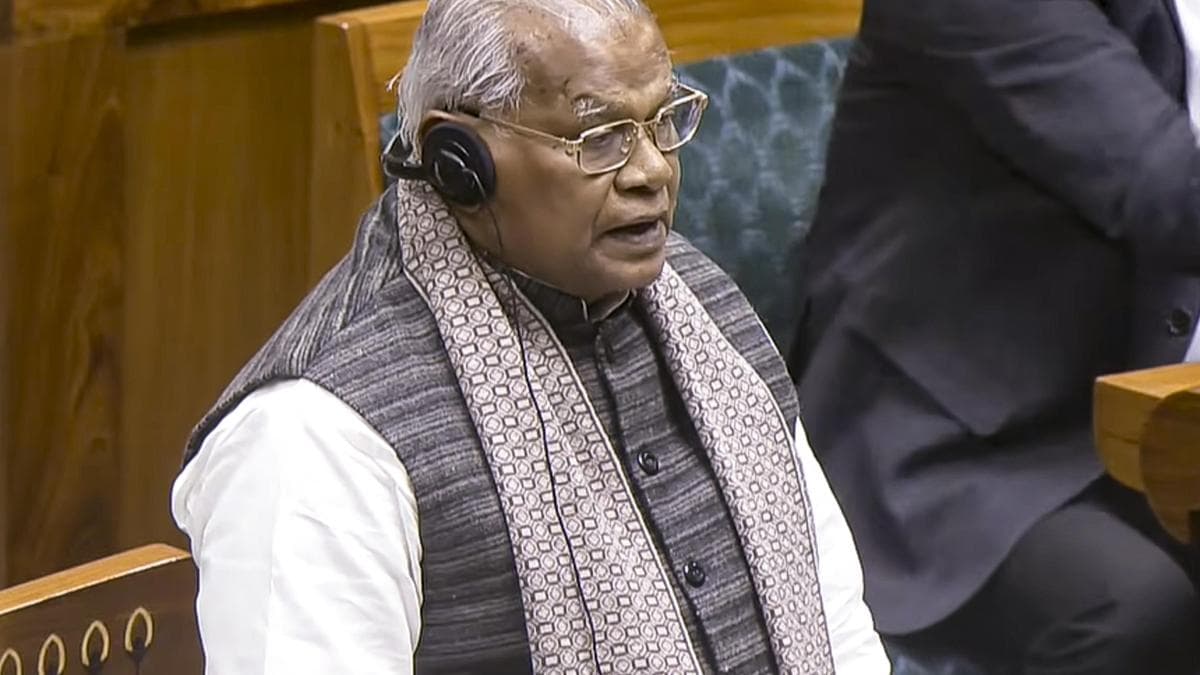
Former Bihar CM Jitan Ram Manjhi demands Rajya Sabha seat, alleges unfair treatment in NDA.
Summary
Former Bihar Chief Minister Jitan Ram Manjhi has demanded a Rajya Sabha seat for his party, alleging unfair treatment within the National Democratic Alliance (NDA). This development highlights internal political dynamics and seat-sharing negotiations within the ruling alliance, which are important for understanding coalition politics in India. For competitive exams, it's relevant for understanding political figures and alliances, especially for state-level politics.
Key Points
- 1Jitan Ram Manjhi is a former Chief Minister of Bihar.
- 2He has demanded a Rajya Sabha seat for his political party.
- 3The demand is directed towards the National Democratic Alliance (NDA).
- 4Manjhi alleged experiencing 'unfair treatment' within the NDA coalition.
- 5This issue pertains to internal seat-sharing and alliance management among NDA constituents.
In-Depth Analysis
Jitan Ram Manjhi, a prominent Dalit leader and former Chief Minister of Bihar, recently stirred political waters by demanding a Rajya Sabha seat for his party, Hindustani Awam Morcha (Secular) [HAM(S)], alleging 'unfair treatment' within the National Democratic Alliance (NDA). This development is not merely a local Bihar political squabble but offers a crucial lens through which to understand the complex dynamics of coalition politics, caste equations, and electoral strategies in India.
**Background Context:**
Jitan Ram Manjhi's political journey is marked by significant shifts and realignments. A long-time member of the Janata Dal (United) [JD(U)], he served as Bihar's Chief Minister from May 2014 to February 2015, handpicked by Nitish Kumar. However, a fallout with Kumar led him to form his own party, HAM(S), in May 2015. Since then, Manjhi has navigated various alliances, including the Mahagathbandhan (Grand Alliance) before eventually returning to the NDA fold. His political existence is largely predicated on his appeal to a section of the Mahadalit community, a crucial vote bank in Bihar's caste-driven politics. The NDA in Bihar comprises the Bharatiya Janata Party (BJP), JD(U), HAM(S), and other smaller allies, each vying for influence and electoral share.
**What Happened:**
Manjhi's demand for a Rajya Sabha seat for a HAM(S) candidate, specifically for his son Santosh Suman, stems from the upcoming biennial elections to the Rajya Sabha. With five seats from Bihar falling vacant in April, the allocation of these seats becomes a critical point of negotiation within the NDA. Manjhi's public allegation of 'unfair treatment' suggests a perceived lack of adequate representation or influence for his party despite its contribution to the NDA's electoral victories. This public posturing is a classic tactic in coalition politics to exert pressure and secure concessions from larger partners.
**Key Stakeholders Involved:**
1. **Jitan Ram Manjhi and HAM(S):** As a smaller regional party, HAM(S) seeks to ensure its political relevance and secure representation at the national level (Rajya Sabha). Manjhi's personal ambition and the political future of his son are also key drivers.
2. **Bharatiya Janata Party (BJP):** The dominant partner in the NDA, the BJP aims to maintain coalition stability, ensure smooth seat-sharing, and consolidate its position ahead of upcoming elections. Alienating smaller allies could jeopardize its electoral prospects.
3. **Janata Dal (United) [JD(U)]:** Another significant NDA partner in Bihar, led by Chief Minister Nitish Kumar. JD(U) also has its own aspirations for Rajya Sabha seats and plays a crucial role in negotiating with allies, sometimes being at odds with Manjhi's demands.
4. **Other Smaller NDA Allies:** The outcome of these negotiations sets a precedent for how larger parties treat smaller constituents, impacting overall alliance cohesion.
**Why This Matters for India:**
This episode highlights several critical aspects of Indian politics:
* **Coalition Politics and Stability:** It underscores the inherent tensions and complexities within multi-party alliances. Maintaining unity among diverse partners with varying aspirations is crucial for governmental stability, especially in a state like Bihar, known for its fluid political landscape.
* **Regional Party Influence:** Despite being smaller, parties like HAM(S) hold significant sway due to their command over specific caste vote banks. Their ability to shift allegiance can dramatically alter electoral outcomes, making them indispensable allies.
* **Caste Dynamics:** Manjhi's identity as a Mahadalit leader is central. His demands are often viewed through the prism of Dalit representation and empowerment, a recurring theme in Indian politics. Neglecting such leaders can lead to resentment and potential erosion of support from crucial demographic segments.
* **Electoral Strategy:** With the Lok Sabha elections in 2024 and Bihar Assembly elections in 2025 on the horizon, every seat-sharing negotiation and every alliance partner's demand carries significant weight. The BJP and JD(U) must carefully balance the aspirations of their allies to present a united front.
**Historical Context:**
India has a rich history of coalition governments, particularly since the late 1980s and 1990s, where regional parties gained increasing prominence. Bihar, in particular, has seen a constant churn of alliances and realignments driven by caste and community considerations. Leaders like Manjhi, Ram Vilas Paswan, and Upendra Kushwaha have historically leveraged their influence over specific caste groups to secure power and representation. The demand for Rajya Sabha seats is a common feature in these negotiations, as it provides national visibility and a platform for leaders who may not always contest direct elections.
**Future Implications:**
If Manjhi's demands are met, it could strengthen HAM(S)'s position within the NDA and signal the larger partners' commitment to accommodating smaller allies. However, if unfulfilled, it could lead to disgruntlement, potential cross-voting, or even a re-evaluation of HAM(S)'s allegiance to the NDA, potentially disrupting the alliance's unity ahead of crucial elections. This situation will test the leadership skills of the BJP and JD(U) in managing internal dissent and ensuring coalition cohesion. The outcome will influence the pre-election seat-sharing agreements for both the Lok Sabha and State Assembly polls, impacting the broader political narrative in Bihar.
**Related Constitutional Articles, Acts, or Policies:**
* **Article 80 of the Indian Constitution:** Deals with the composition of the Rajya Sabha. It states that the Council of States (Rajya Sabha) shall consist of not more than 250 members, of whom 12 are nominated by the President and the remainder (not more than 238) are representatives of the States and Union Territories.
* **Fourth Schedule:** This Schedule to the Constitution provides for the allocation of seats in the Council of States to the States and Union Territories.
* **Representation of the People Act, 1951:** This Act governs the conduct of elections to the Houses of Parliament and the State Legislatures. Specifically, Section 125A deals with the election of members to the Rajya Sabha by elected members of the State Legislative Assemblies through the system of proportional representation by means of the single transferable vote.
* **Anti-defection Law (Tenth Schedule):** While not directly applicable to the demand itself, the possibility of a party leader threatening to defect or withdraw support if demands are not met always brings the provisions of the Tenth Schedule into play, which deals with disqualification on grounds of defection.
Exam Tips
This topic falls under 'Indian Polity and Governance' (UPSC Mains GS-II, State PSCs General Studies). Focus on the structure and functioning of the Rajya Sabha, electoral processes, and the dynamics of coalition governments.
Study related topics like the election process for Rajya Sabha members (proportional representation by single transferable vote), the powers and functions of the Rajya Sabha, and the role of regional parties in Indian federalism.
Common question patterns include factual questions on constitutional articles (e.g., Article 80, Fourth Schedule), analytical questions on the challenges of coalition politics, and questions on the significance of caste in electoral outcomes. Be prepared to discuss the implications of such demands on alliance stability and national politics.
Related Topics to Study
Full Article
The Former Bihar Chief Minister alleged unfair treatment within the NDA.