



Relevant for Exams
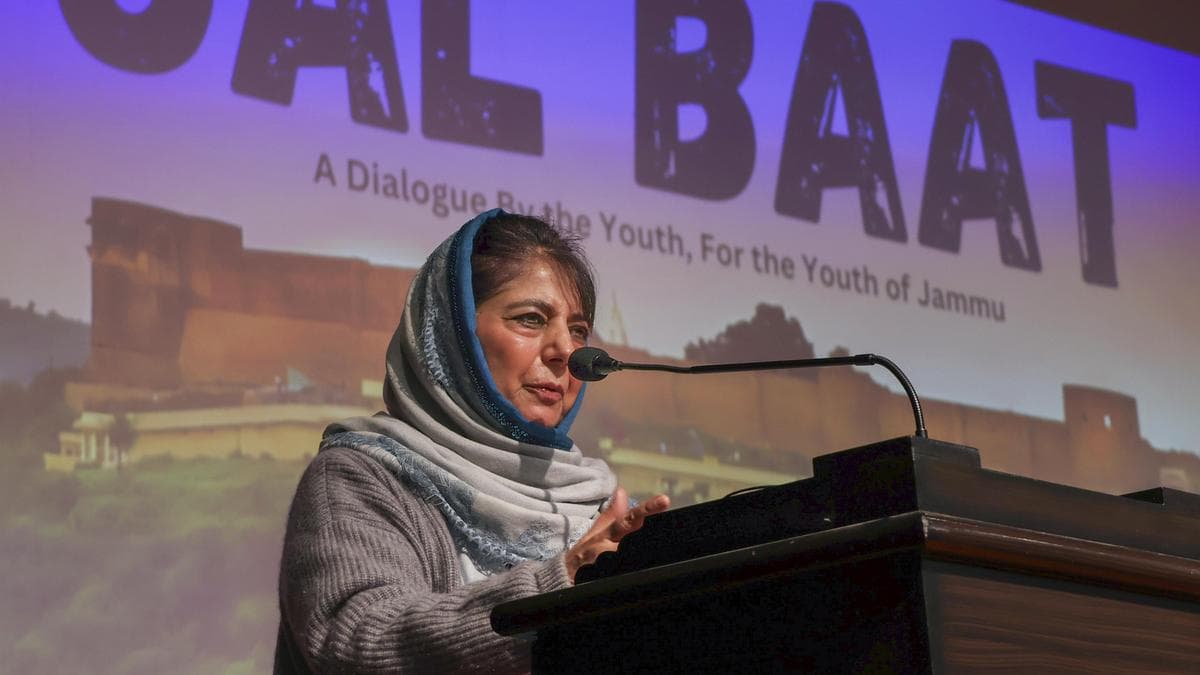
Jammu youth raise reservation policy concerns, citing 30% open merit quota, at PDP's 'Gal Baath' event.
Summary
At the Peoples Democratic Party's (PDP) "Gal Baath" initiative in Jammu, local youth voiced concerns regarding regional issues. A primary point of contention was the existing reservation policy, which speakers argued disadvantages open merit students by allotting them only a 30% quota. This highlights ongoing debates on equity and access in public opportunities within the region, relevant for understanding socio-political dynamics for competitive exams.
Key Points
- 1The initiative where youth raised concerns was named "Gal Baath".
- 2The "Gal Baath" initiative was organized by the Peoples Democratic Party (PDP).
- 3The event took place in the Jammu region, addressing local issues.
- 4A major issue highlighted by speakers was the existing reservation policy.
- 5The reservation policy was criticized for putting open merit students at a disadvantage with only a 30% quota.
In-Depth Analysis
The "Gal Baath" initiative, organized by the Peoples Democratic Party (PDP) in Jammu, brought to the forefront a critical and perennially debated issue in India: the efficacy and fairness of the reservation policy. This event serves as a microcosm of broader national discussions on social justice, merit, and regional equity, particularly in the unique context of the Union Territory of Jammu & Kashmir.
**Background Context:**
Jammu & Kashmir (J&K) has a complex socio-political history. Prior to August 2019, it enjoyed special status under Article 370 of the Constitution, granting it significant autonomy and allowing it to frame its own laws, including those pertaining to reservation. The region has historically grappled with issues of regional disparities, with distinct socio-economic and political dynamics in the Jammu, Kashmir, and Ladakh regions. The abrogation of Article 370 and the subsequent reorganization of J&K into two Union Territories (J&K and Ladakh) fundamentally altered its administrative and legal landscape, bringing it more in line with central laws and policies. This transition has led to a re-evaluation and often, a re-alignment of existing policies, including those related to affirmative action and public employment.
**What Happened:**
At the PDP's "Gal Baath" (meaning 'discussion' or 'dialogue') initiative in Jammu, local youth were provided a platform to voice their concerns. The central grievance highlighted by several speakers was the existing reservation policy, which they argued disadvantaged "open merit" students by effectively limiting their access to opportunities through a 30% quota. This implies that a significant portion (70%) of positions in public services or educational institutions are reserved for various categories like Scheduled Castes (SCs), Scheduled Tribes (STs), Other Backward Classes (OBCs), Residents of Backward Areas (RBAs), Line of Actual Control (LAC) residents, Economically Weaker Sections (EWS), etc. The youth expressed frustration over what they perceive as an unfair system that compromises merit and limits opportunities for those not falling under reserved categories.
**Key Stakeholders Involved:**
1. **Peoples Democratic Party (PDP):** As the organizer, the PDP aims to connect with the local populace, particularly the youth, and articulate their grievances. This initiative helps the party regain political traction and highlight issues that resonate with a significant section of the electorate in the post-Article 370 political landscape.
2. **Youth of Jammu:** These are the primary stakeholders, directly affected by the reservation policies in terms of access to education and government jobs. Their concerns reflect aspirations for equitable opportunities and a sense of being marginalized within the existing framework.
3. **Government of J&K (UT Administration) and Central Government:** They are responsible for formulating and implementing reservation policies. The UT administration, under the direct control of the Central Government, faces the challenge of balancing constitutional mandates for affirmative action with calls for merit-based selections and addressing regional grievances.
4. **Other Political Parties:** Parties like the BJP, Congress, and National Conference also have a vested interest in the issue, often taking stances that align with their respective vote banks or ideological positions on reservation.
**Why This Matters for India:**
This issue holds significant implications for India for several reasons. Firstly, it underscores the ongoing national debate between "social justice" (affirmative action for historically disadvantaged groups) and "merit" (selection based purely on competitive performance). This tension is not unique to J&K but is a recurring theme across Indian states. Secondly, in the context of J&K's integration post-2019, addressing such grievances is crucial for fostering a sense of belonging and trust among the populace, especially the youth. Perceptions of unfairness can fuel regionalism and discontent, potentially hindering the broader goals of national integration and development. Thirdly, equitable access to opportunities is vital for peace and stability. High youth unemployment or perceived injustice in public opportunities can lead to social unrest and alienation, impacting the security and developmental trajectory of the region.
**Historical Context and Constitutional Provisions:**
Reservation in India has its roots in the constitutional commitment to social justice. Articles 15 and 16 of the Indian Constitution prohibit discrimination on grounds of religion, race, caste, sex, or place of birth, but simultaneously enable the state to make special provisions for the advancement of any socially and educationally backward classes of citizens or for the Scheduled Castes and the Scheduled Tribes. Article 16(4) specifically allows for reservation of appointments or posts in favor of any backward class of citizens which, in the opinion of the State, is not adequately represented in the services under the State. The Mandal Commission (1979) recommendations led to the implementation of 27% reservation for Other Backward Classes (OBCs) in central government services. In 2019, the 103rd Constitutional Amendment Act introduced 10% reservation for Economically Weaker Sections (EWS) in general category, further expanding the scope of affirmative action.
Post-2019, the Jammu and Kashmir Reorganisation Act, 2019, brought the UT's reservation policies under the ambit of central laws. Previously, the Jammu and Kashmir Reservation Act, 2004, governed reservation in the erstwhile state. While specific percentages may vary, the fundamental principles of reservation for SCs, STs, and OBCs, along with categories like Residents of Backward Areas (RBA) and those living near the Line of Control (LoC) or International Border (IB), continue to apply. The youth's concern about a 30% open merit quota suggests a significant portion of posts are reserved, leading to competition for a smaller unreserved pool.
**Future Implications:**
The concerns raised at the "Gal Baath" initiative could prompt the UT administration and the Central Government to review existing reservation policies in J&K. This might involve re-evaluating the percentage distribution across various categories, conducting fresh surveys to identify truly backward classes, or implementing reforms to ensure greater transparency and fairness. Politically, such issues can become potent tools for mobilization, influencing electoral outcomes. For the youth, the outcome of this debate will significantly impact their educational and career prospects, shaping their perception of governance and their future in the region. Ultimately, a balanced approach that addresses the aspirations of all sections, upholds constitutional principles, and promotes genuine merit while ensuring social equity, will be crucial for the long-term stability and development of Jammu & Kashmir.
Exam Tips
This topic falls under GS Paper II (Polity & Governance, Social Justice) and GS Paper I (Indian Society). Focus on the constitutional provisions related to reservation (Articles 15, 16, 335) and major judicial pronouncements (e.g., Indra Sawhney case).
Study the history and evolution of reservation policies in India, including the Mandal Commission, EWS reservation, and specific challenges related to J&K's reorganization. Understand the arguments for and against reservation.
Expect analytical questions on the balance between merit and social justice, the impact of reservation policies on specific regions (like J&K), and the role of affirmative action in promoting inclusive growth. Be prepared to critically evaluate government policies.
Related Topics to Study
Full Article
Several speakers highlighted the reservation policy that puts open merit students at a disadvantage with only 30% quota