



Relevant for Exams
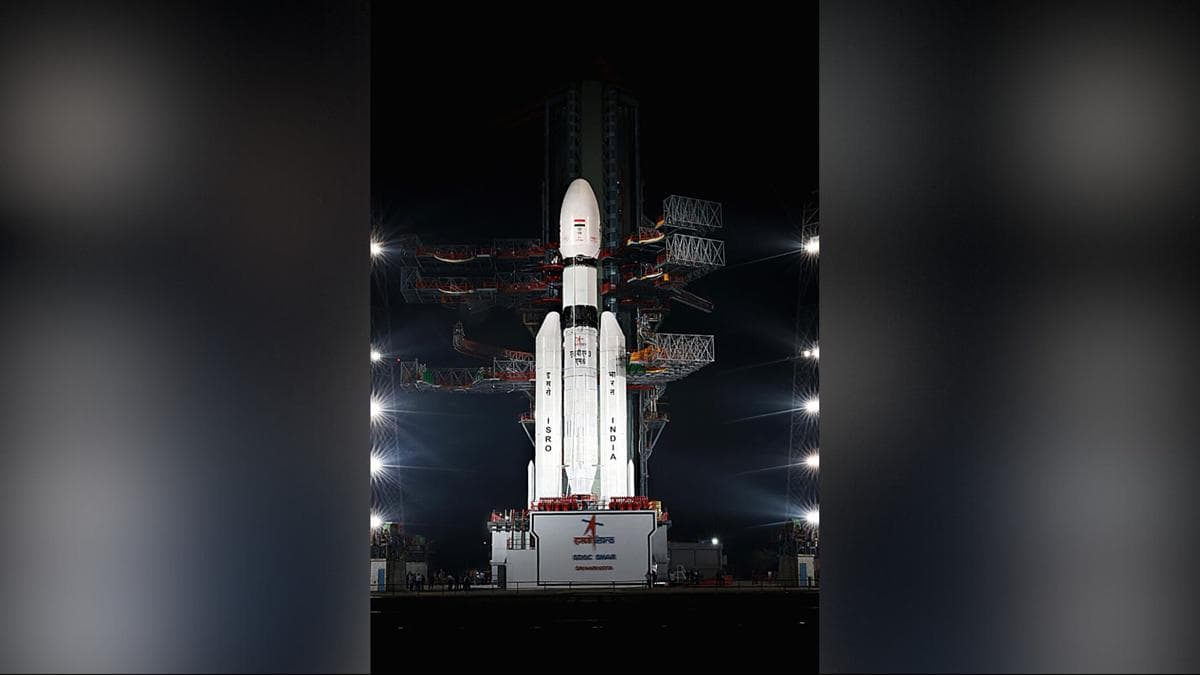
ISRO's LVM3 to launch next-gen communication satellite on Dec 24 for global smartphone broadband.
Summary
ISRO's LVM3 launch vehicle is scheduled to deploy a next-generation communication satellite on December 24. This historic mission aims to provide high-speed cellular broadband directly to smartphones worldwide, signifying a major leap in global digital connectivity. This development is crucial for understanding India's advancements in space technology and its impact on telecommunications for competitive exams.
Key Points
- 1ISRO's LVM3 launch vehicle is slated to deploy a next-generation communication satellite.
- 2The launch of this significant mission is scheduled for December 24.
- 3The satellite is designed to provide high-speed cellular broadband directly to smartphones.
- 4The service aims to deliver broadband connectivity worldwide.
- 5This mission is described as 'historic' for its role in enhancing global digital access.
In-Depth Analysis
India's space agency, ISRO, is once again set to make headlines with the scheduled launch of a next-generation communication satellite by its powerful LVM3 launch vehicle on December 24. This isn't just another satellite launch; it's a 'historic mission' poised to revolutionize global digital connectivity by providing high-speed cellular broadband directly to smartphones worldwide. For competitive exam aspirants, understanding this development goes beyond mere facts; it delves into India's strategic vision, technological prowess, and its evolving role on the global stage.
**The Journey to the Stars: A Historical Perspective**
India's space journey began with humble origins, driven by the vision of Dr. Vikram Sarabhai. The Indian Space Research Organisation (ISRO), established in 1969, has come a long way since its first satellite, Aryabhata, launched in 1975 by a Soviet rocket. The 1980s saw the development of indigenous launch capabilities with the SLV-3, followed by the workhorse PSLV (Polar Satellite Launch Vehicle) and the heavier GSLV (Geosynchronous Satellite Launch Vehicle). Communication satellites have been a cornerstone of ISRO's efforts, starting with the INSAT series in the early 1980s, which transformed television, radio broadcasting, and telecommunications across India. These satellites have been instrumental in bridging the digital divide and enabling critical services like disaster management and remote education. The LVM3 (Launch Vehicle Mark-3), formerly known as GSLV Mk-III, is ISRO's heaviest operational launch vehicle, designed to carry heavy communication satellites into Geosynchronous Transfer Orbit (GTO) and has even been used for the Chandrayaan-2 and OneWeb missions, showcasing its reliability and capacity.
**The Mission Unpacked: What's Happening?**
This particular mission involves the deployment of a 'next-generation communication satellite' by the LVM3. The key differentiator here is its capability to deliver high-speed cellular broadband *directly to smartphones*. Traditionally, satellite broadband required specialized terminals or dishes. This new technology promises to bypass the need for extensive terrestrial infrastructure in remote or underserved areas, offering ubiquitous connectivity. By operating globally, it signifies a major leap towards truly borderless digital access, potentially transforming how people connect, work, and access information across continents.
**Who's Driving This? Key Stakeholders**
At the forefront is **ISRO**, the primary research and development agency under the **Department of Space**, Government of India. ISRO designs, develops, and launches the satellites and launch vehicles. Complementing ISRO is **NewSpace India Limited (NSIL)**, ISRO's commercial arm, responsible for marketing ISRO's products and services, including launch services and satellite applications, globally. This mission likely involves NSIL in its commercial aspects, potentially collaborating with global telecom operators. Furthermore, **IN-SPACe (Indian National Space Promotion and Authorization Centre)** plays a crucial role as an autonomous nodal agency to promote, enable, authorize, and supervise non-governmental entities' activities in the Indian space sector, fostering private sector participation and innovation. The ultimate beneficiaries are global consumers and telecom companies seeking to expand their reach.
**Why This Matters Immensely for India**
This mission holds profound significance for India across multiple dimensions:
* **Economic Impact**: By offering direct-to-smartphone broadband, India positions itself as a key player in the global space-based internet market, a rapidly expanding sector. This can generate substantial revenue through NSIL's commercial ventures, boost the 'Make in India' initiative in advanced manufacturing, and create new jobs in technology and services. It aligns perfectly with the 'Digital India' vision, aiming for a digitally empowered society and knowledge economy.
* **Strategic & Political Influence**: Such advanced capabilities enhance India's 'soft power' and technological leadership on the international stage. It demonstrates India's self-reliance ('Atmanirbhar Bharat') in critical space technology and its ability to contribute to global digital infrastructure. This strengthens India's strategic autonomy and its standing in international forums dealing with space and digital governance.
* **Social Transformation**: The ability to provide high-speed internet directly to smartphones, especially in remote and rural areas, can bridge the persistent digital divide within India and globally. This has far-reaching implications for education, telemedicine, financial inclusion, disaster warning systems, and e-governance, ensuring equitable access to information and opportunities.
**Constitutional and Policy Underpinnings**
While there isn't a specific constitutional article dedicated to space technology, the spirit of scientific advancement is enshrined in the Indian Constitution. **Article 51A(h)**, a Fundamental Duty, mandates citizens to 'develop the scientific temper, humanism and the spirit of inquiry and reform.' This mission embodies the nation's commitment to scientific progress. Furthermore, the **Indian Space Policy 2023** is a landmark document that aims to liberalize the space sector, encouraging greater private sector participation and innovation. It seeks to increase India's share in the global space economy and leverage space technology for national development. This mission is a direct outcome of India's progressive space policies and its push for 'Digital India', a flagship program launched in 2015 to transform India into a digitally empowered society and knowledge economy.
**Looking Ahead: Future Implications**
This direct-to-smartphone broadband capability marks a significant step towards a future where ubiquitous, high-speed internet is a reality, irrespective of geographical location. It will intensify competition in the global satellite internet market, potentially leading to more affordable and accessible services. For India, it solidifies its position as a reliable and advanced spacefaring nation capable of delivering cutting-edge solutions. The future will likely see more public-private partnerships, further integration of space technology into everyday life (e.g., 5G/6G networks from space), and India playing a pivotal role in setting standards and governance for the global space economy. This mission is not just about a satellite; it's about shaping the digital future for billions.
Exam Tips
This topic primarily falls under the 'Science & Technology' section of the UPSC Civil Services Exam (Prelims and Mains GS-III), SSC, State PSCs, and other competitive exams. For Banking and Railway exams, it's relevant under 'Current Affairs' and 'General Awareness'.
When studying, focus on the 'why' and 'how': Why is this mission historic (direct-to-smartphone, global reach)? How does it fit into India's broader space strategy and digital initiatives? Understand the difference between various launch vehicles (PSLV, GSLV, LVM3) and satellite types (communication, earth observation, navigation).
Common question patterns include: MCQs on facts (e.g., 'What is LVM3?', 'What is the primary objective of this satellite?'), descriptive questions on the significance of India's space program for socio-economic development, and policy-related questions on India's Space Policy 2023 or the role of NSIL/IN-SPACe.
Related Topics to Study
Full Article
The historic mission will deploy the next-generation communication satellite designed to provide high-speed cellular broadband directly to smartphones worldwide