



US culture wars article title provided, but no content available for factual extraction or analysis.
Summary
The provided input indicates an article titled "Is the young, white male being pushed out? A new article is latest lightning rod in US culture wars." However, as the content is explicitly stated as "No content available," no specific facts, arguments, or detailed analysis can be extracted for competitive exam preparation purposes, making it impossible to assess its significance.
Key Points
- 1The article's title is 'Is the young, white male being pushed out? A new article is latest lightning rod in US culture wars'.
- 2The category of the article is specified as 'international'.
- 3The source of the article is identified as 'indianexpress.com'.
- 4The critical input 'Content: No content available' prevents any factual extraction from the article's body.
- 5No specific details regarding the 'new article' or the cultural debate mentioned in the title are provided in the input.
In-Depth Analysis
The article title, "Is the young, white male being pushed out? A new article is latest lightning rod in US culture wars," immediately signals a deep dive into the ongoing and often contentious 'culture wars' prevalent in the United States. While the specific content of the article is unavailable, the title itself is a powerful indicator of the themes it likely addresses: identity politics, perceived reverse discrimination, and the evolving landscape of privilege and marginalization in Western societies. For Indian competitive exam aspirants, understanding such global phenomena is crucial not just for international relations but also for drawing parallels with India's own complex societal dynamics.
**Background Context and What Happened (Interpreted from Title):**
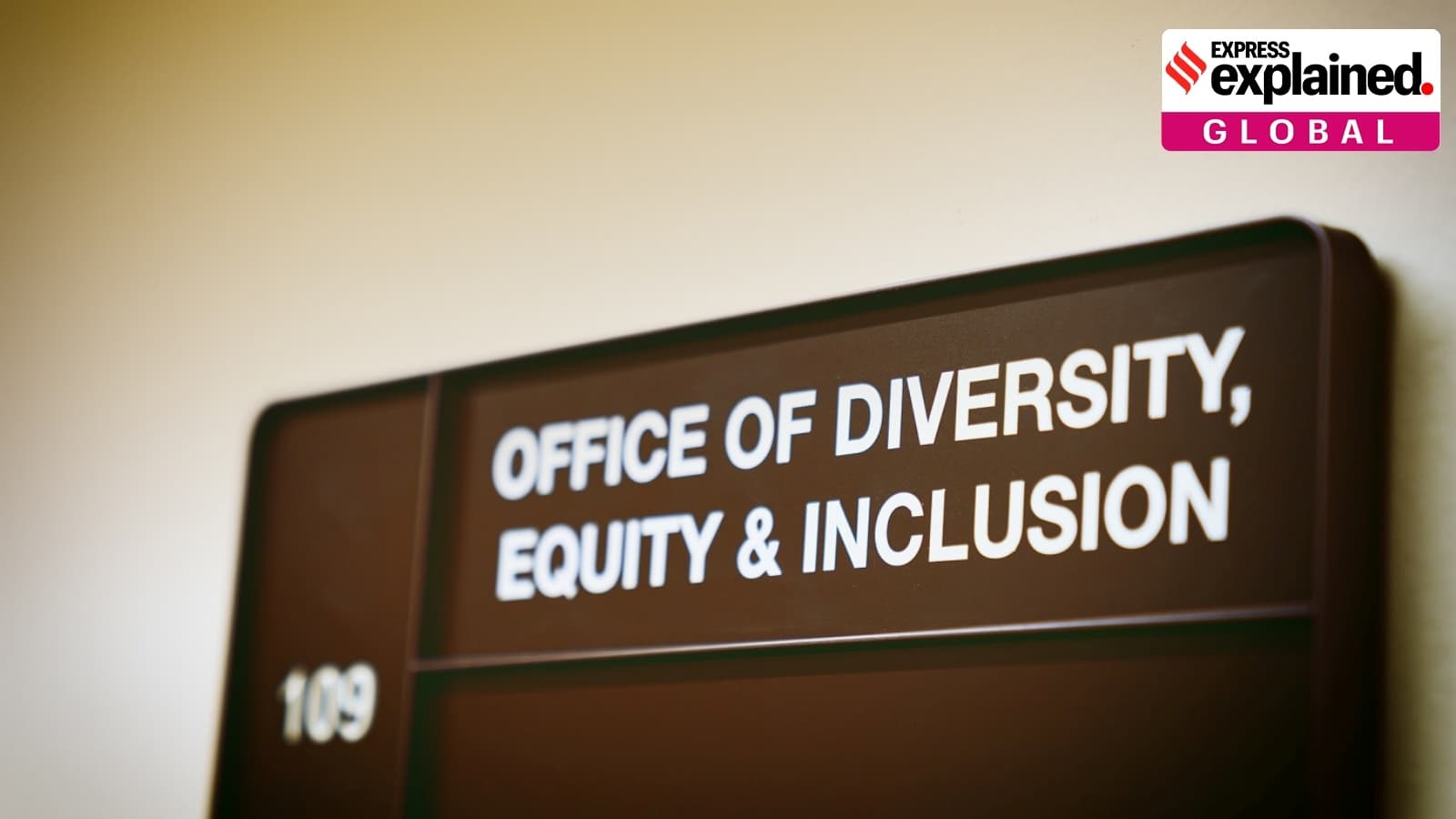
The concept of 'culture wars' in the US dates back decades, often traced to the social upheavals of the 1960s and 70s, which challenged traditional values, norms, and hierarchies. Initially centered on issues like abortion, LGBTQ+ rights, and religious freedom, these wars have evolved to encompass debates on race, gender, historical narratives, and affirmative action. The phrase "Is the young, white male being pushed out?" taps into a specific narrative within these culture wars, suggesting a perceived threat to the traditional status or opportunities of a demographic group (young, white males) that historically held a dominant position in society. This narrative often emerges as a reaction to the rise of social justice movements and policies aimed at promoting diversity, equity, and inclusion (DEI) for historically marginalized groups. The "new article" becoming a "lightning rod" indicates that it likely presented arguments or data that either validated these feelings of displacement or critically examined the implications of DEI initiatives, thereby igniting further debate and polarization.
**Key Stakeholders Involved:**
Several groups are central to this discourse. On one side are **proponents of social justice and DEI initiatives**, including various civil rights organizations, feminist groups, LGBTQ+ advocacy groups, minority communities, and progressive political factions. They argue for systemic changes to address historical injustices and ensure equitable opportunities for all. On the other side are **critics of what they perceive as 'woke' culture or 'reverse discrimination,'** often encompassing conservative media, certain political figures, and segments of the white male population who feel that their interests are being overlooked or actively undermined. Academic institutions, corporations adopting DEI policies, and the broader media also play significant roles, either by championing or critiquing these shifts, thereby shaping public opinion and policy.
**Why This Matters for India:**
While the article is US-centric, its underlying themes resonate deeply with India's socio-political landscape. India, too, grapples with complex issues of identity, historical disadvantage, and affirmative action. Debates around reservations (affirmative action) for Scheduled Castes, Scheduled Tribes, and Other Backward Classes, women's reservation bills, and minority rights often mirror the 'culture war' dynamics seen in the US. Understanding these global trends helps Indian aspirants:
1. **Contextualize Domestic Debates:** It offers a comparative lens to analyze India's own discussions on caste, religion, and gender-based reservations and social justice.
2. **Understand Global Soft Power:** The social cohesion or fragmentation within a major global power like the US can impact its foreign policy, economic stability, and overall global influence, which in turn affects India's international relations and economic partnerships.
3. **Analyze Information Warfare:** The role of media in turning an article into a "lightning rod" highlights how narratives are constructed and amplified, a critical aspect of modern information environments.
**Historical Context and Future Implications:**
The historical context for such debates in the US includes the Civil Rights Movement of the 1950s and 60s, the feminist movements, and the subsequent expansion of rights for various minority groups. Each step towards greater equality has often been met with a backlash or a counter-narrative from those who feel their traditional status is being eroded. The future implications point towards continued political polarization, potential shifts in policy around DEI in both public and private sectors, and an ongoing struggle over cultural narratives. This could influence electoral outcomes, corporate hiring practices, and educational curricula.
**Related Constitutional Articles, Acts, or Policies (for India):**
The Indian Constitution, through its commitment to social justice and equality, provides a robust framework for addressing issues similar to those in the US 'culture wars':
* **Article 14:** Guarantees equality before the law and equal protection of the laws, forming the bedrock of non-discrimination.
* **Article 15:** Prohibits discrimination on grounds of religion, race, caste, sex, or place of birth. Crucially, **Article 15(4)** allows the state to make special provisions for the advancement of any socially and educationally backward classes of citizens or for the Scheduled Castes and the Scheduled Tribes. **Article 15(5)** further extends this to admissions in educational institutions, including private ones. These provisions are the constitutional basis for India's affirmative action (reservation) policies.
* **Article 16:** Ensures equality of opportunity in matters of public employment. **Article 16(4)** allows the state to make provisions for the reservation of appointments or posts in favor of any backward class of citizens which, in the opinion of the State, is not adequately represented in the services under the State.
* **Directive Principles of State Policy (Part IV):** Articles like **Article 38** (State to secure a social order for the promotion of welfare of the people) and **Article 46** (Promotion of educational and economic interests of Scheduled Castes, Scheduled Tribes and other weaker sections) underscore the state's responsibility to mitigate social and economic inequalities.
These constitutional provisions, along with various acts like The Scheduled Castes and the Scheduled Tribes (Prevention of Atrocities) Act, 1989, and policies related to women's empowerment, directly address the challenges of historical disadvantage and the pursuit of social equity, providing a domestic context for understanding the international discourse on identity and fairness.
Exam Tips
This topic falls under GS Paper I (Indian Society, World History/Contemporary Issues), GS Paper II (Social Justice, Polity, International Relations), and Essay. Students should focus on understanding the nuances of identity politics globally and its parallels with India's caste, gender, and religious dynamics.
Study related topics like affirmative action (reservations in India), the evolution of social justice movements (both in India and globally, e.g., Civil Rights Movement, Feminist Movements), and the role of media and social media in shaping public discourse and polarization. Compare and contrast approaches to social equity in different democracies.
Common question patterns include analytical questions on the impact of identity politics on governance, social cohesion, and international relations. Expect questions requiring a comparative analysis of social justice policies between India and other countries, or essay topics on the challenges and opportunities presented by diverse societies.
Familiarize yourself with the specific constitutional articles related to equality and affirmative action in India (Articles 14, 15, 16, and relevant Directive Principles). Understand the historical context and landmark judgments related to reservation policies, as these are frequently tested.