



Relevant for Exams
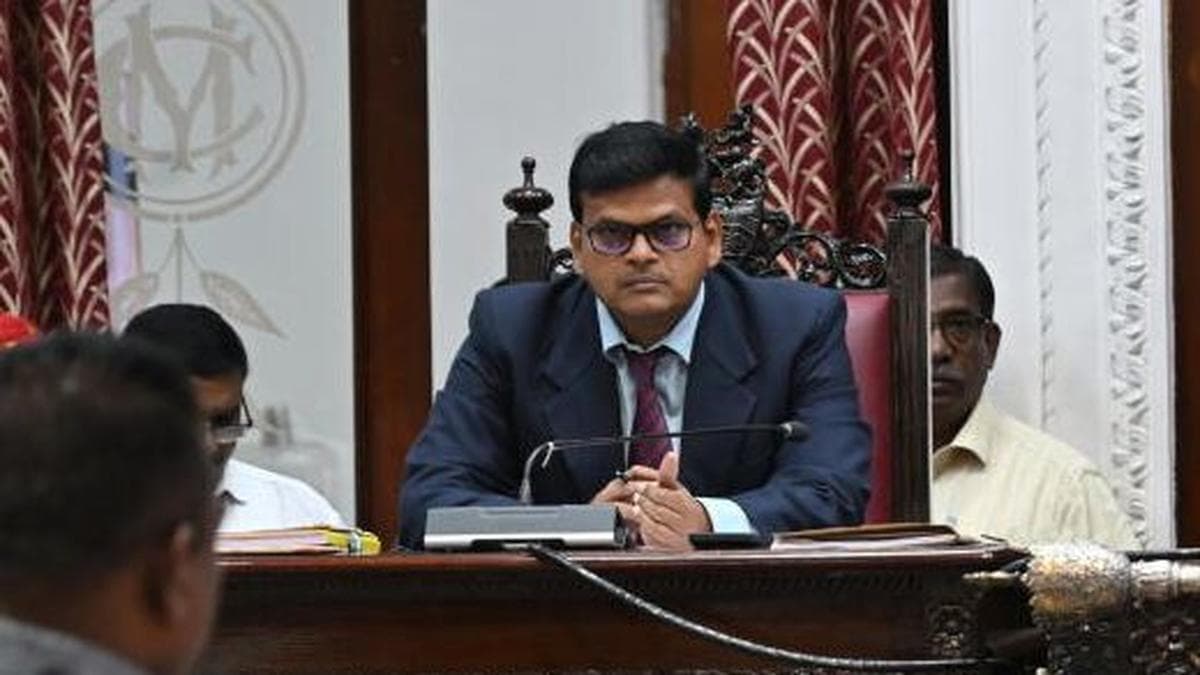
GCC Commissioner orders probe into bank fraud by park contractors over unpaid worker salaries in Chennai.
Summary
The Greater Chennai Corporation (GCC) Commissioner has initiated a police investigation into suspected bank fraud involving private contractors responsible for park maintenance. These agencies are accused of submitting fake bank transaction documents, leading to the non-payment of salaries to park workers. This incident highlights critical issues of financial transparency, contractor accountability, and worker welfare in public-private partnerships, making it relevant for topics like governance and ethics in competitive exams.
Key Points
- 1The investigation was initiated by the Greater Chennai Corporation (GCC) Commissioner.
- 2The probe targets suspected bank fraud perpetrated by private contractors.
- 3These contractors are responsible for the maintenance of parks in Chennai.
- 4They allegedly submitted fake bank transaction documents to the GCC.
- 5The alleged fraud resulted in park workers not receiving their due salaries.
In-Depth Analysis
The recent initiative by the Greater Chennai Corporation (GCC) Commissioner to launch a police investigation into suspected bank fraud by private contractors managing city parks brings to light critical issues at the intersection of public governance, private accountability, and social justice. This incident serves as a stark reminder of the vulnerabilities inherent in public-private partnerships (PPPs) and the persistent challenge of ensuring probity and worker welfare in government contracts.
**Background Context: The Landscape of Public-Private Partnerships in Urban Governance**
Urban local bodies (ULBs) across India, like the GCC, increasingly rely on private contractors to deliver essential municipal services, ranging from waste management and street lighting to the upkeep of public spaces such as parks. This trend gained significant momentum post-economic liberalization in the early 1990s, driven by the desire for improved efficiency, specialized expertise, and cost-effectiveness that private sector involvement purportedly offers. The 74th Constitutional Amendment Act of 1992 significantly empowered ULBs (like Municipal Corporations), entrusting them with a wider array of functions, many of which are now outsourced. While PPPs can bridge resource gaps and enhance service delivery, they also introduce complexities in oversight, accountability, and the potential for rent-seeking and corruption, especially when robust monitoring mechanisms are lacking.
**What Happened: A Case of Alleged Financial Malfeasance and Worker Exploitation**
The core of the matter involves private agencies contracted by the GCC for park maintenance. These agencies are accused of submitting fraudulent bank transaction documents to the Corporation, presumably to claim payments for work or salaries that were never actually disbursed. The most egregious consequence of this alleged fraud is the non-payment of salaries to the park workers, who are often daily wage earners or contractual staff with limited bargaining power. This indicates a clear case of financial misappropriation, where public funds intended for service delivery and worker remuneration were allegedly siphoned off, leaving the most vulnerable stakeholders – the workers – in distress. The GCC Commissioner's decision to involve the City Police underscores the seriousness of the allegations and the need for a criminal investigation.
**Key Stakeholders Involved:**
1. **Greater Chennai Corporation (GCC):** As the contracting authority and the urban local body responsible for public services, the GCC is a primary stakeholder. It initiated the probe, highlighting its role in ensuring accountability and safeguarding public funds.
2. **GCC Commissioner:** The administrative head of the Corporation, whose direct intervention signals a commitment to addressing corruption and ensuring transparency within the system.
3. **Private Contractors/Agencies:** The accused parties, responsible for park maintenance. Their alleged actions demonstrate a breach of contract, financial fraud, and exploitation of labour.
4. **Park Workers:** The direct victims of the alleged fraud, denied their rightful wages, impacting their livelihoods and fundamental rights.
5. **City Police:** The investigating agency, tasked with uncovering the truth, gathering evidence, and prosecuting the culprits under relevant laws.
6. **Public/Taxpayers:** Ultimately, they are the benefactors of public services and the source of public funds. Fraudulent practices lead to a misuse of taxpayer money and degradation of public infrastructure.
**Why This Matters for India: Implications for Governance, Labour, and Public Finance**
This incident carries significant implications for several critical aspects of Indian governance and society. Firstly, it exposes weaknesses in **governance and oversight** mechanisms within ULBs. The ability of contractors to submit 'fake documents' points to a lack of robust verification processes, which are crucial in managing public funds. This undermines the principles of good governance, transparency, and accountability, which are essential for effective public administration.
Secondly, the non-payment of workers' salaries directly impacts **labour welfare and social justice**. In India, a significant portion of the workforce, especially in the informal and contractual sectors, faces exploitation. This incident highlights a systemic issue where workers' fundamental rights, including the right to fair wages (protected under **Article 21** of the Constitution, which includes the right to live with dignity, and DPSP **Articles 39(a)** and **43**), are violated. Such practices are also a direct contravention of the **Payment of Wages Act, 1936**, and the **Minimum Wages Act, 1948**.
Thirdly, it raises concerns about **financial integrity and public finance management**. The alleged bank fraud involves the misuse of public funds, which are meant for the betterment of citizens. This can lead to a loss of public trust in government contracting processes and the overall financial prudence of ULBs. If public funds are siphoned off, it directly impacts the quality and availability of public services.
**Historical Context and Future Implications:**
Historically, allegations of corruption, kickbacks, and substandard work in public contracts have been a recurring challenge in India. The shift to PPPs, while aiming for efficiency, has often complicated accountability lines. This incident might prompt ULBs to implement more stringent contractor vetting processes, leverage technology for payment tracking (e.g., direct benefit transfer to workers' accounts, e-governance platforms for contract management), and enhance audit mechanisms. The legal repercussions for the involved agencies under the **Indian Penal Code (IPC)** for cheating and forgery (e.g., Sections 420, 463, 464, 468) and potentially the **Prevention of Corruption Act, 1988**, if public officials are found complicit, could set a precedent. The outcome of this investigation will influence future contracting policies, potentially leading to greater emphasis on digital transparency and direct payment to workers to prevent such frauds, thereby strengthening the social security net for contractual labourers.
Exam Tips
**UPSC GS Paper II (Governance, Polity, Social Justice) & GS Paper IV (Ethics):** This topic fits perfectly under 'Governance' (accountability, transparency, role of ULBs, PPPs), 'Social Justice' (labour rights, worker exploitation), and 'Ethics' (probity in governance, ethical dilemmas in public service). Expect questions on the challenges of PPPs, measures for good governance, and case studies on ethical issues in public contracting.
**Related Topics for Comprehensive Study:** Study the 74th Constitutional Amendment Act and the structure and functions of Urban Local Bodies (ULBs). Understand the various models of Public-Private Partnerships (PPPs) in India, their benefits, and inherent challenges. Familiarize yourself with key labour laws like the Payment of Wages Act, Minimum Wages Act, and Contract Labour (Regulation and Abolition) Act.
**Common Question Patterns:** Questions could be analytical, asking you to critically evaluate the role of ULBs in ensuring accountability in PPPs. There might be case studies on corruption in public contracts, requiring you to suggest administrative and legal remedies. Direct questions on constitutional provisions related to labour rights or municipal governance are also possible. For instance, 'Discuss the challenges faced by Urban Local Bodies in ensuring transparency and accountability in public-private partnerships, with suitable examples.'
Related Topics to Study
Full Article
While workers at the parks did not receive salaries, the private agency submitted fake documents of bank transaction