



Relevant for Exams
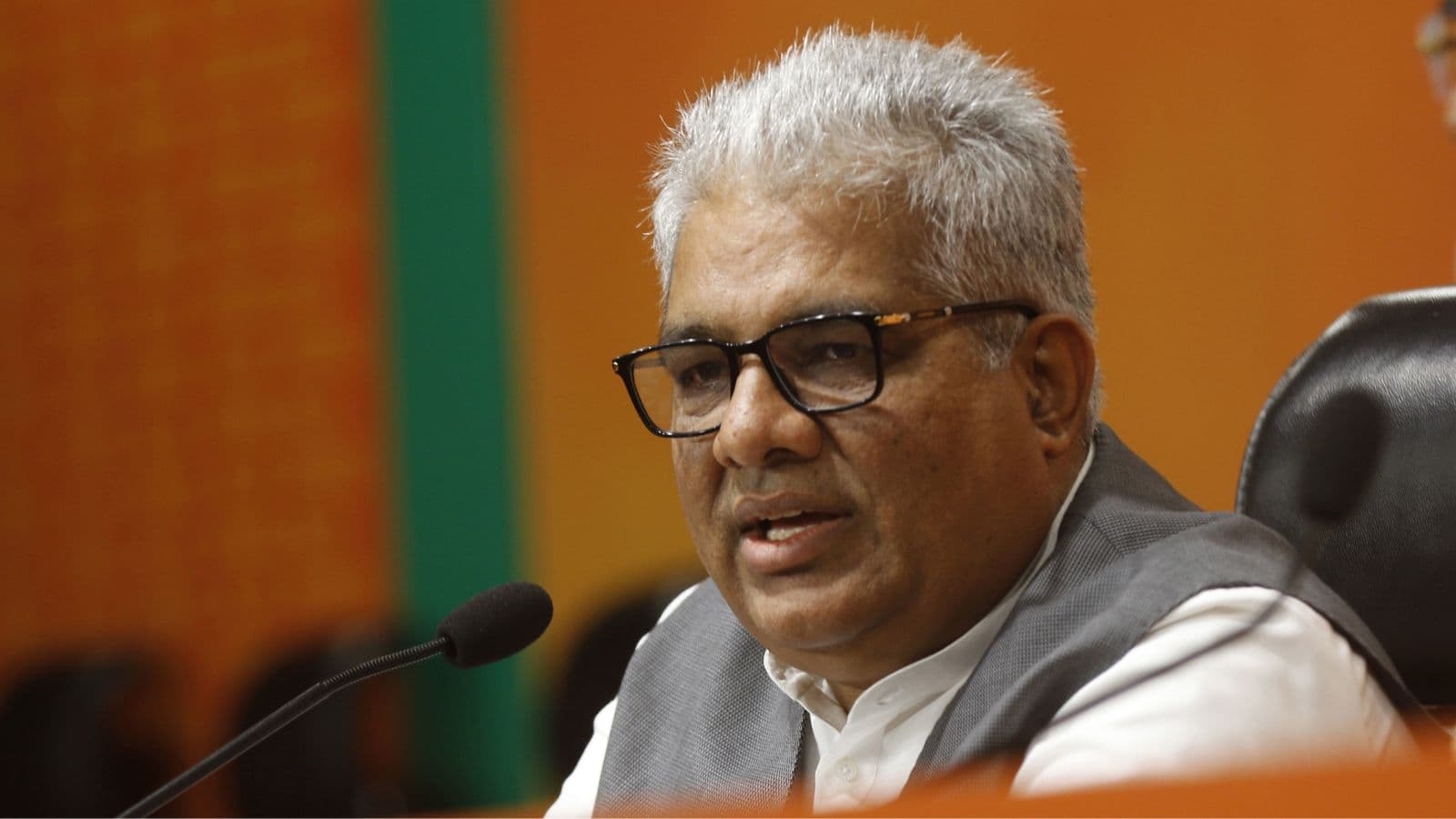
Environment Minister confirms no relaxation for mining in ecologically sensitive Aravalli range.
Summary
India's Environment Minister has publicly stated that there will be no relaxation of mining regulations in the Aravalli mountain range. This crucial policy decision comes amidst public scrutiny and environmental concerns, underscoring the government's commitment to protecting this ancient and ecologically vital geological formation. It highlights the ongoing balance between economic activity and environmental conservation, a key topic for competitive exams focusing on geography, environment, and government policy.
Key Points
- 1India's Environment Minister has publicly affirmed that there will be no relaxation of existing regulations for mining activities in the Aravalli mountain range.
- 2The Aravalli range is one of the world's oldest fold mountain systems, extending approximately 692 km across Gujarat, Rajasthan, Haryana, and Delhi.
- 3The Minister's statement was made while 'facing flak,' indicating significant public and environmental concern regarding potential mining impacts.
- 4Protection of the Aravallis is vital for biodiversity, groundwater recharge, and as a natural barrier against desertification, especially for the National Capital Region.
- 5This policy decision underscores the government's focus on environmental governance and sustainable development in critical ecological zones.
In-Depth Analysis
The statement by India's Environment Minister, affirming 'no relaxation for mining in Aravallis,' is a critical policy declaration that resonates deeply with India's environmental governance and sustainable development goals. This commitment comes amidst increasing pressure from various quarters, highlighting the perpetual tug-of-war between economic growth and ecological preservation.
**Background Context: The Ancient Aravallis Under Threat**
The Aravalli mountain range, one of the world's oldest fold mountains, predates the Himalayas. Stretching approximately 692 km across Gujarat, Rajasthan, Haryana, and Delhi, it serves as a vital ecological corridor and a natural green barrier. For the National Capital Region (NCR), it acts as a crucial 'green lung,' mitigating air pollution, recharging groundwater, and preventing the eastward spread of the Thar Desert. Its diverse ecosystems support unique biodiversity, including leopards, hyenas, and various bird species. Historically, the Aravallis have been subjected to extensive mining for minerals like marble, granite, sandstone, and various minor minerals. This activity, often unregulated or illegal, has led to severe environmental degradation, including deforestation, soil erosion, groundwater depletion, and loss of biodiversity. The 'flak' the Minister faced likely stemmed from persistent public and environmental activist concerns regarding the ecological damage caused by mining and potential pressures from the mining lobby for policy relaxations.
**What Happened: A Firm Stand for Conservation**
The Environment Minister's public affirmation signifies a strong policy stance against further environmental degradation in this ecologically sensitive region. It indicates the government's recognition of the Aravallis' irreplaceable ecological services and the severe consequences of unchecked exploitation. This statement effectively signals that environmental protection will take precedence over short-term economic gains from mining in this particular zone, at least for the foreseeable future. It aims to reassure environmentalists and the public that the government is committed to upholding environmental regulations.
**Key Stakeholders Involved**
Several stakeholders are directly impacted by or involved in this decision. The **Ministry of Environment, Forest and Climate Change (MoEFCC)** is the primary policymaker and regulator. **State Governments** (Rajasthan, Haryana, Gujarat, Delhi) play a crucial role in granting mining leases and enforcing environmental norms, often facing the direct conflict between revenue generation and environmental protection. The **mining industry** and associated businesses are economic stakeholders, advocating for access to mineral resources. **Local communities** residing in and around the Aravallis are directly affected by mining activities, facing issues like dust pollution, water scarcity, and displacement, but also sometimes relying on mining for livelihoods. **Environmental activists and Non-Governmental Organizations (NGOs)** continuously monitor and advocate for the Aravallis' protection, often resorting to legal action to ensure compliance with environmental laws. Finally, the **judiciary**, particularly the **Supreme Court** and the **National Green Tribunal (NGT)**, has played a pivotal role in issuing directives and judgments to curb illegal mining and ensure environmental protection in the Aravallis, often acting as a last resort for environmental justice.
**Why This Matters for India: Ecological Security and Sustainable Development**
This policy decision holds immense significance for India. Ecologically, protecting the Aravallis is critical for **water security**, especially for the water-stressed regions of Rajasthan and Haryana, and for groundwater recharge for the NCR. It is vital for **biodiversity conservation**, safeguarding unique flora and fauna. As a natural barrier, it helps combat **desertification** and mitigates the impact of dust storms originating from the Thar Desert. From a governance perspective, it underscores the government's commitment to **environmental rule of law** and **sustainable development**, balancing economic aspirations with ecological imperatives. It reflects India's broader commitment to international environmental goals, including the **Sustainable Development Goals (SDGs)**, particularly SDG 15 (Life on Land) and SDG 6 (Clean Water and Sanitation).
**Historical Context and Judicial Interventions**
The Aravallis' protection has a long history of legal battles. The Supreme Court of India has intervened multiple times, notably in the landmark **M.C. Mehta vs. Union of India (1996)** case, which led to significant restrictions on mining in the Aravallis. Subsequent orders in 2009 and 2018 further highlighted the issue of illegal mining and the need for stricter enforcement. The apex court had, in 2018, directed Rajasthan and Haryana to stop illegal mining, emphasizing the ecological fragility of the range. These judicial pronouncements have significantly shaped environmental policy in the region, often pushing governments to take a firmer stand.
**Future Implications: Enforcement and Green Alternatives**
The Minister's statement sets a clear policy direction, but the challenge lies in its effective implementation and stringent enforcement. Future implications include increased scrutiny on existing mining operations, potential for more robust environmental impact assessments (EIAs), and a push towards exploring alternative, sustainable livelihoods for communities dependent on mining. It could also spur investment in green technologies and restoration efforts for degraded areas. However, constant vigilance from civil society and continued judicial oversight will be crucial to ensure that this policy declaration translates into concrete action on the ground and prevents the resurgence of illegal mining activities. The decision reinforces the idea that India is moving towards a more environmentally conscious development model, recognizing that long-term prosperity is intrinsically linked to ecological health.
**Related Constitutional Articles, Acts, or Policies**
This issue is deeply rooted in India's constitutional and legal framework:
* **Article 48A** of the Directive Principles of State Policy (DPSP) mandates that "The State shall endeavour to protect and improve the environment and to safeguard the forests and wild life of the country."
* **Article 51A(g)** of the Fundamental Duties states that "It shall be the duty of every citizen of India... to protect and improve the natural environment including forests, lakes, rivers and wild life, and to have compassion for living creatures."
* **Environment (Protection) Act, 1986**: This umbrella legislation provides for the protection and improvement of the environment and for matters connected therewith.
* **Forest (Conservation) Act, 1980**: Regulates the diversion of forest land for non-forest purposes, including mining.
* **Mines and Minerals (Development and Regulation) Act, 1957 (MMDR Act)**: Governs mining activities, but its provisions are subject to environmental safeguards.
* **National Green Tribunal Act, 2010**: Established the NGT for effective and expeditious disposal of cases relating to environmental protection and conservation of forests and other natural resources.
Exam Tips
This topic falls under 'Environment & Ecology' and 'Indian Geography' for UPSC CSE, State PSCs, and SSC exams. Be prepared for questions on the geographical extent, ecological significance (biodiversity, water recharge, desertification control), and threats to the Aravallis.
For UPSC Mains (GS-III), questions can be analytical, focusing on the balance between economic development and environmental conservation, the role of judicial activism (Supreme Court, NGT) in environmental protection, and the implementation challenges of environmental policies. Link it to Sustainable Development Goals (SDGs).
Study related constitutional provisions (Article 48A, 51A(g)) and key environmental acts (Environment Protection Act, Forest Conservation Act, MMDR Act, NGT Act). Factual questions might ask about the year these acts were passed or their primary objectives.
Common question patterns include: 'Discuss the ecological significance of the Aravalli range and the challenges it faces from mining activities.' or 'Analyze the role of government policy and judicial intervention in protecting ecologically sensitive zones in India, with special reference to the Aravallis.'