



Relevant for Exams
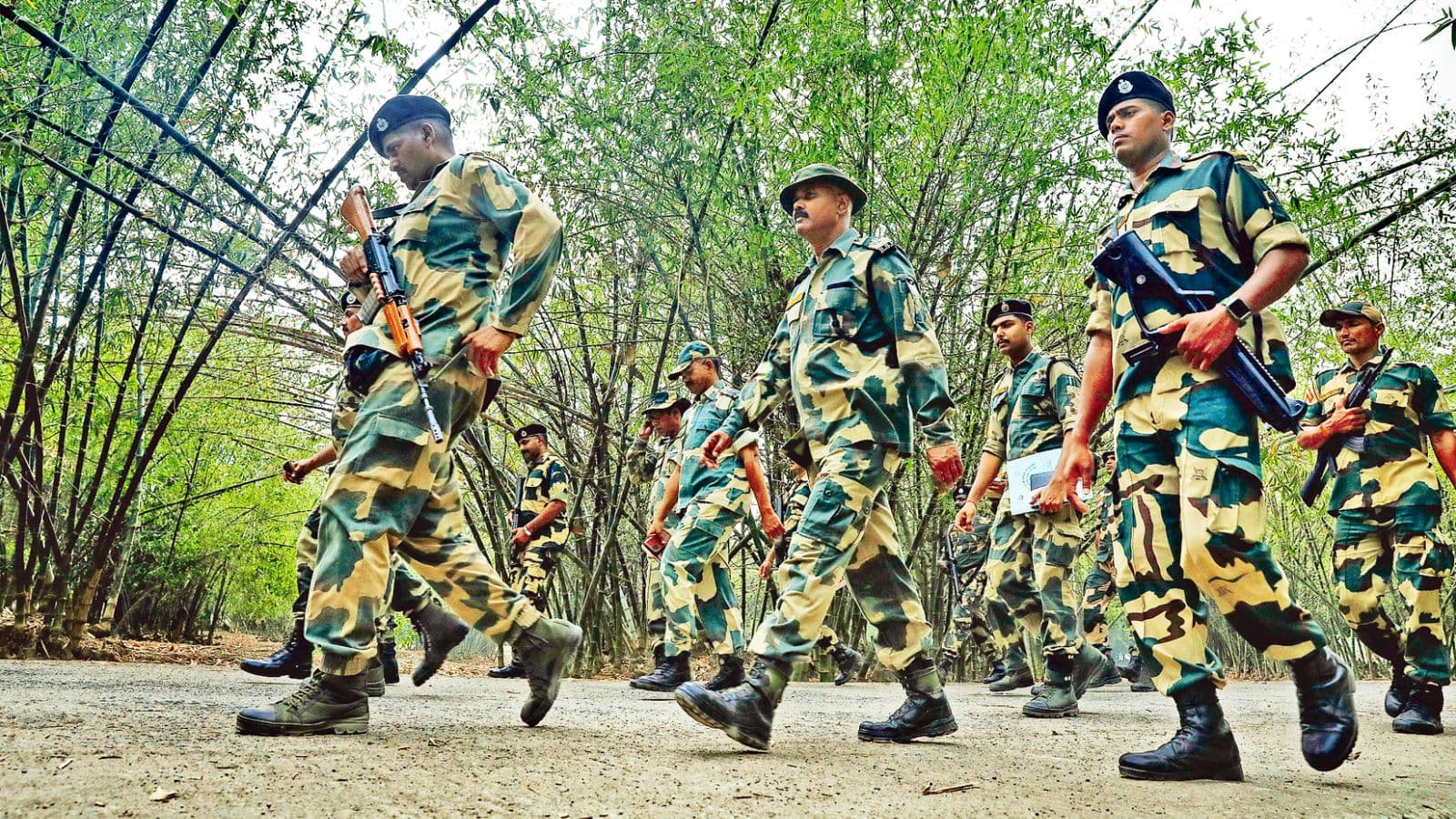
Ex-Agniveer quota for BSF constable posts raised to 50%, boosting post-service opportunities.
Summary
The quota for ex-Agniveers in constable posts within the Border Security Force (BSF) has been increased to 50%. This significant policy change aims to provide enhanced post-service opportunities for Agniveers, ensuring their integration into other security forces. It underscores the government's commitment to the Agniveer scheme and its personnel, making it a crucial development for competitive exams focusing on defence, internal security, and government policies.
Key Points
- 1The reservation quota for ex-Agniveers in constable posts of the Border Security Force (BSF) is now 50%.
- 2The Agniveer scheme was launched by the Ministry of Defence, Government of India, for recruitment into the Indian Armed Forces.
- 3Agniveers serve for a tenure of four years, with a percentage retained for permanent service.
- 4The Border Security Force (BSF) operates under the Ministry of Home Affairs and is one of India's Central Armed Police Forces (CAPFs).
- 5This increased quota aims to provide a clear career path for Agniveers post their four-year service, integrating trained personnel into CAPFs.
In-Depth Analysis
The recent decision to increase the reservation quota for ex-Agniveers in constable posts within the Border Security Force (BSF) to a significant 50% marks a pivotal development in India's defence and internal security policy landscape. This move, spearheaded by the Ministry of Home Affairs, aims to provide a structured and attractive career path for individuals completing their four-year tenure under the Agnipath scheme, thereby addressing a major concern regarding their post-service integration.
To truly understand the implications, we must first delve into the background of the **Agnipath Scheme**. Launched on June 14, 2022, by the Ministry of Defence, the Agnipath scheme revolutionized recruitment into the Indian Armed Forces (Army, Navy, and Air Force). Its primary objective was to create a younger, fitter, and technologically adept fighting force while reducing the burgeoning pension bill. Under this scheme, recruits, termed 'Agniveers,' serve for a fixed tenure of four years. Upon completion, only a quarter (25%) are retained for permanent commission based on merit, while the remaining 75% are demobilized. This aspect, particularly the lack of guaranteed long-term employment, initially sparked widespread protests and concerns among potential recruits and their families regarding their future prospects.
**What happened** is that the government has now substantially enhanced the opportunities for these demobilized Agniveers. Previously, there were provisions for reservations, but this jump to a 50% quota specifically for constable posts in the BSF is unprecedented. The Border Security Force (BSF), one of India's seven Central Armed Police Forces (CAPFs), operates under the administrative control of the Ministry of Home Affairs and plays a crucial role in guarding India's land borders and preventing trans-border crime. By reserving half of its constable vacancies for ex-Agniveers, the government is signalling a strong commitment to their welfare and future.
**Key stakeholders** involved in this decision include the **Ministry of Defence (MoD)**, which conceptualized and implements the Agnipath scheme; the **Ministry of Home Affairs (MoHA)**, under whose purview the BSF and other CAPFs fall, and which is responsible for implementing this quota; the **Border Security Force (BSF)** itself, which will now primarily recruit from this pool; and most importantly, the **Agniveers** and **ex-Agniveers**, who are the direct beneficiaries. This policy demonstrates a coordinated effort between the defence and home ministries to ensure a smoother transition for Agniveers into civilian or other security roles.
**Why this matters for India** is multi-faceted. Socially, it addresses anxieties related to unemployment and reintegration for a significant number of young individuals. It provides a clear, attractive career trajectory post-Agniveer service, potentially boosting morale and recruitment for the Agnipath scheme itself. From a security perspective, it's a strategic move to integrate highly trained, disciplined, and battle-hardened personnel into CAPFs like the BSF. These ex-Agniveers will bring valuable military training, discipline, and experience, enhancing the operational effectiveness and professionalization of the CAPFs. Economically, it ensures productive employment for a skilled workforce, preventing potential social unrest or misuse of their training. Politically, it reinforces the government's resolve to make the Agnipath scheme a success and mitigates criticisms about the scheme's lack of post-service benefits.
While not directly tied to a specific constitutional article for this particular reservation, the broader framework of **reservation policy** in India is rooted in **Articles 15 and 16** of the Constitution, which ensure equality of opportunity in public employment and allow the state to make special provisions for the advancement of any socially and educationally backward classes or for appointments in favor of any backward class of citizens which, in the opinion of the State, is not adequately represented in the services under the State. While ex-Agniveers are not a 'backward class' in the traditional sense, this can be seen as a special provision to facilitate their rehabilitation and utilize their unique training, akin to existing reservations for ex-servicemen. The **Agnipath scheme** itself is a significant policy under the executive powers of the government.
The **future implications** are profound. This move sets a precedent and could pave the way for similar reservation quotas in other Central Armed Police Forces (CAPFs) such as the Central Reserve Police Force (CRPF), Indo-Tibetan Border Police (ITBP), Sashastra Seema Bal (SSB), Central Industrial Security Force (CISF), and Assam Rifles. Such an expansion would create a vast pool of trained personnel for India's internal security apparatus, strengthening its capabilities. It could also influence the long-term structure and recruitment patterns of both the armed forces and the CAPFs, fostering greater synergy between them. However, challenges in integrating military-trained Agniveers into the distinct operational culture of CAPFs, ensuring smooth transition and further specialized training, will need careful management.
In essence, the 50% quota for ex-Agniveers in BSF constable posts is more than just a job reservation; it's a strategic policy move designed to strengthen national security, provide meaningful post-service avenues for youth, and ensure the long-term viability and success of the transformative Agnipath scheme.
Exam Tips
This topic falls under 'Indian Polity & Governance' (UPSC Prelims GS-II, Mains GS-II), 'Internal Security' (UPSC Mains GS-III), and 'Defence' (general awareness for all exams). Focus on the Agnipath scheme's features, the role of different ministries (MoD, MoHA), and the functions of CAPFs.
Study related topics like the Agnipath Scheme (its objectives, tenure, benefits for Agniveers, and criticisms), the structure and roles of various Central Armed Police Forces (CAPFs), and the general principles of reservation policies in India (Articles 15 & 16).
Common question patterns include factual questions (e.g., 'When was Agnipath launched?', 'Which ministry controls BSF?', 'What is the percentage of reservation for ex-Agniveers in BSF?'), analytical questions (e.g., 'Discuss the pros and cons of the Agnipath scheme', 'Analyze the impact of increased quota for ex-Agniveers on internal security'), and policy-based questions (e.g., 'Explain the government's strategy for post-service integration of Agniveers').
Pay attention to the specific percentage (50%) and the force (BSF) mentioned, as these are key factual details. Also, understand the distinction between the Indian Armed Forces (recruiting Agniveers) and CAPFs (offering post-service opportunities).