



Relevant for Exams
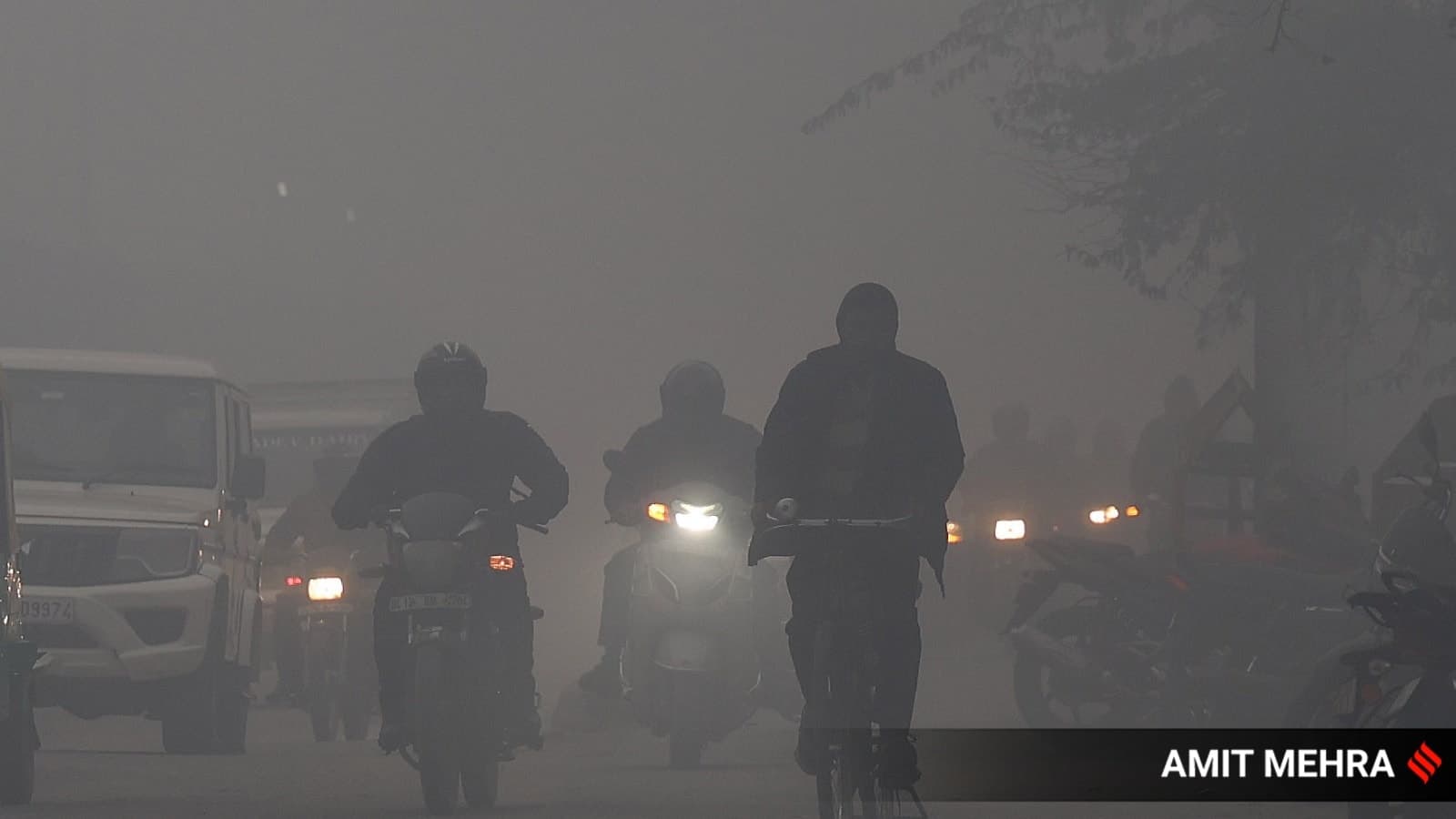
Dense fog and cold wave continue in North India, impacting flight operations.
Summary
North India is currently experiencing dense fog and cold wave conditions, leading to significant disruptions in flight operations. This recurring winter phenomenon highlights the impact of meteorological conditions on daily life and infrastructure. For competitive exams, understanding weather patterns, their causes, and the role of agencies like IMD is crucial.
Key Points
- 1Dense fog conditions are prevalent over parts of North India during winter, significantly reducing visibility.
- 2Cold wave conditions are also affecting North India, characterized by a drop in minimum temperatures.
- 3Flight operations at major airports in North India are frequently impacted due to low visibility caused by dense fog.
- 4The India Meteorological Department (IMD) issues regular forecasts and advisories regarding fog and cold wave conditions.
- 5Such weather phenomena are critical topics for geography and environment sections in competitive exams, focusing on their causes and impacts.
In-Depth Analysis
North India's annual tryst with dense fog and cold wave conditions is a recurring winter phenomenon that significantly impacts daily life, particularly disrupting critical infrastructure like aviation. This year is no exception, with widespread dense fog and biting cold gripping regions, leading to flight delays and cancellations. Understanding the meteorological causes, societal impacts, and governmental responses is crucial for competitive exam aspirants.
The genesis of dense fog in the Indo-Gangetic Plains (IGP) during winter is a fascinating interplay of specific atmospheric conditions. The IGP, being a vast, low-lying area, becomes highly susceptible to radiation fog. This occurs when the ground cools rapidly overnight, typically under clear skies and calm winds, radiating heat away. The air near the surface then cools to its dew point, leading to condensation around abundant dust and pollution particles (condensation nuclei) present in the atmosphere, forming a thick fog layer. Key factors include high humidity, often brought by moisture-laden Western Disturbances moving across North India, and a temperature inversion, where a layer of warm air traps colder, moist air near the surface, preventing vertical mixing and allowing fog to intensify and persist. This phenomenon is exacerbated by the stagnant air conditions prevalent during winter months.
Simultaneously, cold wave conditions are a result of the advection of cold air from the higher latitudes, particularly from the snow-clad Himalayas, towards the plains. Clear skies, low humidity, and calm winds allow for rapid radiative cooling of the ground, leading to a significant drop in minimum temperatures. When minimum temperatures fall significantly below normal for a region, a 'cold wave' is declared by the India Meteorological Department (IMD). These dual phenomena often coincide, creating a challenging environment across the region.
Several key stakeholders are actively involved in managing and mitigating the impacts. The **India Meteorological Department (IMD)**, under the Ministry of Earth Sciences, is the primary agency responsible for weather forecasting and issuing timely advisories and warnings (often color-coded: Yellow, Orange, Red) regarding fog, cold waves, and other extreme weather events. These forecasts are vital for preparedness. **Airport Authorities of India (AAI)** and private airport operators (like Delhi International Airport Limited - DIAL) are crucial for managing flight operations. They implement Low Visibility Procedures (LVPs) and utilize advanced instrument landing systems (ILS) like CAT III-B, which allow aircraft to land in extremely low visibility conditions (down to 50 meters Runway Visual Range). Airlines, in turn, must adapt their schedules, communicate with passengers, and manage crew logistics. Furthermore, **National Disaster Management Authority (NDMA)** and State Disaster Management Authorities (SDMAs), though primarily focused on larger-scale disasters, play a role in broader preparedness and public awareness campaigns related to extreme weather, leveraging the **Disaster Management Act, 2005**, which provides the legal framework for such efforts.
This recurring winter ordeal holds significant implications for India. Economically, flight delays and cancellations lead to substantial losses for airlines, airports, and passengers, impacting business travel, tourism, and cargo movement. Road and rail traffic also suffer disruptions, affecting supply chains and logistics. Socially, cold waves pose severe health risks, including hypothermia, frostbite, and exacerbation of respiratory illnesses, particularly among vulnerable populations like the homeless and the elderly. The trapped fog layer often combines with existing air pollution, especially in urban centers like Delhi, creating a toxic 'smog' that further deteriorates air quality and public health, linking to broader concerns under **Article 21 (Right to Life)**, which implicitly includes the right to a healthy environment. Agriculturally, severe frost can damage winter crops, impacting farmers' livelihoods and food security.
Historically, dense fog and cold waves have been a consistent feature of North Indian winters. The intensity and duration, however, can vary annually, influenced by global weather phenomena like El Niño/La Niña and the frequency of Western Disturbances. In the broader context of governance, this highlights the importance of robust meteorological infrastructure (covered under **Entry 53, Union List, Seventh Schedule**), effective disaster preparedness mechanisms, and coordinated efforts between central and state agencies. Looking ahead, climate change presents a complex picture. While some studies suggest a potential decrease in the number of extreme cold days, others indicate an increase in the intensity of certain extreme weather events. Therefore, future implications include the need for continuous upgrades in forecasting technology, resilient infrastructure, proactive public health advisories, and long-term climate adaptation strategies to mitigate the socio-economic disruptions caused by these annual winter phenomena.
Exam Tips
This topic falls under Geography (Climatology, Indian Monsoon, Weather Phenomena), Environment & Ecology (Air Pollution, Climate Change), and Disaster Management sections of competitive exam syllabi. Focus on the scientific causes of fog and cold waves.
Study related topics like Western Disturbances, Jet Streams, types of fog (radiation, advection), temperature inversion, air masses, and the impact of air pollution (PM2.5) on winter conditions in North India. Also, understand the structure and role of IMD and NDMA.
Common question patterns include: 'Explain the factors contributing to dense fog formation in the Indo-Gangetic Plains.' 'Discuss the socio-economic impacts of cold waves and fog in North India.' 'What measures are taken by aviation authorities to manage flight operations during low visibility conditions?' 'Analyze the role of IMD in weather forecasting and disaster mitigation.'
Be prepared for questions that connect these weather phenomena to broader issues like climate change, public health, and agricultural impacts. Specific constitutional articles like Article 21 and the Disaster Management Act, 2005, are often relevant in analytical questions.
Practice map-based questions identifying regions most affected by fog and cold waves in India, and understand the general direction of cold air intrusion.