



Relevant for Exams
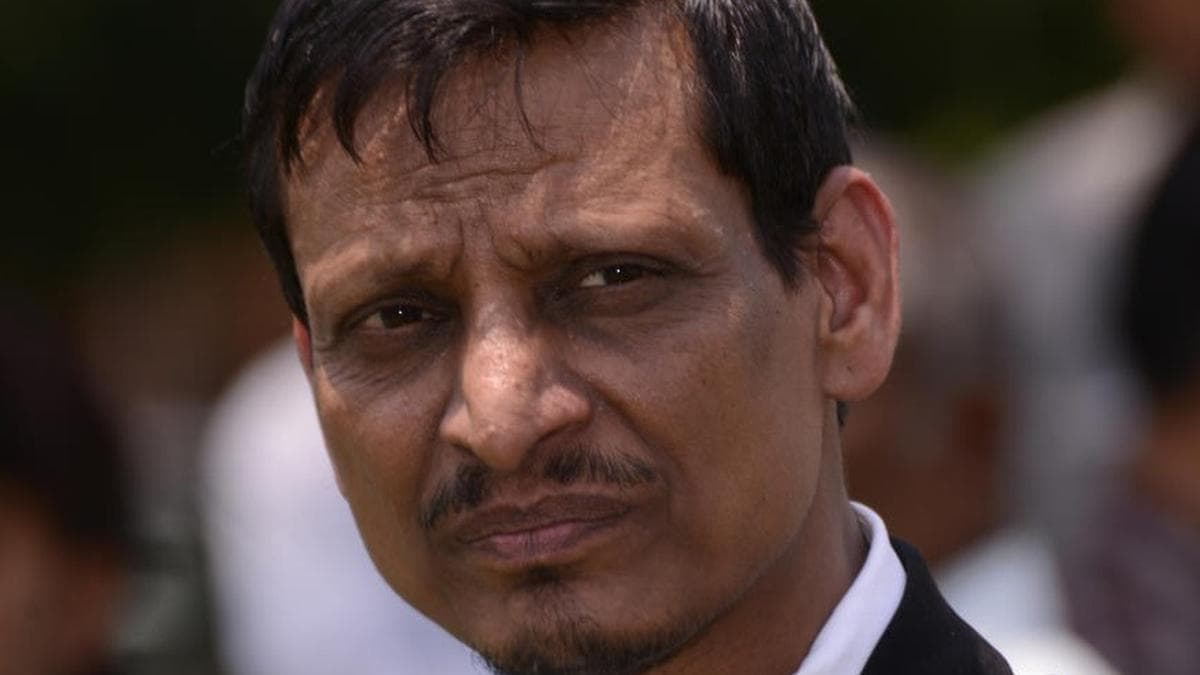
PIL lawyer M.L. Sharma, known for Article 370, Pegasus, Rafale, and coal block cases, passes away.
Summary
Prominent petitioner lawyer M.L. Sharma, known for filing multiple Public Interest Litigations (PILs) on significant national issues, has passed away. His notable petitions included challenges to the abrogation of Article 370, the Pegasus spyware controversy, the Rafale case, and the coal block allocation case. This news is relevant for competitive exams as it highlights a key legal figure and landmark cases, important for general awareness and legal current affairs.
Key Points
- 1M.L. Sharma, a prominent petitioner lawyer, has passed away.
- 2He was widely known for filing numerous Public Interest Litigations (PILs).
- 3Sharma filed a significant PIL challenging the abrogation of Article 370.
- 4He was also a petitioner in the Pegasus spyware controversy case.
- 5Other notable cases associated with him include the Rafale deal and the Coal block allocation cases.
In-Depth Analysis
The passing of M.L. Sharma, a prominent petitioner lawyer, brings into focus the critical role of Public Interest Litigations (PILs) and judicial activism in India's democratic framework. Sharma was not just a lawyer; he was a persistent voice in the Supreme Court, challenging governmental actions and seeking accountability on issues of national importance. His legacy is intertwined with several landmark cases that have shaped legal discourse, governance, and public perception in India.
At the heart of Sharma's work was the instrument of Public Interest Litigation (PIL), a unique Indian innovation born in the late 1970s and early 1980s. Unlike traditional litigation where a party seeks redress for their own injury, a PIL allows any citizen or organization to approach the court on behalf of a public interest or a marginalized group. This concept, championed by judges like Justice P.N. Bhagwati and Justice V.R. Krishna Iyer, transformed the Supreme Court and High Courts into guardians of public rights, often invoking Articles 32 and 226 of the Constitution, which grant citizens the right to move the Supreme Court and High Courts, respectively, for the enforcement of fundamental rights.
One of the most significant cases M.L. Sharma pursued was the **Coal Block Allocation Case**, famously known as the 'Coalgate Scandal.' This controversy erupted in 2012 when a Comptroller and Auditor General (CAG) report highlighted irregularities in the allocation of coal blocks between 1993 and 2010. The report estimated a 'presumptive loss' of ₹1.86 lakh crore to the exchequer due to the allocation of coal blocks to private and public sector companies without a transparent bidding process. Sharma's PIL, among others, prompted the Supreme Court to intervene, ultimately leading to the cancellation of 214 out of 218 coal block allocations in 2014, terming them 'arbitrary and illegal.' This case underscored the critical need for transparency in natural resource allocation and accountability in governance, emphasizing the judiciary's role in safeguarding public assets.
Sharma also challenged the **abrogation of Article 370** of the Constitution, which granted special status to Jammu & Kashmir, in August 2019. The government's decision to revoke Article 370 and reorganize the state into two Union Territories (J&K and Ladakh) was a monumental constitutional and political move. The abrogation sparked widespread debate about federalism, the powers of the Parliament, and the process of amending the Constitution. Sharma's petition was one of many that questioned the legality and constitutionality of this move, arguing it violated the basic structure of the Constitution and the rights of the people of J&K. This case, currently under review by the Supreme Court, has far-reaching implications for India's federal structure and the interpretation of constitutional provisions related to state autonomy and reorganisation.
The **Pegasus spyware controversy** saw Sharma as a key petitioner. In 2021, reports emerged alleging that the Israeli-made Pegasus spyware, developed by NSO Group, was used to surveil journalists, activists, politicians, and judges in India. This raised serious concerns about the right to privacy (enshrined under Article 21, as affirmed by the Puttaswamy judgment in 2017), press freedom, and government accountability regarding surveillance. Sharma's PIL highlighted the potential misuse of sophisticated technology by state actors, urging the court to investigate and ensure protection against unwarranted surveillance. The Supreme Court's subsequent appointment of a technical committee to probe the allegations demonstrates the judiciary's commitment to balancing national security concerns with fundamental rights.
Lastly, the **Rafale deal**, an inter-governmental agreement between India and France for the procurement of 36 Rafale fighter jets, also saw Sharma's involvement. Allegations of irregularities, inflated pricing, and lack of transparency in the deal surfaced, leading to political controversy. Sharma's PIL sought an investigation into the deal, questioning the government's decision-making process. While the Supreme Court initially dismissed petitions seeking a probe, reaffirming its limited role in defence procurement, the case highlighted the constant tension between executive privilege in matters of national security and the public demand for transparency and accountability in large-scale government contracts.
These cases collectively illustrate the multifaceted role of the Indian judiciary and the power of PILs in a vibrant democracy. M.L. Sharma, through his persistent legal battles, became a symbol of judicial activism, holding power to account and pushing for greater transparency and justice. His work contributes to the broader themes of good governance, constitutionalism, accountability, and the protection of fundamental rights. The future implications of these cases continue to unfold, shaping legal precedents, influencing policy-making, and reinforcing the judiciary's role as a crucial check on the executive and legislative branches, ultimately strengthening India's democratic foundations.
Exam Tips
This topic falls under 'Indian Polity & Governance' (UPSC Mains GS-II, State PSCs) and 'Current Affairs' (all exams). Focus on the concept of PIL, judicial review, and specific constitutional articles like Article 32, 226, 21, and 370. Also, understand the structure and role of the Supreme Court and High Courts.
Study the 'Judicial Activism' and 'Public Interest Litigation' chapters thoroughly. Connect these cases to broader themes such as federalism (Article 370), right to privacy (Pegasus), anti-corruption mechanisms (Coal Block), and defence procurement policy (Rafale).
Expect questions on the definition and evolution of PIL, landmark judgments related to fundamental rights (e.g., Puttaswamy judgment for privacy), and the constitutional provisions involved in each case. Factual questions on the 'Coalgate' scandal or the year of Article 370 abrogation are also common. Be prepared for analytical questions on the judiciary's role in ensuring executive accountability.
Related Topics to Study
Full Article
He filed multiple public interest litigations, notably on the abrogation of Article 370, the Pegasus spyware controversy, and the Rafale case