



Relevant for Exams
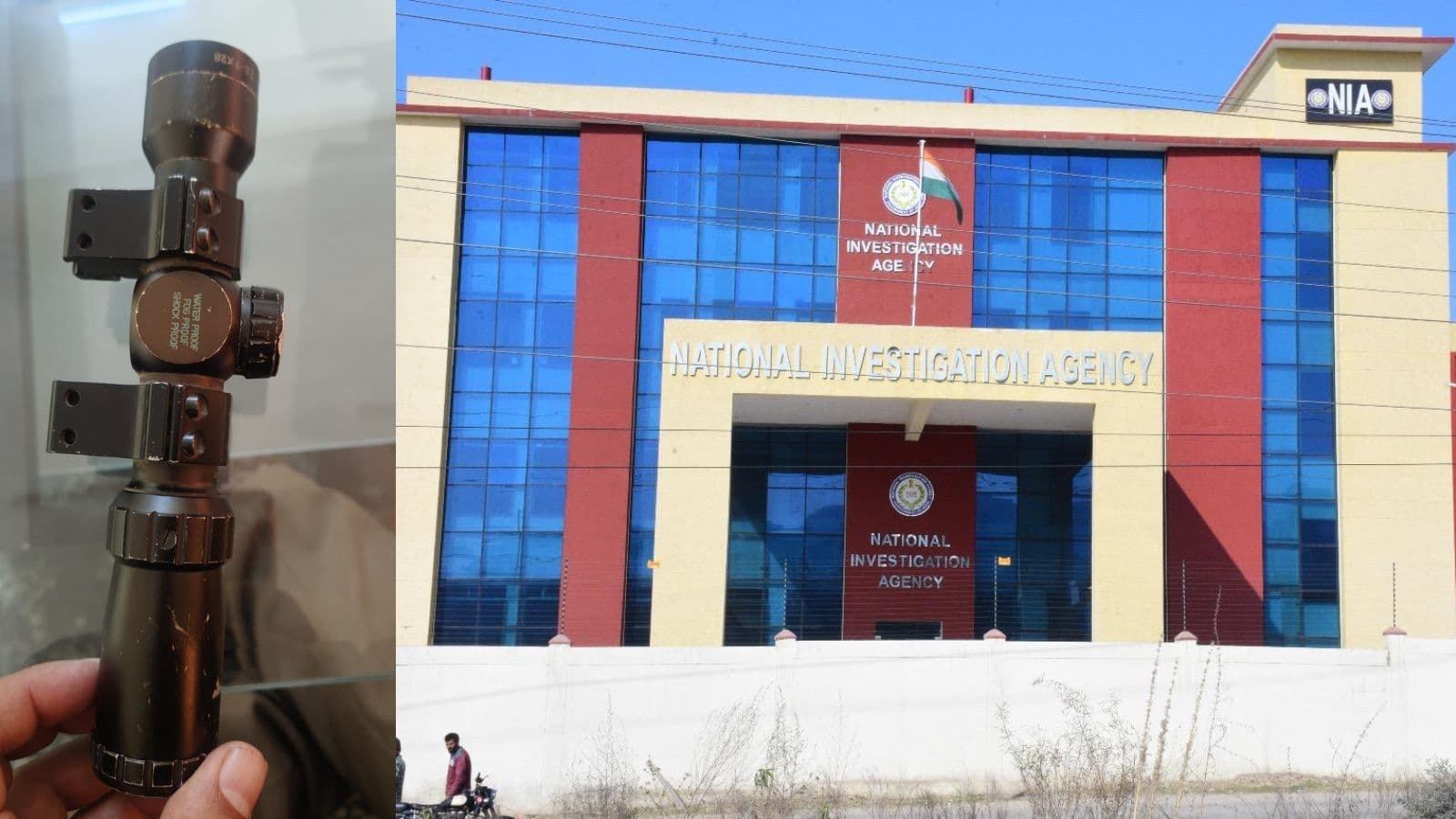
Chinese rifle telescope found near NIA Jammu office; security on high alert.
Summary
A Chinese-origin rifle telescope was discovered near the National Investigation Agency (NIA) office in Jammu, prompting a high security alert. This incident signifies potential threats to national security and raises concerns about cross-border activities and militant infiltration in the sensitive Jammu and Kashmir region. It's crucial for understanding internal security dynamics.
Key Points
- 1A rifle telescope of Chinese origin was reportedly found near the NIA office in Jammu.
- 2The discovery immediately triggered a high security alert in the region.
- 3The National Investigation Agency (NIA) is India's primary counter-terrorism task force.
- 4The incident highlights ongoing security challenges and potential cross-border infiltration in Jammu & Kashmir.
- 5Jammu is a strategically important city in the Union Territory of Jammu and Kashmir.
In-Depth Analysis
The discovery of a Chinese-origin rifle telescope near the National Investigation Agency (NIA) office in Jammu has triggered a high security alert, underscoring the persistent and evolving internal security challenges India faces, particularly in the strategically vital Union Territory of Jammu and Kashmir (J&K). This incident is not merely about a piece of equipment; it's a potent symbol of potential cross-border nefarious activities, militant infiltration, and the continuous efforts by hostile actors to destabilize the region.
**Background Context and What Happened:**
Jammu and Kashmir has historically been a hotbed of militancy, fueled by cross-border support and ideological extremism. The region, especially after the abrogation of Article 370 in August 2019, has seen a renewed focus on establishing peace and normalcy, alongside intensified counter-terrorism operations. Jammu, being the winter capital and a major transit point for pilgrims and military convoys, holds immense strategic importance. It's a critical nerve center connecting the Kashmir valley with the rest of India and houses key security installations. The specific incident involved the finding of a rifle telescope, identified as being of Chinese origin, in close proximity to a high-value target like the NIA office. This discovery immediately prompted a comprehensive security lockdown and investigation, indicative of the seriousness with which such threats are perceived.
**Key Stakeholders Involved:**
Several key stakeholders are directly involved in or impacted by such incidents. The **National Investigation Agency (NIA)**, established under the NIA Act, 2008, is India's premier counter-terrorism agency, responsible for investigating and prosecuting offenses affecting the sovereignty, security, and integrity of India. Its office being targeted signifies an attempt to challenge the state's authority and disrupt anti-terror operations. **Indian Security Forces**, including the Indian Army, Border Security Force (BSF), Central Reserve Police Force (CRPF), and the Jammu & Kashmir Police, are on the frontline, tasked with maintaining law and order, conducting counter-insurgency operations, and securing borders. Their coordinated response is crucial. **Militant groups**, often operating with external backing, are the primary perpetrators of such activities, aiming to incite fear and disrupt peace. The 'Chinese origin' of the telescope also brings **China** into the periphery, raising questions about the supply chain of arms and equipment used by militants, even if indirectly. Historically, **Pakistan** has been a significant state actor accused of sponsoring and facilitating cross-border terrorism in J&K.
**Why This Matters for India:**
This incident carries profound significance for India's national security. Firstly, it highlights the persistent threat of **terrorism and targeted attacks** on security installations and personnel. The proximity to the NIA office suggests a potential reconnaissance or an attempt to instill fear, directly challenging India's internal security apparatus. Secondly, it underscores the ongoing problem of **cross-border infiltration** and the availability of sophisticated weaponry to militant outfits. The presence of Chinese-origin equipment, whether procured directly or through third parties, indicates complex supply networks that need to be dismantled. Thirdly, it impacts the **socio-economic development** of J&K. Security alerts and incidents deter investment, tourism, and overall progress, hindering the government's efforts to integrate the region fully. Politically, it serves as a reminder of the external forces attempting to destabilize India, necessitating robust diplomatic and strategic responses. It also reinforces the need for continuous vigilance and modernization of security forces.
**Historical Context and Legal Framework:**
Jammu and Kashmir has a long and complex history of militancy, dating back to the late 1980s, often described as a proxy war waged by Pakistan. Major events like the Kargil War in 1999 and numerous terror attacks, including the 2019 Pulwama attack, underscore the chronic nature of this challenge. The abrogation of Article 370 and Article 35A aimed to fully integrate J&K with the Indian Union and streamline governance, but it also led to heightened security concerns and a period of intense counter-insurgency operations. To combat terrorism, India has robust legal frameworks. The **NIA Act, 2008**, grants the NIA wide-ranging powers to investigate terror-related offenses across states without special permission. The **Unlawful Activities (Prevention) Act (UAPA), 1967**, significantly amended over the years, provides the legal teeth to deal with terrorist and unlawful activities, allowing for the designation of individuals as terrorists and granting extensive powers for investigation and detention. Constitutionally, **Article 355** of the Indian Constitution places a duty upon the Union to protect every State against external aggression and internal disturbance, providing the basis for central government intervention and deployment of forces in regions like J&K.
**Future Implications:**
The incident necessitates heightened security vigilance and intelligence gathering in J&K, particularly around critical government and security installations. There will likely be an intensified focus on border management and anti-infiltration grid to stem the flow of weapons and militants. Furthermore, the 'Chinese origin' aspect might prompt deeper investigations into arms trafficking networks and potential linkages, possibly influencing India's diplomatic engagements with China regarding border security and regional stability. Domestically, it reinforces the need for community engagement and de-radicalization programs to prevent local youth from being drawn into militancy. The long-term goal remains to foster an environment conducive to peace, development, and democratic processes in J&K, ensuring that such incidents do not derail the path to normalcy and prosperity.
Exam Tips
This topic falls under GS Paper III (Internal Security and Disaster Management) for UPSC Civil Services Exam. Understand the role and mandate of the NIA, UAPA provisions, and India's border management strategies.
For State PSC and SSC exams, focus on factual questions: establishment year of NIA, key provisions of UAPA, geographical significance of Jammu & Kashmir, and major security challenges faced by India. Be aware of recent developments in J&K.
Common question patterns include analytical questions on the effectiveness of counter-terrorism measures, challenges of cross-border infiltration, role of external state and non-state actors in J&K, and the impact of internal security issues on India's foreign policy. Prepare to discuss solutions and government initiatives.
Study related topics like the evolution of militancy in J&K, Article 370 abrogation, India-Pakistan and India-China border disputes, and the structure of India's intelligence agencies (IB, RAW) alongside this incident.
Practice essay writing and answer structuring on topics related to national security, internal security threats, and strategies to combat terrorism, incorporating constitutional and policy references.