



Relevant for Exams
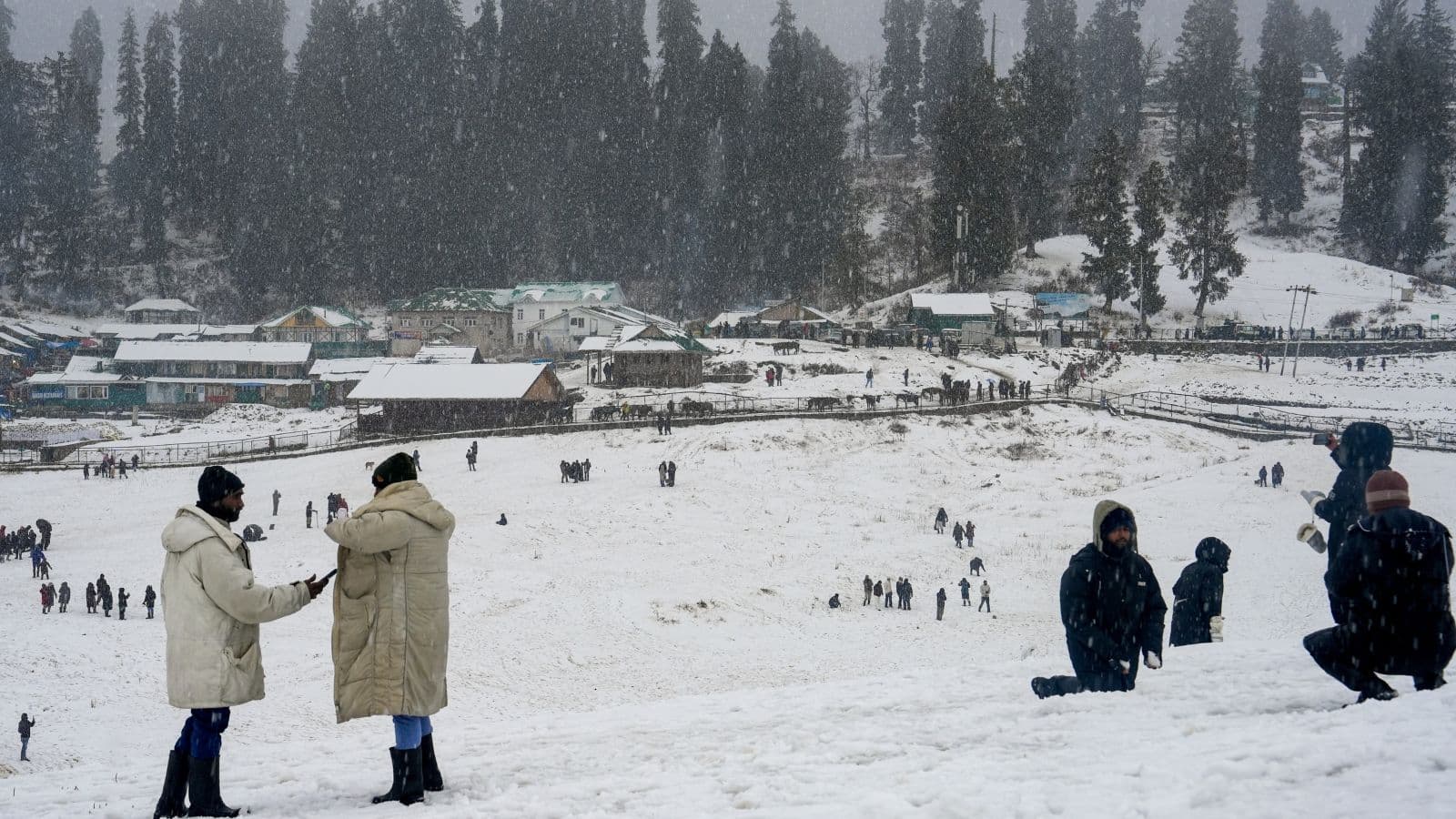
Kashmir's Chillai Kalan begins with season's first snowfall, breaking a long dry spell.
Summary
Chillai Kalan, the 40-day harshest winter period, has commenced in Kashmir with the season's first significant snowfall, ending a prolonged dry spell. This event is crucial for replenishing water resources and glaciers in the region, impacting agriculture and hydropower. For competitive exams, understanding this geographical phenomenon and its environmental significance for Jammu & Kashmir is important.
Key Points
- 1Chillai Kalan is the local name for the 40-day harshest winter period in the Kashmir Valley.
- 2This period traditionally commences around December 21st each year and is characterized by intense cold and heavy snowfall.
- 3The recent event marked the season's first significant snowfall in Kashmir, effectively breaking a prolonged dry spell.
- 4Snowfall during Chillai Kalan is crucial for replenishing water bodies, including glaciers and rivers, in Jammu & Kashmir.
- 5The replenished water resources are vital for the region's agriculture, horticulture, and hydro-power generation.
In-Depth Analysis
Chillai Kalan, a Persian term meaning 'major cold,' refers to the 40-day period of intense winter in the Kashmir Valley, traditionally commencing around December 21st each year. It is the harshest phase of winter, characterized by biting cold, sub-zero temperatures, and heavy snowfall, which often freezes water bodies and disrupts daily life. This period is followed by 'Chillai Khurd' (small cold) of 20 days and 'Chillai Bachha' (baby cold) of 10 days, gradually easing the winter grip. The recent news highlights the commencement of Chillai Kalan with the season's first significant snowfall, effectively breaking a prolonged dry spell that had gripped the region.
The background context for this event is crucial. Kashmir, nestled in the Himalayas, relies heavily on winter precipitation, primarily snow, for its water resources. For several weeks leading up to Chillai Kalan, the region experienced an unusual dry spell, leading to concerns among farmers, environmentalists, and the administration. A lack of snowfall during the early winter months can have dire consequences for the subsequent spring and summer, impacting everything from agriculture to power generation. Therefore, the arrival of snowfall at the onset of Chillai Kalan was a much-anticipated and welcome development, signaling a potential replenishment of vital water sources.
Key stakeholders involved in this phenomenon and its implications include the local residents of Jammu & Kashmir, particularly farmers and horticulturists, whose livelihoods are directly tied to water availability. Crops like saffron, apples, and various vegetables depend on adequate irrigation from snowmelt. The Jammu & Kashmir administration, now a Union Territory, is a critical stakeholder responsible for disaster management, water resource planning, and agricultural support. Hydropower generation companies, such as the National Hydroelectric Power Corporation (NHPC) and local state power corporations, are also significantly impacted, as the region's numerous hydroelectric projects (e.g., on the Jhelum and Chenab rivers) rely on consistent water flow. Environmental scientists and climatologists are continuously monitoring these patterns, studying the long-term effects of climate change on Himalayan snowfall and glacier health.
This event matters immensely for India, especially for the Union Territory of Jammu & Kashmir. Economically, the region's agriculture and horticulture sectors, particularly the renowned apple and saffron industries, are heavily dependent on snowmelt for irrigation. A good snowfall during Chillai Kalan ensures sufficient water for the spring sowing season and for fruit orchards. Hydropower, a major source of electricity for the region and a contributor to the national grid, also benefits significantly from replenished water levels in reservoirs. Environmentally, adequate snowfall is vital for the health of Himalayan glaciers, which act as natural water towers, feeding major rivers like the Indus, Jhelum, and Chenab. The Indus Waters Treaty between India and Pakistan also underscores the geopolitical significance of these shared river systems, making water security in J&K a strategic imperative.
Historically, Kashmir's economy and culture have been intricately linked to its unique climate and water resources. Traditional practices and livelihoods have evolved around these seasonal cycles. However, in recent decades, climate change has introduced unpredictability, with increasing instances of delayed or scanty snowfall, leading to drought-like conditions in some years. This recent snowfall, therefore, offers a temporary reprieve and a reminder of the delicate balance of the region's ecosystem. The long-term trend of glacier retreat and changing precipitation patterns remains a significant concern, requiring robust policy interventions.
Future implications of such snowfall patterns are multifaceted. On one hand, good snowfall promises a healthier agricultural season, improved hydropower generation, and a boost to winter tourism. On the other hand, the increasing variability in weather patterns due to climate change necessitates proactive measures. The administration needs to focus on sustainable water management strategies, including rainwater harvesting and efficient irrigation techniques, to mitigate the risks of future dry spells. Disaster management preparedness, under the framework of the Disaster Management Act, 2005, is also crucial for dealing with potential heavy snowfall-related challenges like road blockages and avalanches. Constitutional provisions related to water (Entry 17, State List, Seventh Schedule, though inter-state rivers fall under Entry 56, Union List) and environmental protection (Article 48A DPSP and Article 51A(g) Fundamental Duty) guide policy formulation in this regard. The National Water Policy also provides a framework for water resource management. The J&K Reorganisation Act, 2019, has also redefined administrative structures, impacting how these policies are implemented at the UT level. Ultimately, the future well-being of J&K's economy and environment hinges on adapting to these changing climatic realities while preserving its invaluable natural resources.
Exam Tips
This topic falls under the 'Indian Geography' and 'Environment & Ecology' sections of UPSC, SSC, and State PSC syllabi. Focus on physical geography of Himalayas, climate patterns, and their impact on human activities.
Study related topics such as Himalayan river systems (Indus, Jhelum, Chenab), glacier formation and retreat, impact of climate change on mountain ecosystems, and water resource management policies in India.
Common question patterns include: definitions (What is Chillai Kalan?), significance (Why is winter snowfall crucial for J&K?), impact analysis (How does climate change affect Kashmir's water security?), and policy-related questions (Government initiatives for water conservation in Himalayan regions).