



Relevant for Exams
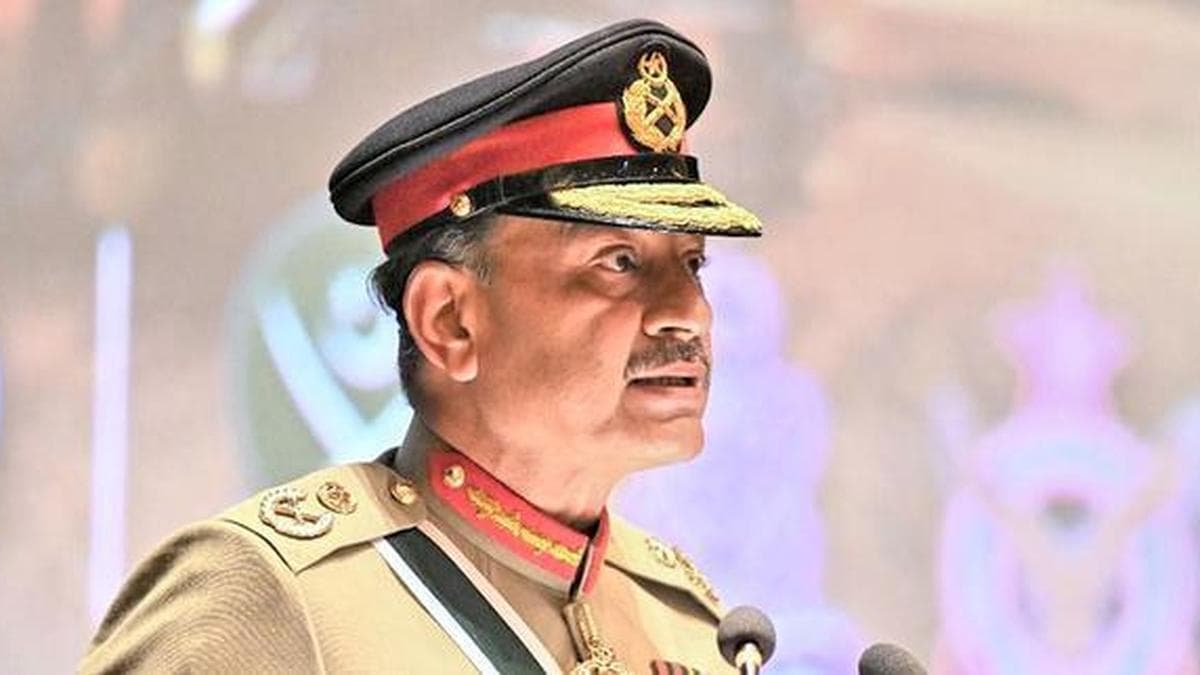
Pakistan COAS Asim Munir warns Afghan Taliban: Choose between TTP and Pakistan.
Summary
Pakistan's Chief of Army Staff (COAS), General Asim Munir, issued a stern ultimatum to the Afghan Taliban, demanding they choose between supporting the Tehrik-i-Taliban Pakistan (TTP) and maintaining relations with Pakistan. This development underscores escalating cross-border tensions and Pakistan's concerns over militant groups operating from Afghanistan. For competitive exams, this is vital for understanding regional geopolitics, India's neighborhood security, and international relations.
Key Points
- 1Pakistan's Chief of Army Staff (COAS) is General Asim Munir.
- 2The ultimatum was issued to the Afghan Taliban.
- 3The core issue concerns the militant group Tehrik-i-Taliban Pakistan (TTP).
- 4General Munir demanded the Afghan Taliban choose between TTP and Pakistan.
- 5He also stated that only the state, not individuals, can order 'jihad' in an Islamic state.
In-Depth Analysis
The recent ultimatum issued by Pakistan's Chief of Army Staff (COAS), General Asim Munir, to the Afghan Taliban, demanding they choose between supporting the Tehrik-i-Taliban Pakistan (TTP) and maintaining relations with Pakistan, marks a critical juncture in the volatile Afghanistan-Pakistan relationship. This development is not merely a bilateral issue but a significant indicator of regional instability, with profound implications for India's security and foreign policy.
**Background Context and What Happened:**
Pakistan and Afghanistan share a long, often contentious, border known as the Durand Line, which has historically been a source of dispute and cross-border movement. Pakistan has long sought 'strategic depth' in Afghanistan, influencing its politics to counter India. However, this policy has often backfired, leading to the rise of militant groups that challenge Pakistan's own security. The Afghan Taliban, after seizing power in August 2021 following the U.S. withdrawal, initially promised not to allow Afghan soil to be used for attacks against other countries. However, Pakistan alleges that the TTP, an ideologically aligned but distinct entity aiming to overthrow the Pakistani state, has found safe haven and operational bases in Afghanistan under the Taliban's rule. The TTP has intensified its attacks within Pakistan, particularly in Khyber Pakhtunkhwa and Balochistan, causing significant casualties among security forces and civilians. General Munir's statement, including his assertion that only the state can order 'jihad' in an Islamic state, reflects Pakistan's growing frustration and its attempt to delegitimize TTP's actions while asserting its sovereign authority.
**Key Stakeholders Involved:**
1. **Pakistan:** The Pakistani military, led by COAS General Asim Munir, and the civilian government are the primary stakeholders, grappling with a severe economic crisis and rising internal security threats from the TTP. Their objective is to eliminate the TTP threat and secure their western border.
2. **Afghan Taliban:** The de facto rulers of Afghanistan are caught in a difficult position. Ideologically, they share a common lineage with the TTP, and many TTP fighters fought alongside the Afghan Taliban against foreign forces. Breaking ties with TTP could alienate a segment of their own support base. However, maintaining ties risks further alienating Pakistan, a crucial neighbor, and the international community.
3. **Tehrik-i-Taliban Pakistan (TTP):** This umbrella organization of various Pakistani militant groups seeks to enforce its strict interpretation of Sharia law in Pakistan. They exploit the porous border and ideological kinship with the Afghan Taliban for sanctuary and operational planning, complicating Pakistan's counter-terrorism efforts.
4. **India:** While not directly involved, India is a crucial observer. Instability in Pakistan and Afghanistan has direct implications for India's regional security interests, counter-terrorism efforts, and strategic projects in Afghanistan.
5. **International Community:** Global powers, particularly the U.S., China, and Central Asian Republics, are concerned about Afghanistan becoming a launchpad for international terrorism, and they closely monitor the situation for its broader regional and global security implications.
**Why This Matters for India:**
This escalating tension directly impacts India's national security and strategic interests. Firstly, the resurgence of militant groups in Afghanistan and Pakistan creates a volatile neighborhood, potentially emboldening other India-focused terror outfits like Lashkar-e-Taiba (LeT) and Jaish-e-Mohammed (JeM). Secondly, regional instability can disrupt trade routes and India's connectivity projects, such as the Chabahar Port in Iran, which aims to provide India with access to Afghanistan and Central Asia, bypassing Pakistan. Thirdly, India has a significant stake in a stable and peaceful Afghanistan, having invested heavily in its development and reconstruction over the past two decades. A breakdown of law and order or a further strengthening of radical elements in the region poses a direct threat to India's 'Neighborhood First' policy and its broader geopolitical ambitions. The spillover effect of radical ideologies and potential refugee crises are also concerns.
**Historical Context and Future Implications:**
Historically, Pakistan's policy of differentiating between 'good Taliban' (Afghan Taliban) and 'bad Taliban' (TTP) has proven to be a double-edged sword. Its long-standing support for the Afghan Taliban during the Soviet-Afghan war and later contributed to the proliferation of radical groups, eventually leading to blowback in the form of TTP's insurgency. The current ultimatum reflects a realization, albeit belated, that such distinctions are unsustainable. Moving forward, the Afghan Taliban faces a severe test of its commitment to counter-terrorism. Should they fail to act against TTP, Pakistan might resort to stronger measures, including cross-border military operations, further destabilizing the region. This could lead to a humanitarian crisis and empower more radical elements. For India, it necessitates heightened vigilance on its western borders, strengthening counter-terrorism intelligence, and calibrating its diplomatic engagement with regional and international partners to ensure its security interests are protected. India's commitment to international peace and security, enshrined in **Article 51** of its Constitution, mandates its proactive engagement in addressing such threats. India's counter-terrorism legal framework, including the **Unlawful Activities (Prevention) Act (UAPA), 1967**, and its consistent stance at the UN Security Council against terrorism, underscores its firm position on these issues. The situation also tests the effectiveness of global counter-terrorism financing mechanisms like the Financial Action Task Force (FATF), which has often scrutinized Pakistan's actions against terror groups.
The unfolding scenario highlights the complex interplay of internal politics, regional geopolitics, and cross-border terrorism, demanding a sophisticated and nuanced approach from all stakeholders, especially India.
Exam Tips
This topic falls under UPSC Mains GS-II (International Relations - India and its Neighborhood, Bilateral, Regional and Global Groupings and Agreements involving India and/or affecting India’s interests) and GS-III (Internal Security - Linkages between development and spread of extremism, Role of external state and non-state actors in creating challenges to internal security).
Study related topics like the history of the Durand Line dispute, the rise and fall of the Taliban in Afghanistan, the evolution of TTP, and India's 'Neighborhood First' policy. Understand the nuances of India's strategic investments in Afghanistan (e.g., Chabahar Port, Salma Dam).
Expect questions on the impact of regional instability on India's security, India's foreign policy challenges concerning its western neighbors, the role of non-state actors in international relations, and the effectiveness of counter-terrorism strategies. Be prepared for analytical questions requiring a multi-faceted approach, integrating geopolitics, security, and economic aspects.
Related Topics to Study
Full Article
The CDF further said that no one could order jihad in an Islamic state other than the state itself