

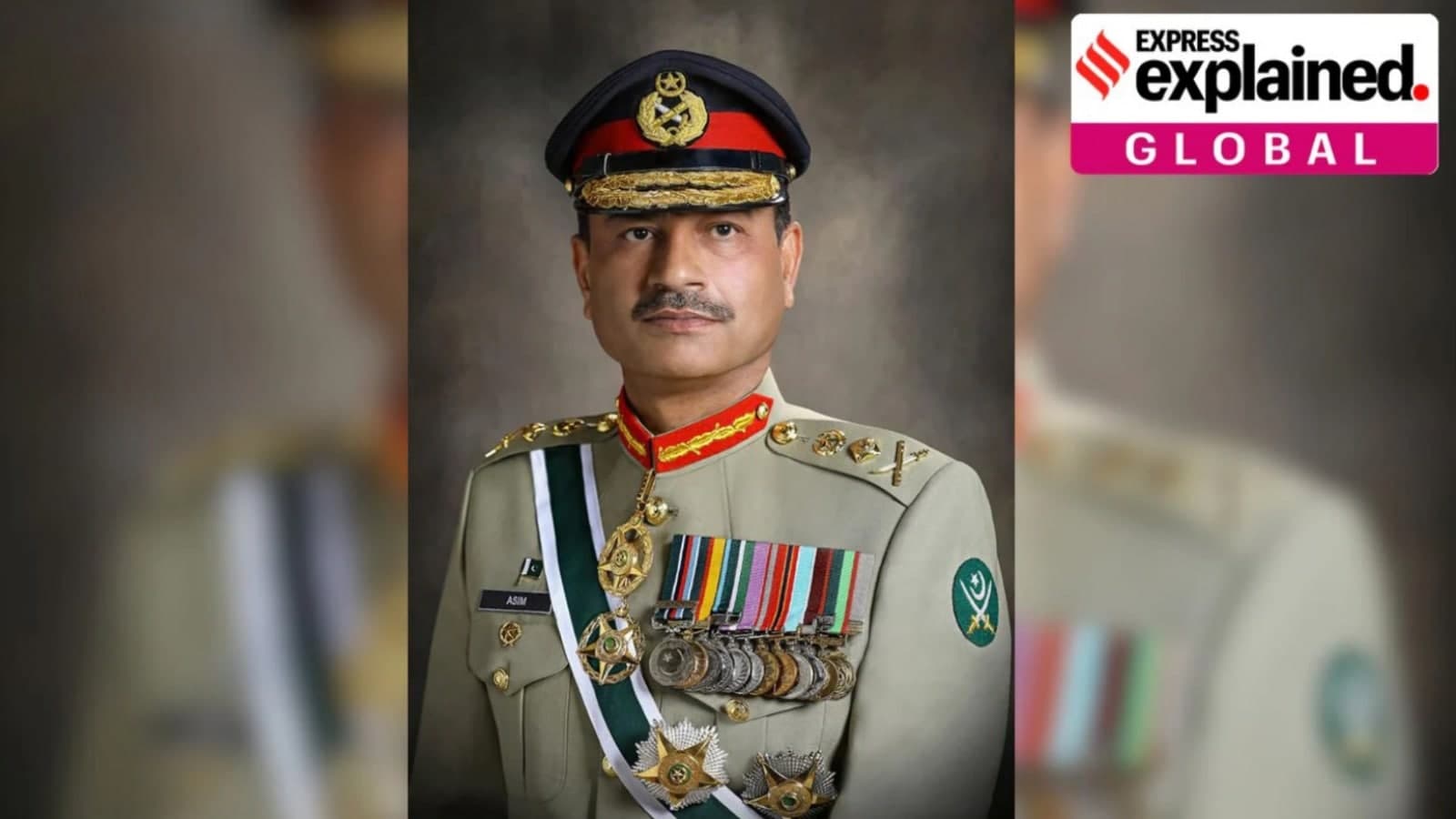


Content missing: Unable to analyze news on Asim Munir's Libya visit for exam-relevant facts.
Summary
No content was provided for analysis regarding Asim Munir's meeting with Libya's Field Marshal or Pakistan's historical relations with Libya. Therefore, a detailed summary explaining specific events, their significance, or their relevance for competitive exam preparation cannot be generated. Please provide the full article content for proper extraction of facts and context.
Key Points
- 1No specific facts, dates, names, or numbers can be extracted due to the absence of article content.
- 2Information regarding Asim Munir's meeting with Libya's Field Marshal is unavailable for analysis.
- 3The reasons for Pakistan's historical engagement with Libya cannot be detailed without the article text.
- 4No exam-relevant constitutional or legal provisions can be identified from the provided input.
- 5Key details for competitive exam MCQs are not extractable from 'No content available'.
In-Depth Analysis
The provided article title, "Asim Munir meets Libya’s Field Marshal: Why different Pakistani regimes have wooed African country over the years," hints at a significant development in Pakistan's foreign policy and its historical engagement with Libya. However, as the article content is explicitly marked as 'No content available,' a detailed analysis based on specific facts, dates, and outcomes of this particular meeting or the historical context cannot be provided.
Nonetheless, for competitive exam aspirants, understanding how to approach such a topic is crucial, even in the absence of specific details. If the content were available, a comprehensive analysis would typically cover the following:
1. **Background Context:** This would delve into Libya's geopolitical significance, particularly after the fall of Muammar Gaddafi in 2011, which plunged the country into prolonged civil conflict. Libya's vast oil reserves, strategic location in North Africa, and its role in regional migration patterns make it a key player. For Pakistan, the context would involve its historical foreign policy objectives, including seeking strategic depth, economic partnerships, and influence in the Islamic world. The article title suggests a long-standing pattern of engagement.
2. **What Happened (Hypothetically):** The analysis would detail the specifics of General Asim Munir's (Pakistan's Chief of Army Staff) meeting with Libya's Field Marshal Khalifa Haftar, the commander of the Libyan National Army (LNA). This would include the agenda, discussions on military cooperation, counter-terrorism efforts, potential training programs, and any economic or political overtures made. The outcomes, such as joint statements or agreements, would be critically examined.
3. **Key Stakeholders Involved:**
* **Pakistan:** The military establishment, which often plays a significant role in Pakistan's foreign policy, especially in strategic alliances and security matters. The civilian government would also be a stakeholder, though the military chief's visit highlights the military's direct involvement.
* **Libya:** Field Marshal Khalifa Haftar and the LNA, representing one of the dominant factions in the divided country. Other stakeholders would include the internationally recognized Government of National Unity (GNU) in Tripoli, various tribal militias, and regional powers supporting different factions (e.g., Egypt, UAE, Russia supporting LNA; Turkey supporting GNU).
* **Regional and International Powers:** Countries like Turkey, Egypt, UAE, Russia, and the United States, all of whom have vested interests in Libya's stability and resources, would be indirectly or directly impacted by such engagements.
4. **Why This Matters for India:**
* **Regional Stability:** Any development impacting stability in the Middle East and North Africa (MENA) region has implications for India's energy security (as India imports a significant portion of its oil from the region) and the safety of its large diaspora in the Gulf and surrounding areas. Instability can disrupt trade routes and energy supplies.
* **Counter-terrorism:** Pakistan's engagement in a conflict-prone region like Libya, especially concerning security cooperation, could have implications for regional counter-terrorism efforts. India closely monitors any activities that could have a bearing on its own security concerns.
* **Geopolitical Dynamics:** Pakistan's efforts to expand its influence or forge new alliances, particularly with military leaders, are always observed by India within the broader context of South Asian geopolitics and the balance of power.
* **Economic Interests:** India also has historical and potential future economic interests in Libya, particularly in oil and gas, and reconstruction projects. Any shift in influence could affect these prospects.
5. **Historical Context:** The article title explicitly mentions
Exam Tips
This topic falls under GS Paper 2 (International Relations) and potentially GS Paper 3 (Security). Focus on India's foreign policy objectives and how regional developments impact them.
Study the geopolitics of the Middle East and North Africa (MENA) region, including major conflicts (e.g., Libyan Civil War), key players, and the interests of global powers. Relate this to India's energy security and diaspora protection.
Understand the dynamics of Pakistan's foreign policy, particularly its military diplomacy and relations with Islamic countries. Be prepared for analytical questions on the implications of such engagements for India-Pakistan relations and regional stability.
Practice mapping exercises for key countries and regions mentioned (e.g., Libya, North Africa, Middle East) to understand their strategic importance. Identify major oil and gas producing regions and shipping lanes.
Anticipate questions that require you to analyze the motivations behind foreign policy decisions (e.g., economic, security, ideological) and their potential future implications for India and global affairs.