



Relevant for Exams
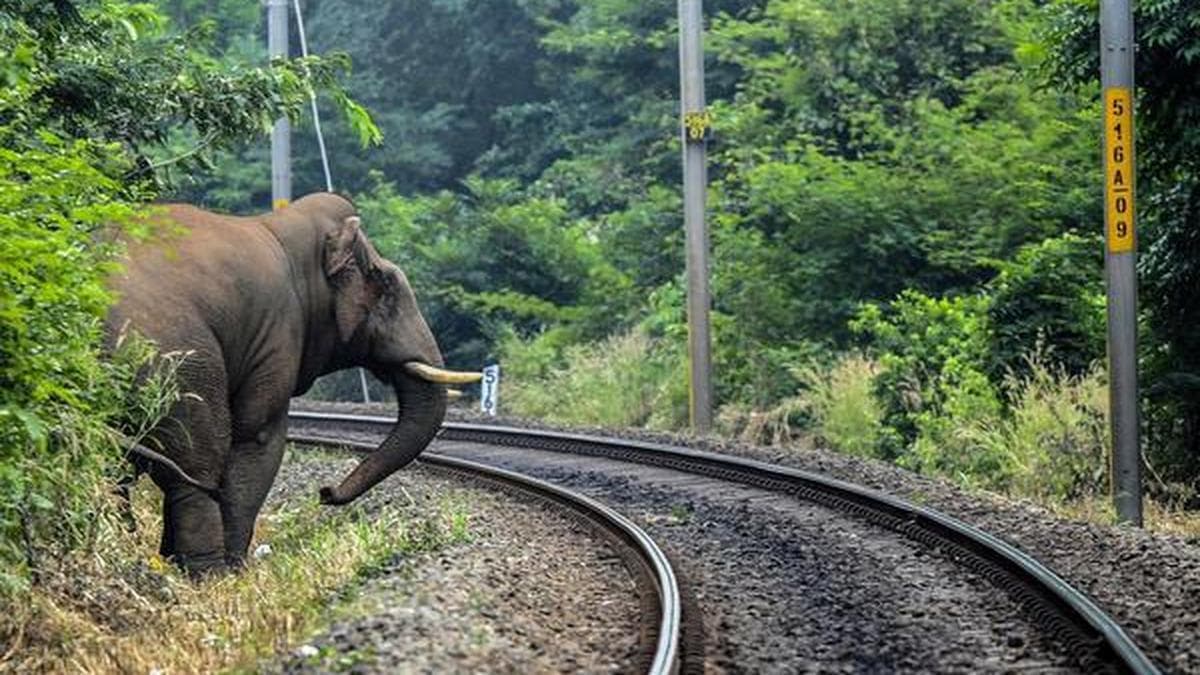
8 passenger trains cancelled for 3 days due to elephant movement between Jharkhand-Odisha.
Summary
Eight passenger trains were cancelled for three days due to the movement of a herd of elephants near railway tracks between the Chakradharpur (Jharkhand) and Jharsuguda (Odisha) section, specifically near Bandamunda. This incident underscores the critical issue of human-wildlife conflict, particularly concerning elephant corridors and railway safety, which is a significant environmental and infrastructure challenge relevant for competitive exam preparation.
Key Points
- 1Around 8 passenger trains were cancelled for a period of three days.
- 2The reason for the train cancellations was the movement of a herd of elephants near rail tracks.
- 3The affected railway section is between Chakradharpur (Jharkhand's Singhbhum district) and Jharsuguda (Odisha).
- 4Elephant movements were specifically observed near Bandamunda along the railway line.
- 5The incident highlights challenges related to human-wildlife coexistence and railway safety in elephant corridors.
In-Depth Analysis
The recent cancellation of eight passenger trains for three days between Chakradharpur (Jharkhand) and Jharsuguda (Odisha) due to elephant movements near railway tracks, specifically at Bandamunda, is a stark reminder of India's escalating human-wildlife conflict. This incident, while appearing localized, underscores a critical national challenge at the intersection of infrastructure development, wildlife conservation, and public safety.
**Background Context and What Happened:** India is home to over 60% of the world's wild Asian elephant population. Historically, these majestic animals roamed vast, contiguous forest landscapes. However, rapid economic development, urbanization, mining activities, and agricultural expansion have led to severe habitat fragmentation and degradation. Elephant corridors—narrow strips of land that elephants use to move between larger habitats—have been increasingly encroached upon by human settlements, roads, and railway lines. The Chakradharpur-Jharsuguda section, located in the resource-rich, forested regions of Jharkhand and Odisha, is a known elephant habitat and corridor. The presence of a railway line dissecting such an ecologically sensitive area inevitably leads to conflicts. In this specific instance, the proactive decision by railway authorities to cancel trains was a crucial step to prevent potential collisions, which often result in tragic deaths for both elephants and humans, as well as significant damage to railway infrastructure.
**Key Stakeholders Involved:** Several key players are involved in managing and mitigating such conflicts. **Indian Railways** is a primary stakeholder, responsible not only for safe and efficient train operations but also for implementing measures to prevent wildlife collisions. This includes installing speed restrictions, creating underpasses/overpasses, and collaborating with forest departments. The **Forest Departments of Jharkhand and Odisha** are crucial for monitoring elephant movements, protecting habitats, and responding to conflict situations. Their role involves tracking herds, creating awareness among local communities, and ensuring the implementation of wildlife protection laws. **Local communities** residing near these corridors are often on the front lines, facing crop damage and potential danger, yet their cooperation is vital for conservation efforts. **Wildlife conservation organizations and NGOs** play a significant role in research, advocacy, and on-ground mitigation efforts, often working with both government agencies and local populations. Finally, the **Ministry of Environment, Forest and Climate Change (MoEFCC)** sets national policies and provides funding for wildlife conservation initiatives like Project Elephant.
**Why This Matters for India:** This incident highlights several critical issues for India. Environmentally, it signifies the immense pressure on India's biodiversity and the shrinking space for its megafauna. The conservation of elephants, a Schedule I species under the Wildlife (Protection) Act, 1972, is paramount for maintaining ecological balance. Economically, train cancellations lead to direct revenue losses for the railways, logistical disruptions, and inconvenience for thousands of passengers and freight movement, impacting supply chains. Socially, such conflicts pose significant safety risks to both humans and elephants, often leading to resentment towards wildlife among affected communities. This dilemma forces India to balance its developmental aspirations with its commitment to environmental protection and sustainable coexistence. The incident also underscores the need for robust environmental impact assessments (EIAs) for infrastructure projects in ecologically sensitive areas.
**Historical Context and Future Implications:** Elephant-human conflict is not a new phenomenon in India. With the launch of Project Elephant in 1992, India recognized the urgency of protecting its elephant populations and their habitats. Despite conservation efforts, the frequency and intensity of conflicts have risen, largely due to habitat destruction and fragmentation. Looking ahead, future implications demand a multi-pronged approach. This includes enhanced inter-departmental coordination between Railways, Forest Departments, and local administrations. Investment in innovative mitigation strategies such as elephant-friendly railway infrastructure (e.g., elevated corridors, underpasses), advanced early warning systems using sensors, and effective land-use planning to avoid fragmenting critical habitats are essential. Community engagement, livelihood diversification for affected populations, and awareness campaigns are also vital. India must move towards a model of 'green infrastructure' that integrates ecological considerations into its developmental planning, ensuring that progress does not come at the irreversible cost of its natural heritage.
**Related Constitutional Articles, Acts, or Policies:** The constitutional framework for environmental protection in India includes **Article 48A** (Directive Principle of State Policy), which mandates the State to 'endeavour to protect and improve the environment and to safeguard the forests and wildlife of the country.' Furthermore, **Article 51A(g)** (Fundamental Duty) enjoins every citizen 'to protect and improve the natural environment including forests, lakes, rivers and wildlife, and to have compassion for living creatures.' The primary legislative instrument is the **Wildlife (Protection) Act, 1972**, which provides for the protection of wild animals, birds, and plants, and lists elephants in Schedule I, according them the highest level of protection. **Project Elephant**, launched in 1992, specifically aims to protect elephants, their habitat, and corridors, and address human-elephant conflict. The MoEFCC also issues guidelines for mitigating elephant deaths on railway tracks, emphasizing cooperation between railway and forest authorities.
Exam Tips
This topic falls under GS Paper I (Geography - Human-Wildlife Interaction), GS Paper II (Governance - Policy Implementation, Inter-State Coordination), and GS Paper III (Environment & Ecology - Conservation, Environmental Impact, Disaster Management, Infrastructure).
Study related topics like Project Elephant (objectives, achievements, challenges), key elephant corridors in India, the Wildlife (Protection) Act, 1972 (especially Schedule I and II species), and various human-wildlife conflict mitigation strategies.
Be prepared for analytical questions on the causes and consequences of human-wildlife conflict, the challenges of balancing development with conservation, and the role of different stakeholders. Factual questions might ask about the year Project Elephant was launched or specific constitutional articles.
Understand the 'green infrastructure' concept and how it relates to sustainable development. Practice essay writing on the theme of environmental conservation vs. economic development.
Familiarize yourself with the constitutional provisions related to environmental protection (Articles 48A, 51A(g)) and their implications for state and citizen responsibilities.
Related Topics to Study
Full Article
Movement of a herd of elephants has been noticed near rail tracks between Chakradharpur (Jharkhand's Singhbhum)-Jharsuguda (Odisha) section of the division, especially Bandamuna during night