



Relevant for Exams
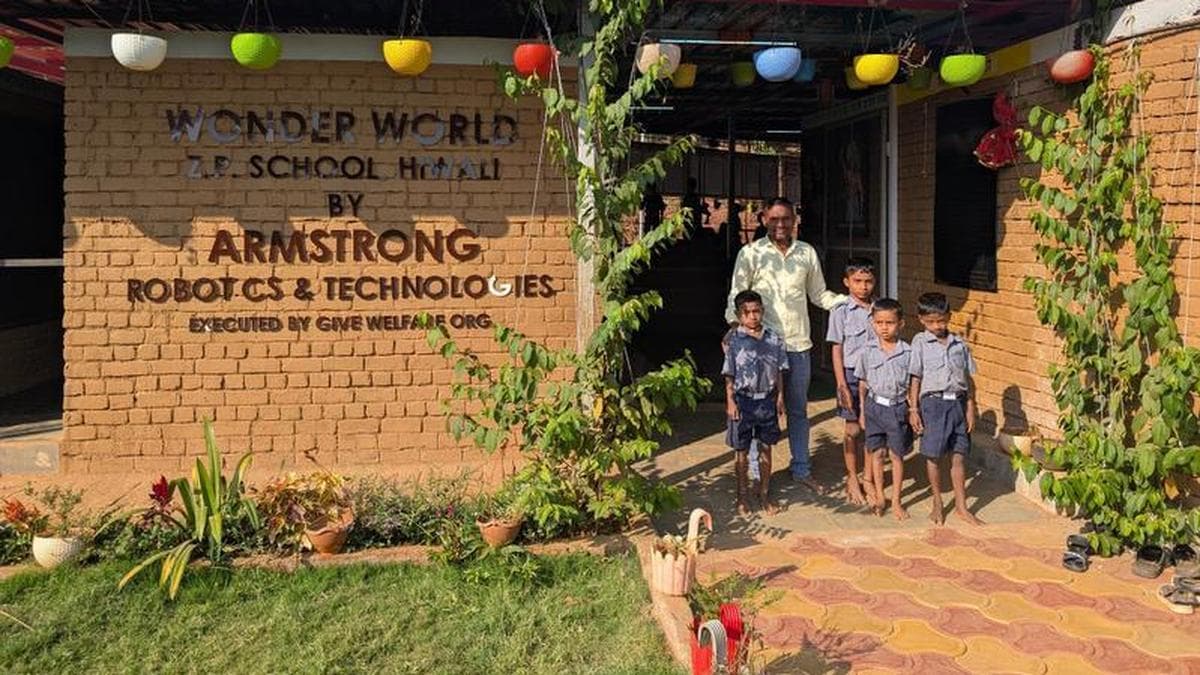
Maharashtra's Hiwali tribal school battles water scarcity with solar power and KT dam to curb migration.
Summary
A tribal school in Hiwali, Maharashtra, is actively combating severe water scarcity, a critical issue that often forces local populations to migrate. The school is seeking the implementation of sustainable solutions like solar power and a Kolhapur-Type Weir (KT dam) to ensure a stable water supply. This initiative highlights local efforts in tribal welfare and sustainable resource management, making it relevant for competitive exams focusing on geography, environment, and social issues.
Key Points
- 1The Hiwali school, a tribal school located in Maharashtra, is actively addressing water scarcity.
- 2The primary objective of the school's initiative is to fight migration caused by water scarcity in the region.
- 3The school is seeking the installation of solar power for sustainable energy solutions.
- 4It is also advocating for the construction of a KT dam, which stands for Kolhapur-Type Weir.
- 5A Kolhapur-Type Weir (KT dam) is a low-cost, gravity-based riverbed structure designed to store post-monsoon river flow for water supply.
In-Depth Analysis
The struggle of the Hiwali tribal school in Maharashtra against water scarcity is a poignant illustration of the multifaceted challenges faced by marginalized communities in India and their proactive efforts to overcome them. This micro-level initiative offers profound insights into issues of rural development, environmental sustainability, tribal welfare, and governance, making it highly relevant for competitive exam aspirants.
The **background context** reveals a persistent problem in many parts of India: water scarcity, particularly in rain-shadow regions like parts of Maharashtra. Tribal communities, often residing in remote, forest-dependent areas, are disproportionately affected. Their livelihoods are intrinsically linked to natural resources, and a lack of reliable water sources directly impacts agriculture, livestock, and daily life. This scarcity frequently triggers distress migration, where entire families, including children, are forced to leave their ancestral lands in search of water and employment, disrupting education, health, and social structures. The Hiwali school's fight is not just for water; it's a battle against the displacement and disintegration of its community.
**What happened** is that the Hiwali school, recognizing the dire consequences of water scarcity, particularly the forced migration of its students' families, decided to act. Instead of passively waiting for external aid, it has actively sought sustainable, localized solutions. The school is advocating for two key interventions: the installation of **solar power** and the construction of a **Kolhapur-Type Weir (KT dam)**. Solar power offers a clean, renewable energy source, vital for pumping water, lighting, and potentially powering educational tools, reducing reliance on an often unreliable grid. The KT dam, a low-cost, gravity-based riverbed structure, is designed to store post-monsoon river flow. This simple yet effective technology can ensure a stable water supply for drinking, sanitation, and potentially small-scale irrigation, thereby bolstering local livelihoods and reducing the impetus for migration.
**Key stakeholders** involved include the **Hiwali school and the local tribal community**, who are the primary initiators and beneficiaries of these efforts. Their agency in identifying problems and proposing solutions is commendable. The **Maharashtra State Government**, particularly departments like the Tribal Development Department, Water Resources Department, and Rural Development Department, are crucial. Their role involves policy formulation, funding allocation, technical support, and project implementation for structures like KT dams. Non-governmental organizations (NGOs) and civil society groups could also play a significant role in providing advocacy, technical expertise, and additional funding.
This initiative **matters for India** on several fronts. Firstly, it directly addresses **tribal welfare and inclusive development**. By ensuring water security and promoting education, it aligns with India's constitutional commitment to uplift Scheduled Tribes. Secondly, it contributes to **sustainable development goals**, particularly SDG 6 (Clean Water and Sanitation) and SDG 13 (Climate Action), by promoting renewable energy and efficient water management. Thirdly, it offers a model for **climate change adaptation**, as localized water harvesting and renewable energy are critical for building resilience in vulnerable regions. Fourthly, it tackles **rural-urban migration**, a major socio-economic challenge, by creating conditions that allow communities to thrive in their native villages. The economic impact includes improved agricultural productivity, reduced healthcare burdens, and enhanced human capital through uninterrupted education.
From a **constitutional and policy perspective**, several provisions are relevant. **Article 46** of the Directive Principles of State Policy mandates the State to promote with special care the educational and economic interests of the weaker sections of the people, especially the Scheduled Castes and the Scheduled Tribes. The **Fifth Schedule** of the Constitution provides for the administration and control of Scheduled Areas and Scheduled Tribes, empowering the Governor and Tribal Advisory Councils. The **Panchayats (Extension to Scheduled Areas) Act (PESA), 1996**, is particularly pertinent as it empowers Gram Sabhas in Scheduled Areas with control over natural resources, including water bodies. This local initiative resonates with the spirit of PESA, advocating for community control over resources. Government schemes like the **Jal Jeevan Mission**, aiming to provide tap water to all rural households by 2024, and the **National Water Policy**, which emphasizes integrated water resource management and community participation, provide a broader framework within which such local efforts can be supported and scaled. Furthermore, programs like MGNREGA often include water conservation and harvesting works, which could be leveraged for KT dam construction.
The **future implications** of the Hiwali school's efforts are significant. If successful, it could serve as a **replication model** for other water-stressed tribal regions, demonstrating the effectiveness of community-led, sustainable solutions. It highlights the potential for **local empowerment** and self-reliance, reducing dependence on large-scale, often delayed, government projects. The success could also prompt a re-evaluation and greater focus on smaller, decentralized water harvesting structures like KT dams in state and national water management policies, especially in the context of increasing climate variability. Ultimately, such initiatives are crucial for building a more equitable, resilient, and sustainable India, ensuring that no community is left behind in the pursuit of development.
Exam Tips
This topic falls under GS Paper I (Geography - Water Resources, Indian Society - Vulnerable Sections), GS Paper II (Polity - Constitutional Provisions for STs, Government Policies & Interventions), and GS Paper III (Environment - Sustainable Development, Infrastructure - Energy).
Study related topics like the National Water Policy, Jal Jeevan Mission, PESA Act (1996), Fifth Schedule of the Constitution, Climate Change Adaptation Strategies, and various tribal welfare schemes by the Ministry of Tribal Affairs.
Common question patterns include: 'Discuss the challenges faced by tribal communities in water-stressed regions and evaluate government initiatives to address them.' or 'Analyze the role of local communities and sustainable technologies in achieving water security in rural India, citing examples.' or 'Examine the constitutional provisions and policy frameworks for tribal development in India, with a focus on resource management and empowerment.'
Related Topics to Study
Full Article
The Hiwali school has been seeking solar power and a KT dam or Kolhapur-Type Weir, a low-cost, gravity-based riverbed structure that acts as a small dam or barrage to store post-monsoon river flow for water supply