



Relevant for Exams
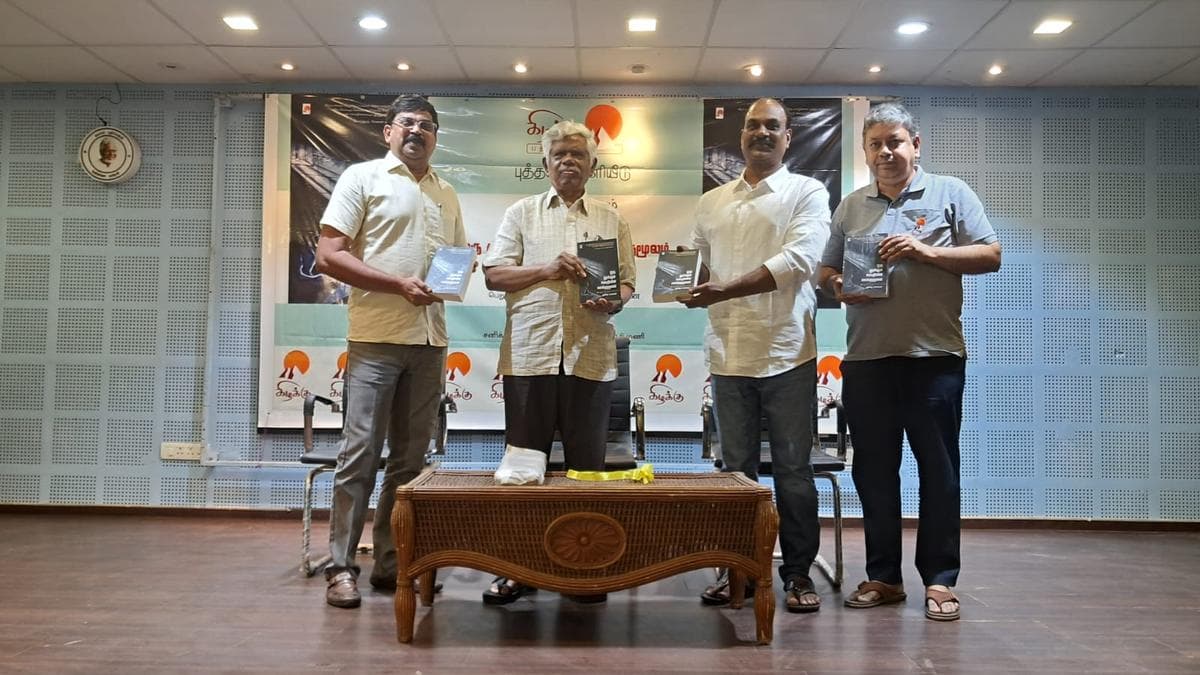
Book by ex-death row convict Selvam details 31 years in prison and Kanniyakumari's 1980s turf wars.
Summary
Oru Thooku Kaithiyin Vaakumoolam, a book by former death row convict Selvam, provides a detailed account of his 31 years in prison and the turf wars in Kanniyakumari district during the late 1980s. While a gripping personal story, its direct relevance for competitive exams is limited. It primarily offers insights into regional history and the justice system rather than major policy or constitutional developments.
Key Points
- 1The book is titled "Oru Thooku Kaithiyin Vaakumoolam".
- 2It is authored by Selvam, a former death row convict.
- 3Selvam spent 31 years in prison.
- 4The book details turf wars that occurred in India's Kanniyakumari district.
- 5These events described in the book took place in the late 1980s.
In-Depth Analysis
The book "Oru Thooku Kaithiyin Vaakumoolam" by Selvam, a former death row convict, offers a compelling personal narrative of 31 years spent in prison and sheds light on the turf wars that plagued Kanniyakumari district in the late 1980s. While the book primarily serves as a personal memoir and a regional historical account, its deeper significance for competitive exam aspirants lies in the insights it provides into the Indian criminal justice system, prison conditions, human rights, and the socio-political dynamics of regional conflicts.
**Background Context and What Happened:**
Kanniyakumari, located at the southernmost tip of peninsular India, is a region with a unique demographic and socio-economic landscape. The late 1980s, when the turf wars described in the book occurred, was a period of significant social and political flux across many parts of India. Local disputes, often fueled by caste, community, land, or political rivalries, could escalate into violent turf wars, challenging the state's law and order machinery. Selvam's personal journey, from being condemned to death to spending over three decades in prison, provides a stark look at the consequences of such conflicts and the long, often arduous, path through the justice system. His account from prison likely details not just the personal ordeal but also the systemic issues prevalent within Indian correctional facilities – overcrowding, lack of adequate facilities, human rights concerns, and the psychological impact of prolonged incarceration.
**Key Stakeholders Involved:**
1. **Selvam (the Author/Convict):** Represents the individuals caught within the criminal justice system, particularly those facing serious charges like murder and the death penalty. His story highlights the human element of crime and punishment, and the potential for reform and rehabilitation even after long periods of imprisonment.
2. **The State (Police, Judiciary, Prison Authorities):** These are the primary institutions responsible for maintaining law and order, administering justice, and managing correctional facilities. The book implicitly critiques or highlights the functioning of these bodies – the efficacy of policing in preventing conflicts, the efficiency and fairness of judicial processes, and the conditions and rehabilitative potential of prisons.
3. **Local Communities in Kanniyakumari:** These communities are both victims and sometimes participants in the turf wars, directly experiencing the breakdown of law and order and its social consequences.
4. **Human Rights Organizations and Legal Aid Advocates:** Though not directly mentioned, such accounts often galvanize these groups to advocate for prison reforms, legal aid for the poor, and protection of prisoners' rights.
**Why This Matters for India:**
This narrative, though regional and personal, resonates with several critical issues facing India. Firstly, it underscores the need for **criminal justice reforms**. The prolonged incarceration (31 years) and the initial death sentence bring into focus the debates surrounding the death penalty, the efficiency of judicial processes, and the need for timely justice. Secondly, it highlights the persistent challenges in **prison administration and human rights**. Selvam's account serves as a testament to the conditions within Indian prisons, prompting discussions on overcrowding, lack of healthcare, vocational training, and the overall rehabilitative aspect. Thirdly, it provides a micro-level view of **regional conflicts and their socio-political impact**, reminding us that maintaining peace and order at the local level is fundamental to national stability and development.
**Historical Context and Future Implications:**
The late 1980s was a period preceding significant economic liberalization in India, marked by various social movements and regional assertions. The law and order machinery was often stretched thin. The account of turf wars reflects the challenges faced by state governments in maintaining peace amidst local rivalries. Historically, prison reforms in India have been a slow process, with the archaic Prisons Act of 1894 still largely in effect, though supplemented by state-level rules and the more modern Model Prison Manual 2016. Accounts like Selvam's contribute to the ongoing public discourse on these issues. In terms of future implications, such narratives can serve as powerful advocacy tools for accelerated prison reforms, focusing on rehabilitation, mental health support, legal aid, and ensuring humane treatment in accordance with international standards. They also reinforce the need for robust local governance and conflict resolution mechanisms to prevent the escalation of disputes into violent turf wars.
**Related Constitutional Articles, Acts, or Policies:**
1. **Article 21 (Right to Life and Personal Liberty):** This fundamental right is paramount. The Supreme Court, through landmark judgments like *Maneka Gandhi v. Union of India* (1978) and subsequent cases, has expanded its scope to include the right to a speedy trial, protection from cruel and unusual punishment, and the right to live with human dignity even for prisoners. Prolonged incarceration and inhumane prison conditions can be challenged under this article.
2. **Article 72 and 161 (Pardoning Power):** These articles empower the President and Governors, respectively, to grant pardons, reprieves, respites, or remission of punishment or to suspend, remit, or commute the sentence of any person convicted of any offence, including death sentences. Selvam's eventual release, if it involved a commutation or remission, would relate to these powers.
3. **Criminal Procedure Code (CrPC), 1973:** This act lays down the procedure for investigation, trial, and punishment of offenders. Provisions related to arrest, custody, bail, and sentencing are crucial.
4. **Prisons Act, 1894:** The foundational law governing prison administration in India, though often criticized for its colonial origins and punitive rather than reformative approach. The **Model Prison Manual 2016** was a significant step towards modernizing prison management, emphasizing human rights, rehabilitation, and welfare of prisoners.
5. **Justice Mulla Committee (1983):** This committee, constituted to review the entire prison system, made comprehensive recommendations for prison reforms, many of which are still relevant and yet to be fully implemented.
6. **National Human Rights Commission (NHRC):** Has consistently advocated for prison reforms and protection of human rights of prisoners.
Exam Tips
This topic primarily falls under 'Indian Polity and Governance' (Criminal Justice System, Human Rights, Social Justice) and 'History' (Social Issues, Regional Dynamics of late 20th century) sections of competitive exam syllabi, especially for State PSCs.
Study the evolution of the criminal justice system, key committees on prison reforms (e.g., Justice Mulla Committee, Justice Krishna Iyer Committee), and landmark Supreme Court judgments related to prisoner rights (e.g., D.K. Basu v. State of West Bengal, Sunil Batra v. Delhi Administration).
Expect questions on fundamental rights, particularly Article 21, and its interpretation concerning prisoners' rights. Be prepared for essay questions on the challenges facing the Indian prison system and suggested reforms.
Understand the distinction between the Prisons Act, 1894, and the Model Prison Manual, 2016, and their implications for prison administration and prisoner welfare.
Familiarize yourself with the constitutional provisions related to pardoning power (Articles 72 and 161) and their practical application in cases involving death row convicts.
Related Topics to Study
Full Article
The book Oru Thooku Kaithiyin Vaakumoolam, authored by Selvam, who was once condemned to death for a murder, goes far beyond his personal story and his 31 years in prison. It provides a detailed account of the turf wars that engulfed Kanniyakumari district in the late 1980s