



Relevant for Exams
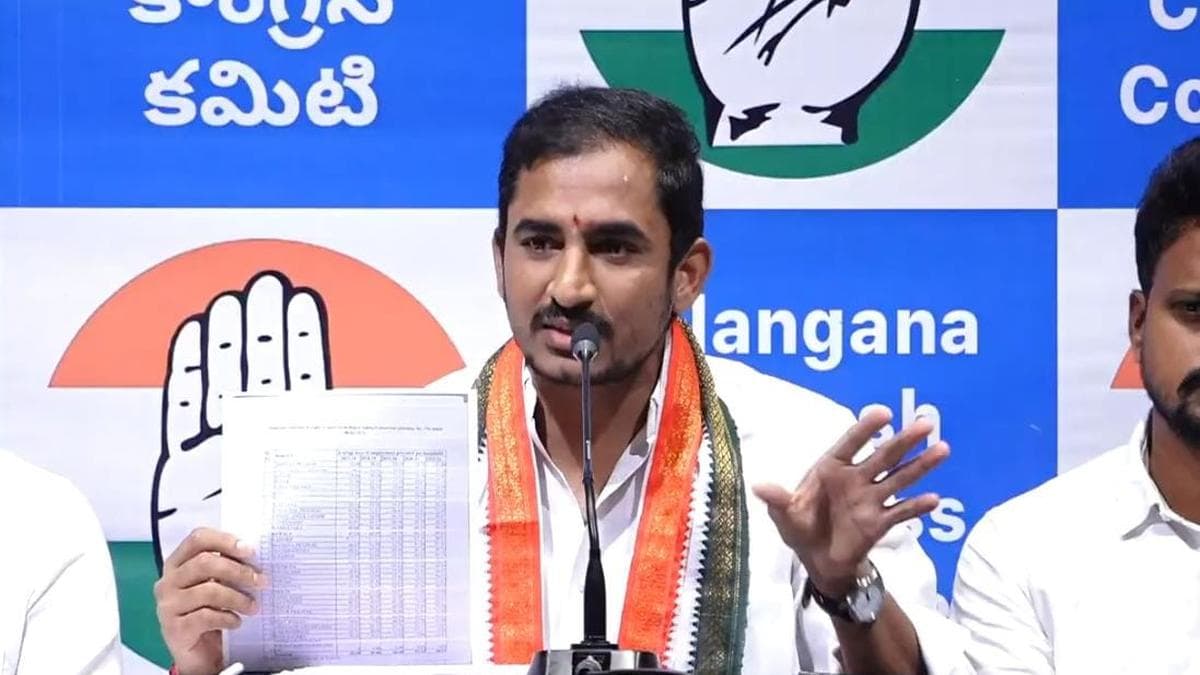
Congress alleges BJP reduced Gramin scheme workdays to 12 in Telangana.
Summary
The Congress party has alleged that the BJP government has reduced the number of workdays to 12 per person in Telangana under a 'Gramin scheme', likely referring to MGNREGA. This accusation highlights concerns over the implementation of crucial rural employment guarantee programs and their impact on livelihoods. For competitive exams, this news is relevant for understanding social welfare schemes, federal governance issues, and political accountability in policy execution.
Key Points
- 1The Congress party accused the BJP of reducing workdays to 12 per person in Telangana.
- 2The alleged reduction of workdays is stated to be under a 'Gramin scheme', implying a rural employment guarantee program.
- 3The specific state where this alleged reduction occurred is Telangana.
- 4The accusation was publicly made by the Congress political party.
- 5The BJP is the party against whom the allegation of reducing workdays has been made.
In-Depth Analysis
The recent allegation by the Congress party, claiming that the BJP government has reduced workdays to 12 per person in Telangana under a 'Gramin scheme,' likely referring to the Mahatma Gandhi National Rural Employment Guarantee Act (MGNREGA), brings to the forefront critical issues related to social welfare, federal governance, and political accountability in India. Understanding this incident requires a deep dive into the scheme itself, the roles of various governmental tiers, and its broader implications for the nation.
**Background Context: The Lifeline of Rural India - MGNREGA**
To grasp the significance of this allegation, one must first understand MGNREGA. Enacted on August 25, 2005, through the Mahatma Gandhi National Rural Employment Guarantee Act, this scheme is a flagship social security measure aimed at enhancing the livelihood security of people in rural areas by guaranteeing 100 days of wage employment in a financial year to every rural household whose adult members volunteer to do unskilled manual work. It is a demand-driven program, meaning work must be provided within 15 days of demand, failing which applicants are entitled to unemployment allowance. The Act was a landmark legislation, moving from a welfare-oriented approach to a rights-based framework for employment, underpinned by the Directive Principles of State Policy, particularly Article 41 (Right to Work) and Article 43 (Living Wage). It sought to address chronic poverty, distress migration, and create durable assets in rural areas.
**What Happened: The Allegation and its Implications**
The Congress party has publicly accused the BJP government of drastically reducing the number of workdays provided to individuals in Telangana to merely 12 days per person under a rural employment scheme. While the specific 'Gramin scheme' isn't explicitly named in the summary, the context strongly suggests MGNREGA, given its prominence in rural employment guarantee. This allegation, if true, represents a significant departure from the statutory guarantee of 100 days of work and would severely impact the livelihoods of rural households dependent on the scheme for income security. Such a reduction could be attributed to various factors, including insufficient fund allocation from the Centre, delays in fund release, administrative inefficiencies at the state level, or even deliberate policy shifts. The political nature of the accusation highlights the ongoing scrutiny of the scheme's implementation by opposition parties.
**Key Stakeholders Involved**
Several key players are central to this issue:
1. **Central Government (BJP-led)**: As the architect and primary funder of MGNREGA, the Union government, under the Ministry of Rural Development, is responsible for policy formulation, fund allocation, and overall oversight. Accusations of reduced workdays often point fingers at the Centre's financial commitment and timely release of funds to states.
2. **State Government (Telangana)**: The state government plays a crucial role in implementing MGNREGA. This includes identifying projects, registering workers, issuing job cards, ensuring work availability, timely wage payments, and grievance redressal. Any reduction in workdays on the ground ultimately reflects on the state's execution capabilities and priorities.
3. **Congress Party**: As the principal opposition party, Congress is a key political stakeholder. Their role is to scrutinize government policies and implementation, hold the ruling party accountable, and articulate concerns of the populace. This accusation serves as a political tool to highlight perceived failures of the BJP government, both at the Centre and potentially through its influence on state-level implementation.
4. **Rural Workers/Beneficiaries**: These are the most critical stakeholders, directly impacted by the provision or denial of workdays. Their livelihoods, food security, and ability to meet basic needs are tied to the scheme's effective functioning.
5. **Local Self-Governments (Panchayati Raj Institutions)**: Gram Panchayats are the primary implementing agencies for MGNREGA, responsible for planning works, executing projects, and monitoring the scheme at the grassroots level.
**Why This Matters for India: Economic, Social, and Political Significance**
This issue holds immense significance for India. Economically, MGNREGA is a crucial safety net, injecting liquidity into rural economies, boosting rural demand, and acting as an anti-cyclical measure during economic downturns. A reduction in workdays directly translates to reduced rural incomes, potentially exacerbating poverty and leading to increased distress migration to urban centers. Socially, it impacts the most vulnerable sections, including women, Scheduled Castes, and Scheduled Tribes, who disproportionately rely on MGNREGA for employment. It undermines the 'right to work' principle enshrined in the Act. Politically, such allegations fuel debates on fiscal federalism, the distribution of financial resources between the Centre and states, and the political will to sustain social welfare programs. It also highlights the constant political tussle and accountability mechanisms in India's democratic framework.
**Historical Context and Future Implications**
MGNREGA has faced challenges since its inception, including issues of corruption, delayed wage payments, inadequate project planning, and insufficient fund allocation. During the COVID-19 pandemic, the scheme proved to be a critical lifeline for millions of returning migrant workers, underscoring its indispensable role. However, there have been ongoing debates regarding its effectiveness, the balance between demand and supply of work, and the quality of assets created. The current allegation, if substantiated, could lead to increased scrutiny of MGNREGA's implementation across other states. It could also prompt calls for greater transparency, timely fund releases, and strengthening of the grievance redressal mechanism. For the BJP, it presents a challenge to defend its commitment to rural welfare, while for Congress, it's an opportunity to underscore its pro-poor credentials. The long-term implications involve potential reforms to the scheme, increased pressure on state governments for efficient implementation, and continued political discourse on the efficacy and future of India's social safety nets.
**Related Constitutional Articles, Acts, and Policies**
* **Mahatma Gandhi National Rural Employment Guarantee Act (MGNREGA), 2005**: The foundational law. It is a legal entitlement to work.
* **Directive Principles of State Policy (Part IV of the Constitution)**: Specifically, Article 41 (Right to Work, to education and to public assistance in certain cases) and Article 43 (Living wage, etc., for workers) provide the constitutional basis for such welfare legislation. While not justiciable, DPSPs guide the state in making laws.
* **Seventh Schedule**: The distribution of legislative powers between the Union and States. 'Public health and sanitation; hospitals and dispensaries' (Entry 6) and 'Relief of the disabled and unemployable' (Entry 9) are in the State List (List II). However, 'Economic and social planning' (Entry 20) and 'Social security and social insurance, employment and unemployment' (Entry 23) are in the Concurrent List (List III), allowing both Centre and States to legislate. MGNREGA operates within this framework, with the Centre legislating and funding, and states implementing.
* **Fiscal Federalism**: The financial relations between the Centre and states, governed by constitutional provisions (e.g., Articles 268-281, including the Finance Commission), are crucial as MGNREGA involves significant central transfers to states. Issues of fund delays often stem from these financial dynamics.
Exam Tips
**Syllabus Section**: This topic primarily falls under 'Indian Economy' (Poverty Alleviation, Social Sector Initiatives, Rural Development) and 'Indian Polity & Governance' (Federalism, Centre-State Relations, Social Justice, Public Policy).
**Related Topics to Study Together**: Thoroughly understand the features, objectives, and challenges of MGNREGA. Also, study Fiscal Federalism, the role of Panchayati Raj Institutions, and other major social welfare schemes like PM-KISAN, National Social Assistance Programme (NSAP), and Public Distribution System (PDS).
**Common Question Patterns**: Expect questions on the salient features of MGNREGA, its impact on rural livelihoods and asset creation, challenges in its implementation (e.g., delayed wage payments, corruption), the role of various stakeholders (Centre, State, PRIs), and its contribution to achieving Sustainable Development Goals. Questions may also involve critical analysis of its effectiveness or comparisons with other welfare programs.
**Policy Analysis**: Be prepared to analyze the policy implications of such allegations, including their impact on centre-state relations, political accountability, and the socio-economic well-being of rural populations. Understand the difference between a 'right-based' approach (like MGNREGA) and a 'welfare-based' approach.