



Relevant for Exams
Govt. proposes replacing MGNREGA with 'Viksit Bharat Guarantee For Rozgar and Ajeevika Mission (Gramin) Bill'.
Summary
The government is considering replacing the Mahatma Gandhi National Rural Employment Guarantee Act (MGNREGA) with the new 'Viksit Bharat Guarantee For Rozgar and Ajeevika Mission (Gramin) Bill'. This move signifies a major policy shift in rural employment and livelihood generation. For competitive exams, understanding the key provisions of both the existing MGNREGA and the proposed changes, along with its socio-economic impact and beneficiaries, is crucial for questions on social welfare schemes and government initiatives.
Key Points
- 1The existing rural employment scheme is the Mahatma Gandhi National Rural Employment Guarantee Act (MGNREGA), enacted in 2005.
- 2MGNREGA guarantees 100 days of wage employment in a financial year to every rural household whose adult members volunteer for unskilled manual work.
- 3The proposed new legislation is named the 'Viksit Bharat Guarantee For Rozgar and Ajeevika Mission (Gramin) Bill'.
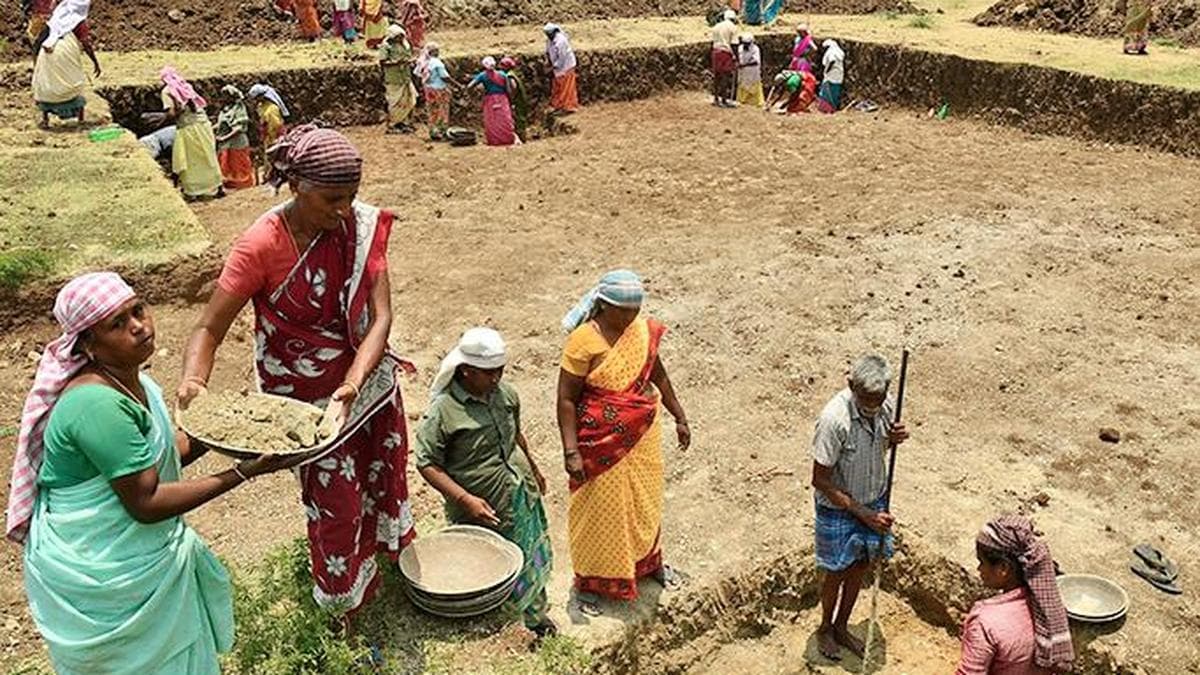
- 4MGNREGA has historically benefited vulnerable rural households, including women, Scheduled Castes, and Scheduled Tribes, providing a legal right to work.
- 5The government's intention is to introduce new provisions and potentially alter the operational framework of rural employment and livelihood generation through the new bill.
In-Depth Analysis
The potential replacement of the Mahatma Gandhi National Rural Employment Guarantee Act (MGNREGA) with the 'Viksit Bharat Guarantee For Rozgar and Ajeevika Mission (Gramin) Bill' marks a significant moment in India's social welfare policy landscape. Understanding this proposed shift requires delving into the origins of MGNREGA, its impact, and the broader vision behind the new initiative.
**Background Context and Historical Journey:**
India, with its vast rural population, has long grappled with issues of unemployment, underemployment, and poverty. Prior to MGNREGA, various employment generation schemes existed, but they often lacked the legal backing and demand-driven nature crucial for effective implementation. The idea of a legal guarantee for rural employment gained traction, culminating in the enactment of the **National Rural Employment Guarantee Act (NREGA) in 2005**, which was later renamed the Mahatma Gandhi National Rural Employment Guarantee Act (MGNREGA) in 2009. This Act was revolutionary as it provided a **legal right to work**, guaranteeing 100 days of wage employment in a financial year to every rural household whose adult members volunteer for unskilled manual work. Its core principles included demand-driven employment, payment of minimum wages, and decentralized implementation through Gram Panchayats. MGNREGA quickly became the world's largest work guarantee program, offering a crucial social safety net, particularly during lean agricultural seasons and economic downturns.
**What's Happening Now:**
After nearly two decades of operation, the government is considering replacing MGNREGA with the 'Viksit Bharat Guarantee For Rozgar and Ajeevika Mission (Gramin) Bill'. While specific details of the new bill are yet to be fully disclosed, the proposed name itself, 'Viksit Bharat Guarantee For Rozgar and Ajeevika Mission', suggests a potential shift in focus. The 'Viksit Bharat' (Developed India) vision often emphasizes productivity, skill development, and sustainable livelihoods rather than solely wage employment. It is anticipated that the new bill might aim to address some of the persistent challenges faced by MGNREGA, such as wage payment delays, asset quality issues, and allegations of corruption. The government's stated intent is likely to make the rural employment program more efficient, outcome-oriented, and integrated with broader rural development and livelihood generation initiatives, moving beyond merely providing 'unskilled manual work' to potentially include more skill-based or asset-creating activities.
**Key Stakeholders Involved:**
* **Government of India (Ministry of Rural Development):** As the proponent of the new bill, it seeks to modernize and streamline rural employment policies, aligning them with its developmental agenda. Its objective is to enhance the effectiveness and impact of the scheme.
* **Rural Households/Workers:** These are the primary beneficiaries whose livelihoods directly depend on such schemes. Any changes will profoundly affect their access to employment, wages, and social security.
* **State Governments:** They play a crucial role in implementing these schemes. Changes in funding patterns, administrative structures, or design will impact their capacity and responsibilities.
* **Civil Society Organizations and Activists:** Groups advocating for labor rights and rural development often monitor such policy changes closely, ensuring that workers' entitlements are not diluted and the scheme remains robust.
* **Opposition Parties:** They are often critical of moves that might be perceived as weakening established welfare programs, especially those with strong public support like MGNREGA. Their concerns typically revolve around potential dilution of the 'legal right to work' aspect and reduced budgetary allocations.
* **Economists and Policy Analysts:** They provide critical assessments of the economic and social implications of such policy shifts, offering insights into their potential success or failures.
**Significance for India:**
This proposed policy shift holds immense significance for India. Economically, MGNREGA has been crucial in boosting rural demand, stabilizing rural wages, and acting as a counter-cyclical measure during economic slowdowns. A new scheme could either enhance these benefits by focusing on more productive asset creation and skill development, or it could risk diminishing the immediate income support that MGNREGA provided. Socially, MGNREGA significantly empowered vulnerable sections, including women, Scheduled Castes (SCs), and Scheduled Tribes (STs), by providing them with independent income and reducing distress migration. The new bill's impact on these groups will be a critical measure of its success. Politically, any changes to a widely popular welfare scheme like MGNREGA are sensitive and can have electoral implications, especially if perceived as a reduction in welfare provisions.
**Constitutional and Policy References:**
MGNREGA finds its spirit rooted in the **Directive Principles of State Policy (DPSP)** enshrined in Part IV of the Indian Constitution. Specifically, **Article 39(a)** directs the State to ensure that citizens, men and women equally, have the right to an adequate means of livelihood, and **Article 41** mandates that the State shall, within the limits of its economic capacity and development, make effective provision for securing the right to work, to education and to public assistance in cases of unemployment, old age, sickness and disablement, and in other cases of undeserved want. MGNREGA was a legislative embodiment of these principles, translating a moral obligation into a legal entitlement. The proposed 'Viksit Bharat Guarantee For Rozgar and Ajeevika Mission (Gramin) Bill' would also operate under these broader constitutional directives, aiming to fulfill the state's welfare responsibilities.
**Future Implications:**
The success of the 'Viksit Bharat Guarantee For Rozgar and Ajeevika Mission (Gramin) Bill' will hinge on its design, funding, and implementation effectiveness. If it manages to retain the demand-driven nature and legal guarantee of employment while integrating skill development, promoting sustainable livelihoods, and ensuring timely wage payments, it could potentially be a more robust rural development tool. However, any dilution of the 'right to work' or a shift away from universal access could have adverse consequences for rural poverty and unemployment. The debate will likely continue regarding whether this new bill represents a progressive evolution of rural employment policy or a step back from a proven social security measure, particularly concerning the extent of the 'guarantee' it offers and its focus on the most vulnerable sections.
Exam Tips
This topic falls under GS Paper-II (Social Justice - Government Schemes & Welfare initiatives, Issues relating to poverty & hunger) and GS Paper-III (Indian Economy - Employment, Inclusive Growth).
Study the key features, objectives, and criticisms of MGNREGA thoroughly. For the new bill, focus on understanding the proposed changes, its stated objectives, and how it differs from MGNREGA. Compare their operational mechanisms and target beneficiaries.
Common question patterns include direct questions on MGNREGA's provisions, its impact on rural economy and women empowerment, challenges faced by the scheme, and analytical questions comparing MGNREGA with the proposed new bill in terms of effectiveness, scope, and constitutional backing.
Related Topics to Study
Full Article
Besides the name, what are the changes in the Viksit Bharat Guarantee For Rozgar and Ajeevika Mission (Gramin) Bill? Who were the biggest beneficiaries of the Mahatma Gandhi National Rural Employment Guarantee Act? Why is the Opposition upset?