



Relevant for Exams
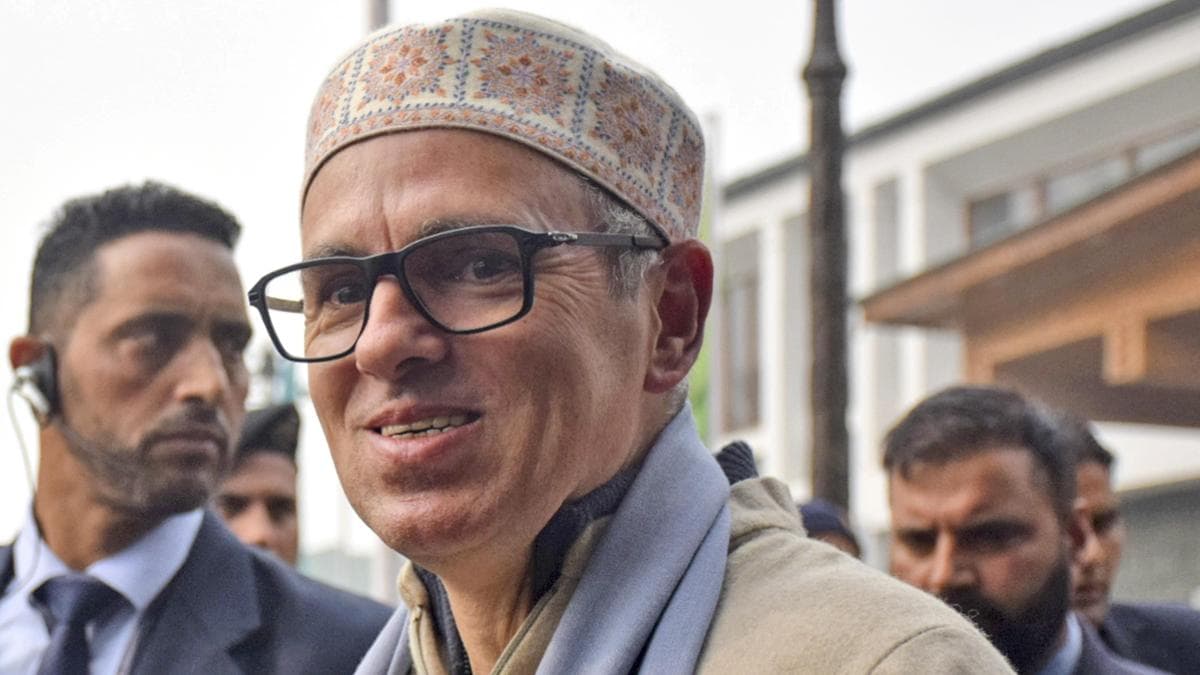
Omar Abdullah praises PM Modi for J&K funding, drawing criticism from PDP and J&K Peoples Conference.
Summary
Omar Abdullah, a prominent political leader, recently praised Prime Minister Narendra Modi for providing liberal funding to economically disadvantaged Jammu & Kashmir. This statement sparked sharp reactions from leaders of the Peoples Democratic Party and the J&K Peoples Conference. The event highlights the evolving political dynamics and inter-party relations within J&K, which is relevant for understanding regional governance and political discourse for competitive exams.
Key Points
- 1Omar Abdullah, a political leader, acknowledged Prime Minister Narendra Modi's 'liberal funding' for Jammu & Kashmir.
- 2The central funding was specifically directed towards 'economically disadvantaged J&K'.
- 3Abdullah's remarks drew 'sharp reactions' from leaders of the Peoples Democratic Party (PDP).
- 4Leaders of the J&K Peoples Conference also expressed strong opposition to Omar Abdullah's statement.
- 5The news highlights political discourse and inter-party dynamics within the Union Territory of Jammu & Kashmir.
In-Depth Analysis
Omar Abdullah's recent commendation of Prime Minister Narendra Modi for providing 'liberal funding' to economically disadvantaged Jammu & Kashmir has ignited a significant political debate, offering a crucial lens into the evolving political landscape of the Union Territory. This seemingly straightforward statement by a prominent regional leader, the Vice-President of the National Conference (NC), has far-reaching implications for India's governance, internal security, and Centre-state relations, particularly in a region as sensitive as J&K.
**Background Context and What Happened:**
To fully grasp the significance of Abdullah's remarks, one must recall the momentous decision of August 5, 2019. On this date, the Government of India abrogated Article 370 and Article 35A of the Constitution, which granted special status to Jammu & Kashmir. Concurrently, the state was bifurcated and reorganized into two Union Territories: Jammu and Kashmir (with a legislature) and Ladakh (without a legislature), under the provisions of the Jammu and Kashmir Reorganisation Act, 2019. This move fundamentally altered the constitutional and political relationship between J&K and the Indian Union. Following this, mainstream political activity in J&K was largely curtailed, and many leaders, including Omar Abdullah, were detained. The Centre's narrative post-2019 has consistently focused on integrating J&K, fostering economic development, and ensuring security, promising a new era of prosperity.
Omar Abdullah's recent statement, acknowledging the Centre's financial assistance, comes amidst this backdrop. His praise for PM Modi for being
Exam Tips
This topic primarily falls under Indian Polity & Governance (GS-II) and can also touch upon Economy (GS-III) and Internal Security (GS-III). Focus on the constitutional provisions related to Union Territories and Centre-State financial relations.
Study the Jammu and Kashmir Reorganisation Act, 2019, thoroughly. Understand the powers of the Lieutenant Governor, the proposed legislative assembly, and the fiscal arrangements for the UT of J&K. Compare it with other UTs like Delhi and Puducherry.
Be prepared for analytical questions on the implications of Article 370 abrogation, the role of regional parties in J&K's political normalization, and the Centre's development strategy for the region. Questions may also involve comparing fiscal federalism in states versus Union Territories.
Related Topics to Study
Full Article
Omar Abdullah’s recent remarks that Prime Minister Narendra Modi has been liberal with funding for economically disadvantaged J&K, drew sharp reactions from leaders of the Peoples Democratic Party and the J&K Peoples Conference