



Relevant for Exams
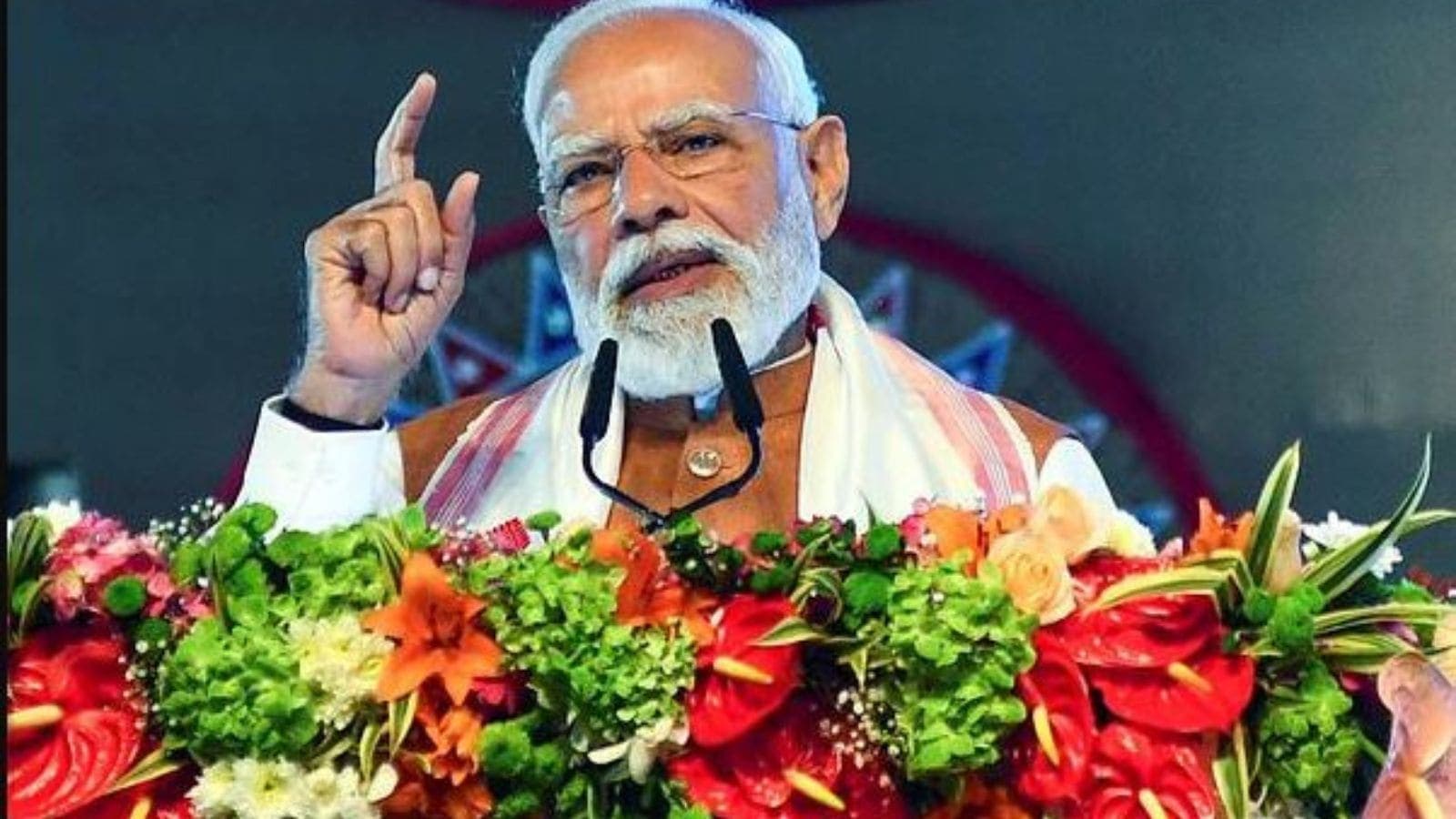
Modi recalls Gopinath Bordoloi's historic stand in Assam, emphasizing his role in state's integration.
Summary
Prime Minister Modi recently invoked Gopinath Bordoloi's historical stance against the Congress, particularly his pivotal role in safeguarding Assam's integration into India. This reference highlights Bordoloi's crucial contribution during the Cabinet Mission Plan, preventing Assam from being grouped with East Pakistan. For competitive exams, understanding Bordoloi's historical significance, especially regarding Assam's territorial integrity and his national recognition, is vital for Indian history and polity sections.
Key Points
- 1Gopinath Bordoloi served as the first Chief Minister of Assam after India's independence.
- 2He played a pivotal role in preventing Assam from being grouped with East Pakistan (Group C) under the 1946 Cabinet Mission Plan.
- 3Bordoloi was posthumously awarded India's highest civilian honour, the Bharat Ratna, in 1999.
- 4He was a prominent freedom fighter and a key leader of the Indian National Congress from Assam.
- 5Gopinath Bordoloi is often referred to by the honorific title 'Lokpriya' (beloved by the people).
In-Depth Analysis
Gopinath Bordoloi's resolute stand against the Cabinet Mission Plan's grouping clause in 1946 is a pivotal, yet often overlooked, chapter in India's struggle for independence and nation-building. Prime Minister Modi's recent invocation of this historical event underscores its enduring significance, particularly for understanding Assam's integration into the Indian Union. This act of defiance by Bordoloi, the first Chief Minister of Assam after independence, was instrumental in safeguarding the territorial and cultural integrity of the province.
The background to this crucial moment lies in the complex political landscape of 1946. With the end of World War II, the British government was keen to transfer power to Indian hands. To facilitate this, the Cabinet Mission, comprising Lord Pethick-Lawrence, Sir Stafford Cripps, and A.V. Alexander, arrived in India in March 1946. Their objective was to devise a framework for India's independence, addressing the contentious demands of the Indian National Congress for a united India and the Muslim League for a separate Pakistan. The Mission proposed a three-tier structure: a weak centre, provinces, and groups of provinces. The grouping scheme was designed as a compromise to appease the Muslim League, allowing for provinces to form groups that could draft their own constitutions. These groups were: Group A (Hindu-majority provinces), Group B (North-Western Muslim-majority provinces), and Group C (Bengal and Assam, both Muslim-majority Bengal and Hindu-majority Assam).
The critical issue arose with Group C, which proposed to merge Assam, a Hindu-majority province with a distinct linguistic and cultural identity, with Bengal, a Muslim-majority province. This arrangement, if implemented, would have effectively placed Assam under the administrative and legislative dominance of Bengal, creating a demographic imbalance and potentially paving the way for its eventual inclusion in East Pakistan (which later became Bangladesh). The Congress Working Committee, in its initial acceptance of the Cabinet Mission Plan, had interpreted the grouping clause as optional, meaning provinces could opt out after the constitution for their group was framed. However, the Muslim League insisted that grouping was compulsory.
Here, Gopinath Bordoloi emerged as the key stakeholder and a staunch defender of Assam's identity. Despite being a prominent leader of the Indian National Congress, he vehemently opposed the grouping clause. He recognized the existential threat it posed to Assam, fearing that it would dilute its unique heritage and potentially lead to its secession from India. Bordoloi, with the full backing of the people of Assam, launched a powerful political agitation. He rallied the Assam Legislative Assembly, which passed a resolution against joining Group C. He argued that the grouping would be detrimental to Assam's economy, culture, and social fabric. His unwavering stance directly challenged the initial inclination of even national Congress leaders like Mahatma Gandhi, who initially advised Assam to accept the grouping. However, Bordoloi's persistent efforts and the widespread public outcry in Assam eventually convinced Gandhi and other Congress leaders of the gravity of the situation.
Bordoloi's defiance proved to be a turning point. The Congress eventually clarified its position, stating that provinces could not be forced to join a group against their will. This internal struggle within the Congress, largely spearheaded by Bordoloi, coupled with the Muslim League's insistence on compulsory grouping, ultimately led to the collapse of the Cabinet Mission Plan's grouping scheme. This historical victory ensured Assam's integral place within the Union of India, preventing a potential territorial fragmentation that could have had lasting geopolitical consequences for India's northeastern frontier. Had Assam been grouped with Bengal, its strategic location, rich natural resources, and diverse ethnic composition might have been irrevocably altered, impacting India's security and regional stability.
This event has profound significance for India. It highlights the importance of regional identity and the federal structure, even before the Constitution was formally adopted. Bordoloi's actions foreshadowed the principles of states' autonomy and the protection of linguistic and cultural diversity that would later be enshrined in the Indian Constitution, particularly through Articles 1 and 3, which deal with the name and territory of the Union and the formation of new states or alteration of areas, boundaries, or names of existing states. His legacy is not just about Assam but about the strength of India's federal spirit and the power of democratic resistance. For his immense contributions, Gopinath Bordoloi was posthumously awarded the Bharat Ratna, India's highest civilian honor, in 1999, recognizing his role as a national hero and a protector of India's territorial integrity. His story remains a testament to courageous leadership in the face of immense political pressure.
Exam Tips
This topic falls under 'Modern Indian History' (specifically, the period leading up to independence and Partition) and 'Indian Polity' (concepts of federalism, state formation, and national integration) for UPSC, SSC, and State PSC exams. Focus on the sequence of events and the roles of key personalities.
When studying the Cabinet Mission Plan, pay close attention to its specific proposals, particularly the grouping scheme (Sections A, B, C), and the reasons for its eventual failure. Connect Bordoloi's role to the broader Congress policy and the Muslim League's stance.
Expect questions on biographical details of Gopinath Bordoloi (e.g., 'Lokpriya' title, Bharat Ratna year, first CM of Assam), the specific context of the Cabinet Mission Plan, and the significance of Assam's grouping issue. Map-based questions on the geographical implications of the grouping are also possible.
Relate this event to the broader theme of India's unity and integrity post-independence, and how regional leaders played crucial roles in shaping the nation's boundaries and political landscape.
Understand the interplay between national leadership (e.g., Gandhi, Nehru) and regional leaders like Bordoloi during critical junctures of nation-building. This often appears in analytical questions requiring a nuanced understanding of historical events.