



Relevant for Exams
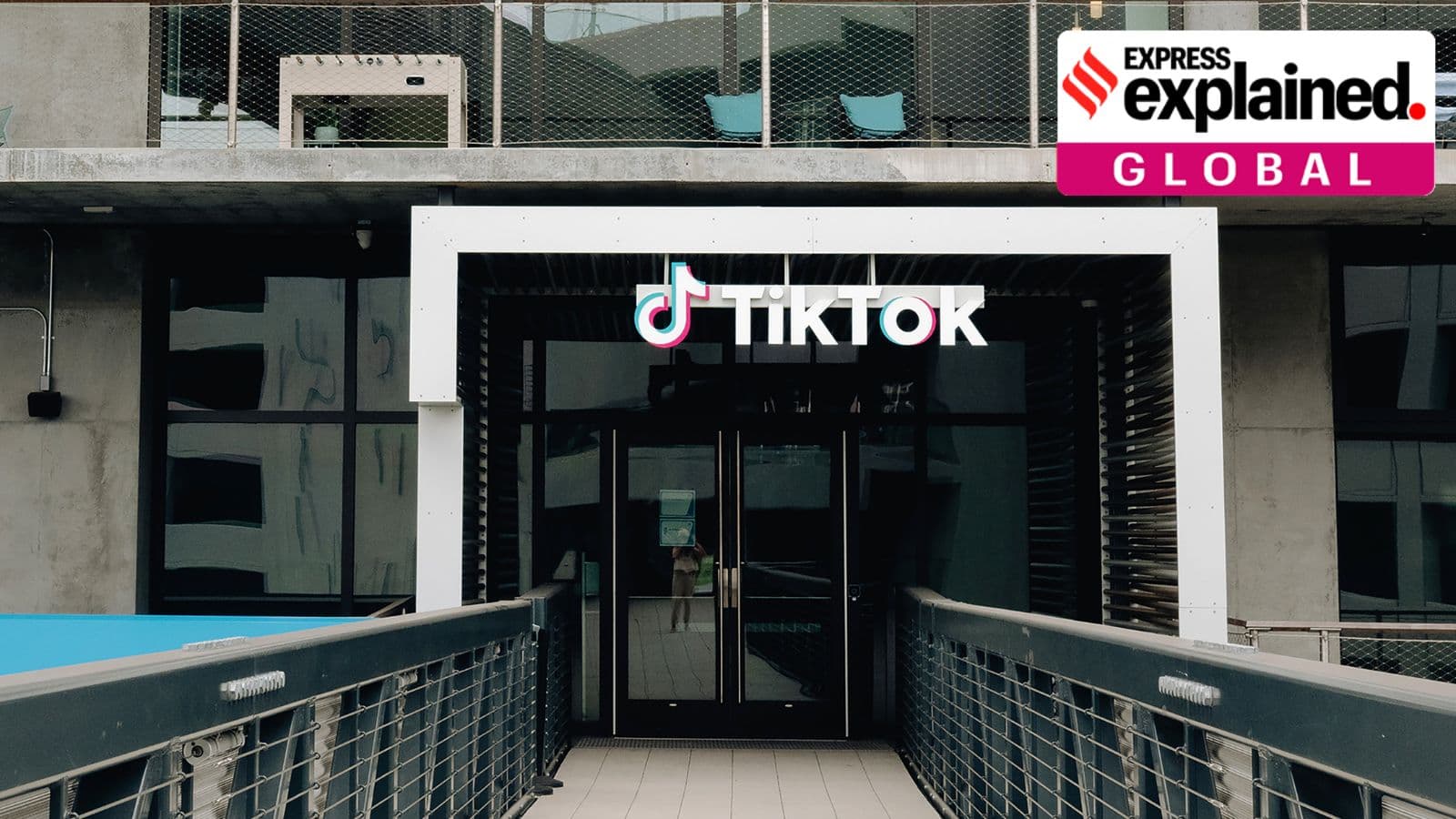
TikTok forms JV to divest US operations from Chinese parent, bypassing US ban.
Summary
TikTok announced a Joint Venture (JV) to divest its US business from its Chinese parent company, aiming to sidestep a potential US ban. This development is crucial for understanding international tech regulations, US-China trade relations, and corporate strategies to navigate geopolitical tensions, making it highly relevant for competitive exams focusing on global economic and political developments.
Key Points
- 1The company involved in the divestment strategy is TikTok.
- 2The method chosen for the divestment is the formation of a Joint Venture (JV).
- 3The specific business segment being divested is TikTok's US operations.
- 4The original owner of TikTok is identified as a Chinese parent company.
- 5The primary motivation for this move is to sidestep a potential ban by the United States.
In-Depth Analysis
The announcement by TikTok regarding a Joint Venture (JV) to divest its US business from its Chinese parent is a significant development, underscoring the escalating geopolitical tensions in the global technology sector. This move by TikTok, owned by Beijing-based ByteDance, is a direct response to persistent national security concerns raised by the United States government, which threatened a complete ban on the popular social media application.
**Background Context: The US-China Tech Rivalry and Data Concerns**
For several years, the relationship between the United States and China has been characterized by increasing friction, particularly in the realms of trade, technology, and national security. The US government, under both the Trump and Biden administrations, has expressed serious concerns that Chinese technology companies, including Huawei and TikTok, could be compelled by Beijing to provide user data to the Chinese Communist Party under China's National Intelligence Law of 2017. This law mandates that any organization or citizen shall "support, assist, and cooperate with national intelligence efforts." For TikTok, these fears were amplified by its immense popularity, especially among younger demographics, giving it access to vast amounts of personal data from over 170 million American users. Critics argued that this data, ranging from browsing habits to location information, could be exploited for surveillance, censorship, or influence operations by the Chinese state. This led to a series of executive orders and legislative efforts in the US aimed at either banning TikTok or forcing its divestment.
**The Divestment Strategy: A Joint Venture Approach**
To sidestep a potential outright ban, TikTok proposed a complex solution: the creation of a Joint Venture to house its US operations, effectively separating it from its Chinese parent, ByteDance. While the specifics of the JV structure are crucial, the core idea is to create an independent American entity that would manage US user data, content moderation, and potentially even its algorithm, ensuring that no sensitive data or operational control falls under the purview of ByteDance or, by extension, the Chinese government. This strategy aims to satisfy US regulatory demands for data security and national security while allowing TikTok to continue operating in one of its largest markets.
**Key Stakeholders in the Geopolitical Tech Saga**
Several key players are central to this development. First, **ByteDance/TikTok** itself, which seeks to protect its valuable US market share and avoid a catastrophic ban. Second, the **United States Government**, including the executive branch (President, Treasury Department, Commerce Department) and Congress, which is driven by national security imperatives and data protection concerns. Third, **US users** of TikTok, whose access to the platform hangs in the balance. Fourth, **potential American investors/partners** in the proposed JV, who would assume significant control over TikTok's US operations. Finally, the **Chinese Government**, which has historically viewed forced divestments of its companies as an affront to its sovereignty and has previously indicated it would oppose such moves, potentially complicating the deal's finalization.
**Significance for India: A Precedent and Validation**
This development holds profound significance for India, a country that proactively banned TikTok and dozens of other Chinese apps in June 2020. India's Ministry of Electronics and Information Technology invoked its powers under **Section 69A of the Information Technology Act, 2000**, citing threats to "national security, defense of India, public order" and "privacy and data security of Indian citizens." The US government's similar concerns and subsequent actions validate India's earlier stance, reinforcing the global apprehension about data security risks associated with Chinese technology. For India, this episode highlights the importance of digital sovereignty, data localization, and robust cybersecurity frameworks. It also provides a case study for Indian tech companies navigating international markets and for the government in formulating policies like the **Digital Personal Data Protection Act, 2023 (DPDP Act)**, which aims to protect citizens' data and regulate cross-border data flows.
**Broader Themes and Future Implications**
This TikTok situation is emblematic of a broader trend towards **tech decoupling** and the **fragmentation of the internet** along geopolitical lines. It underscores the challenges faced by global technology companies, which must increasingly navigate complex regulatory landscapes influenced by national security concerns. The success or failure of TikTok's JV strategy will set a precedent for how other multinational tech companies, particularly those with origins in geopolitically sensitive regions, structure their global operations. It also raises questions about the future of global supply chains for technology, the balance between national security and free market principles, and the potential for a 'splinternet' where digital ecosystems are tailored to national interests. The outcome will influence future policy decisions on foreign investment, data governance, and cybersecurity, not just in the US and China, but globally, including in India, as nations strive to protect their digital borders and citizen data.
Exam Tips
This topic falls under International Relations (Geopolitics, US-China relations), Indian Polity & Governance (IT Act, Data Protection, National Security), and Science & Technology (Cybersecurity, Digital India). Be prepared for questions on India's digital sovereignty and data protection policies.
Study related topics such as the Information Technology Act, 2000 (especially Section 69A), the Digital Personal Data Protection Act, 2023, the concept of 'digital sovereignty,' US-China trade and tech rivalry, and the role of bodies like the Committee on Foreign Investment in the United States (CFIUS).
Common question patterns include direct questions on constitutional articles/acts (e.g., 'Under which section did India ban TikTok?'), analytical questions on the geopolitical implications of tech bans, and essay questions on data governance challenges in a globalized world.
Understand the distinction between data privacy, data security, and national security in the context of digital platforms. Many questions test your ability to differentiate these concepts and their legal/policy implications.
Keep abreast of current affairs related to global tech regulations and international trade disputes, as these topics are dynamic and frequently appear in competitive exams, often requiring a multi-disciplinary approach.