



Relevant for Exams
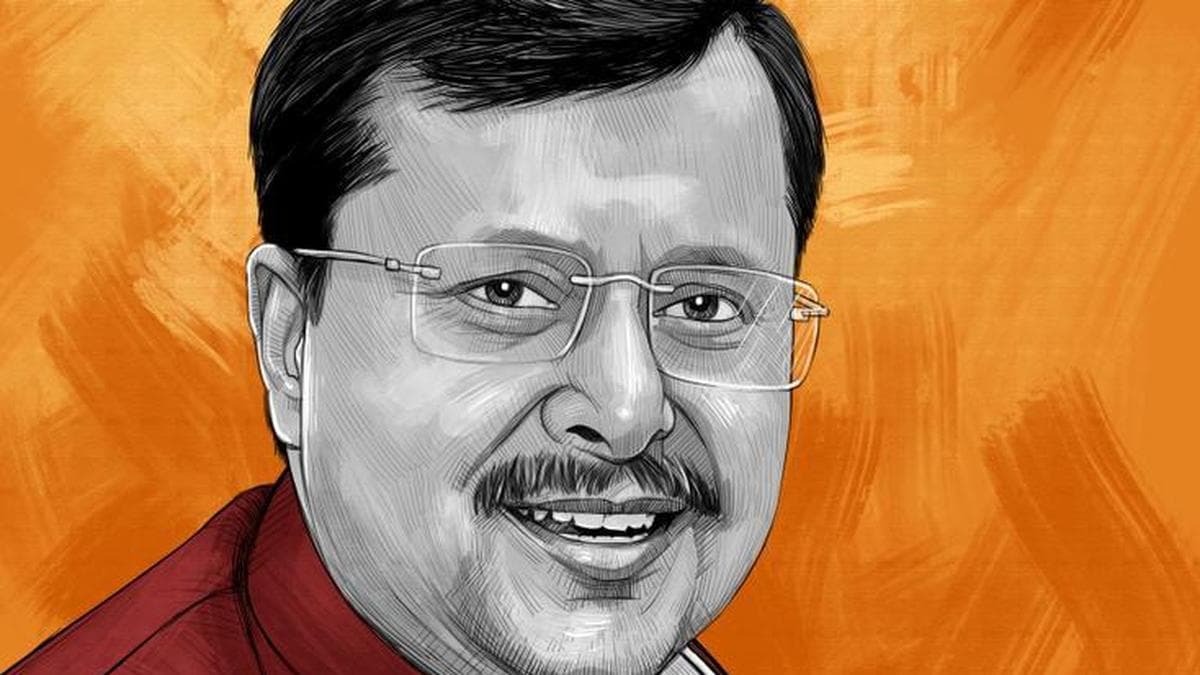
BJP appoints 45-year-old Bihar Minister as new national working president, signaling generational shift.
Summary
The BJP has appointed a 45-year-old Minister from Bihar as its new national working president. This significant leadership change, occurring after the NDA's recent success in State Assembly elections, signals a generational shift within the party. For competitive exams, understanding key political appointments and party organizational changes is crucial for general awareness and political science sections.
Key Points
- 1A 45-year-old Minister from Bihar was appointed as the new national working president of the BJP.
- 2This appointment signifies a generational shift within the organizational structure of the Bharatiya Janata Party.
- 3The new national working president is identified as a Minister hailing from the state of Bihar.
- 4The appointment closely followed the National Democratic Alliance's (NDA) significant victory in recent State Assembly elections.
- 5The specific position assumed is that of the national working president, a key leadership role within the BJP.
In-Depth Analysis
The appointment of a 45-year-old Minister from Bihar as the Bharatiya Janata Party's (BJP) new national working president marks a pivotal moment in India's political landscape, signifying a deliberate generational shift within one of the country's most dominant political organizations. This strategic move, coming on the heels of the National Democratic Alliance's (NDA) recent electoral successes in State Assembly elections, reflects the BJP's forward-looking approach to leadership development and organizational restructuring.
**Background Context:** The BJP, a major force in Indian politics since the late 1980s, has seen remarkable growth, especially under the leadership of Prime Minister Narendra Modi and former Party President Amit Shah. Its ideology, rooted in Hindutva and cultural nationalism, coupled with a focus on economic development and strong governance, has resonated with a significant section of the electorate. The party's organizational strength, often attributed to its cadre-based structure and connection with the Rashtriya Swayamsevak Sangh (RSS), is a critical component of its electoral success. The position of 'working president' is often created when the full-time president is preoccupied with governmental duties or other significant responsibilities, allowing for the smooth functioning of party affairs. Historically, such roles have been used to groom future leaders or delegate operational control.
**What Happened & Key Stakeholders:** The core event is the elevation of a relatively younger leader from Bihar to a significant national position within the BJP. This individual, a Minister from Bihar, now assumes the role of national working president. Key stakeholders involved in this decision include the top brass of the BJP, particularly Prime Minister Narendra Modi and the then-party President Amit Shah, whose strategic vision guides the party's trajectory. The RSS, as the ideological parent of the BJP, also plays a crucial, albeit often indirect, role in major organizational decisions. The new working president himself is a vital stakeholder, representing the aspirations of a younger generation within the party and the political importance of Bihar. The state unit of the BJP in Bihar also benefits from this representation at the national level.
**Significance for India:** This appointment carries immense significance for India's political future. Firstly, it underscores a **generational shift** in Indian politics. With India having a predominantly young population, political parties are increasingly recognizing the need to bring younger faces into leadership roles to connect with this demographic. This move by the BJP could inspire other parties to accelerate their own leadership transitions, fostering a more dynamic and representative political class. Secondly, it highlights the **importance of regional leadership** within national parties. A leader from Bihar, a politically crucial state, being elevated to such a position can strengthen the party's base and outreach in the eastern region, potentially impacting future state and general elections. Thirdly, it signals the BJP's long-term **succession planning**. By entrusting significant responsibilities to younger leaders, the party is preparing its next line of command, ensuring continuity and fresh perspectives in its governance and ideological propagation. This internal democratic exercise, while not directly regulated by the Constitution, is vital for the health of India's multi-party system.
**Historical Context:** Historically, Indian political parties have often been dominated by older leaders, with succession planning sometimes leading to internal conflicts or dynastic politics. The BJP, while having its own established leaders, has shown a tendency to promote leaders based on merit and organizational work. The elevation of leaders like Narendra Modi and Amit Shah themselves demonstrated a shift from the old guard. This current appointment continues that trend, aiming to infuse fresh energy and ideas into the party machinery, reminiscent of how the party has adapted and evolved since its inception in 1980.
**Future Implications:** The appointment of a national working president could have several future implications. It might lead to a more streamlined and efficient organizational structure within the BJP, as the new leader focuses on day-to-day party affairs, freeing the main president for other strategic roles. This could translate into better coordination between the central party and state units, particularly ahead of crucial state elections. It also potentially sets the stage for the individual's future elevation to the full party presidency, indicating a clear leadership pipeline. Furthermore, this move could influence policy discussions within the party, potentially bringing in perspectives relevant to younger generations or specific regional concerns. On a broader scale, it reinforces the democratic process within political parties, which, while internal, contributes to the overall strength and adaptability of India's parliamentary democracy.
**Related Constitutional Articles, Acts, or Policies:** While the appointment of a party functionary is an internal matter and not directly governed by the Indian Constitution, the framework within which political parties operate is deeply embedded in constitutional principles. India's **multi-party system** is a fundamental feature of its parliamentary democracy, enabling diverse representation (Article 74 and 75 for the Union, Article 163 and 164 for States, outlining the Council of Ministers responsible to the Lower House). The **Election Commission of India (ECI)**, established under **Article 324**, plays a crucial role in registering and regulating political parties under the **Representation of the People Act, 1951**. This Act mandates parties to have a constitution and adhere to democratic principles, even if the specifics of internal appointments are left to the party. The right to form political associations is protected under **Article 19(1)(c)** (Right to form associations or unions). The BJP's internal structure and leadership changes, therefore, operate within this broader constitutional and legal framework that facilitates a vibrant democratic polity.
Exam Tips
This topic falls under 'Indian Polity and Governance' for UPSC (Prelims and Mains GS-II), 'General Awareness' for SSC and Banking exams, and 'Current Affairs' for all competitive exams. Focus on understanding the roles of key political positions and party structures.
Study related topics like the structure and functioning of major political parties in India, the role of the Election Commission of India (ECI), anti-defection law (10th Schedule), and the concept of federalism in India. Understanding the powers of the party president versus a working president is crucial.
Common question patterns include: identifying the significance of such appointments (e.g., generational shift, regional representation), questions on the organizational structure of major political parties, the role of political parties in a democracy, and constitutional articles related to elections and political rights.
Related Topics to Study
Full Article
The appointment of the 45-year-old Minister from Bihar as the BJP’s new national working president, close on the heels of the NDA’s big victory in the State Assembly elections, signals a generational shift within the party organisation