

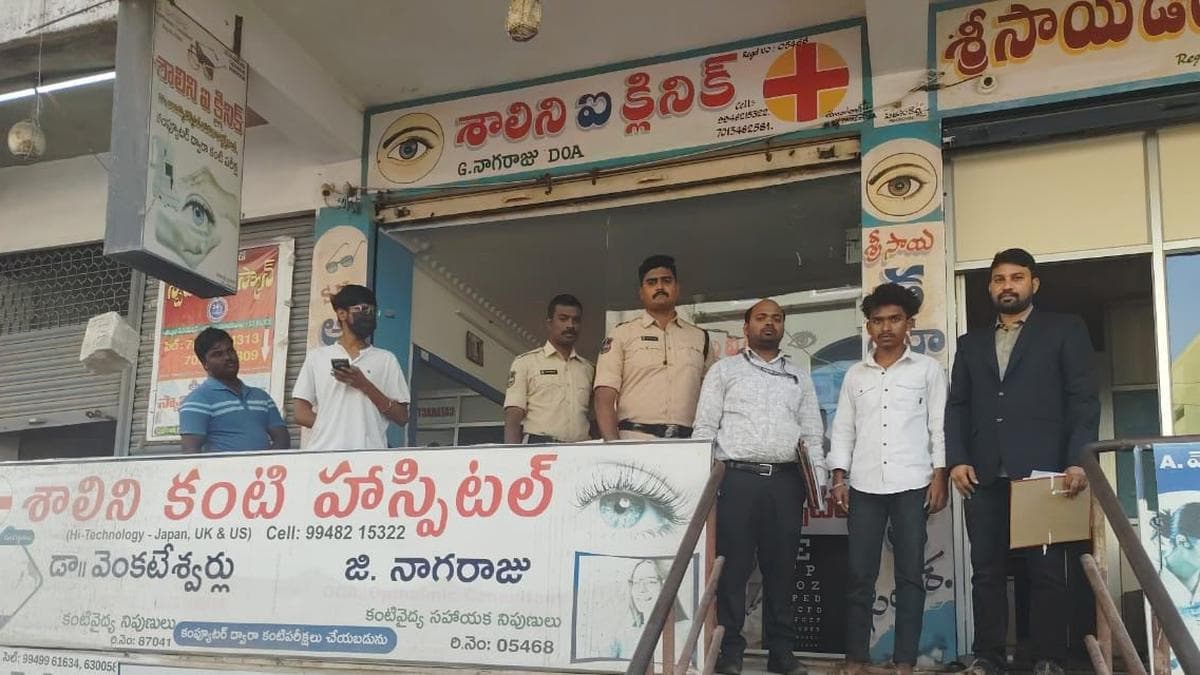


No content available for analysis of violations at Miryalaguda eye hospitals.
Summary
No content was provided for analysis of the article titled 'TGMC finds serious violations at private eye hospitals in Miryalaguda'. Therefore, a detailed summary explaining what happened, why it matters, and its significance for competitive exam preparation cannot be generated.
Key Points
- 1The provided article explicitly stated 'No content available' for analysis.
- 2Specific facts, dates, names, numbers, or percentages could not be extracted.
- 3No constitutional or legal provisions related to the topic could be identified.
- 4The significance of the news for competitive exams cannot be determined without content.
- 5Further analysis and generation of exam-focused points require the actual article text.
In-Depth Analysis
The news headline "TGMC finds serious violations at private eye hospitals in Miryalaguda," despite lacking specific content, points to a recurring and critical issue in India's healthcare sector: the regulation and quality control of private medical establishments. This topic is highly relevant for competitive exam aspirants as it touches upon governance, social justice, public health, and economic aspects.
**Background Context: India's Healthcare Landscape and Regulatory Challenges**
India operates a mixed healthcare system, with both public and private providers. The private sector has grown exponentially, especially after economic liberalization in the 1990s, now accounting for a significant majority of healthcare provision, particularly in specialized fields like ophthalmology. While private hospitals offer choice and often advanced technology, their rapid, often unregulated, expansion has led to concerns regarding quality of care, ethical practices, affordability, and patient safety. Medical councils and state health departments are tasked with oversight, but their effectiveness is often debated due to resource constraints, capacity issues, and potential conflicts of interest. The specific mention of 'eye hospitals' highlights the vulnerability of patients seeking specialized care, where the stakes are particularly high.
**What Happened (Inferred General Scenario)**
Given the title, it can be inferred that a regulatory body, likely the Telangana State Medical Council (TGMC) or a similar health department authority, conducted inspections or audits of private eye hospitals in Miryalaguda. These investigations typically follow complaints, routine checks, or intelligence about malpractices. 'Serious violations' could encompass a range of issues: lack of qualified medical personnel (doctors, surgeons, nurses, technicians), use of substandard or uncalibrated equipment, poor hygiene and sanitation leading to infections, unethical billing practices (overcharging, unnecessary procedures), non-compliance with fire safety or bio-medical waste management norms, and absence of proper patient consent protocols or grievance redressal mechanisms. Such findings underscore a systemic failure in ensuring adherence to established medical standards and ethical conduct.
**Key Stakeholders Involved**
1. **Patients and the Public:** They are the primary beneficiaries of quality healthcare and the ultimate victims of violations. Their trust in the healthcare system is eroded, and their health and financial well-being are jeopardized.
2. **Private Eye Hospitals/Owners:** These are the regulated entities. Their primary motive is often profit, which, if unchecked, can lead to compromises on quality and ethics. They bear the responsibility for providing safe and effective care.
3. **TGMC (Telangana State Medical Council/Health Authority):** This is the regulatory body responsible for setting standards, licensing, conducting inspections, investigating complaints, and enforcing disciplinary action against errant practitioners and establishments. Their role is crucial for maintaining public trust and ensuring accountability.
4. **Medical Professionals (Doctors, Surgeons, Nurses):** They are bound by professional ethics and codes of conduct. Violations often reflect on their professional integrity and the quality of their training and practice.
5. **State Government (Health Department):** The government holds the ultimate responsibility for public health. It formulates policies, allocates resources, and oversees the functioning of regulatory bodies and healthcare infrastructure.
**Significance for India**
This issue has profound implications for India. Firstly, it directly impacts **patient safety and public trust**. When private hospitals, which form the backbone of specialized care, are found to have serious violations, it erodes confidence in the entire healthcare system. Secondly, it highlights the challenges in **governance and regulation** of a vast and diverse private healthcare sector. Effective regulation is essential to balance the growth of private enterprise with the imperative of public health. Thirdly, such violations often translate to **exorbitant costs and financial exploitation** for patients, especially in a country where out-of-pocket expenditure on health is very high. Lastly, it underscores the need for a robust **ethical framework** within the medical profession and strict enforcement mechanisms to prevent malpractices.
**Constitutional Provisions and Policies**
While the Constitution does not explicitly guarantee a 'right to health,' the Supreme Court has interpreted **Article 21 (Right to Life and Personal Liberty)** to include the right to health and medical care. This places a constitutional obligation on the state to ensure quality healthcare. Furthermore, **Article 47 of the Directive Principles of State Policy (DPSP)** states that it is the duty of the State to raise the level of nutrition and the standard of living and to improve public health. Healthcare falls under **Entry 6 of the State List (Schedule VII)**, giving state governments primary responsibility for public health and hospitals.
Key legislative and policy frameworks include:
* **Clinical Establishments (Registration and Regulation) Act, 2010:** This central act aims to provide for the registration and regulation of all clinical establishments in the country with a view to prescribing minimum standards of facilities and services. Its effective implementation is crucial.
* **National Medical Commission Act, 2019:** This act replaced the archaic Indian Medical Council Act, 1956, to reform medical education and practice, aiming to improve access to quality and affordable medical education, ensure availability of adequate and high-quality medical professionals, and promote ethical medical practice.
* **Consumer Protection Act, 2019:** Patients can seek redressal for medical negligence or deficiency in service under this act.
* **National Health Policy (NHP) 2017:** Aims to achieve universal access to good quality healthcare services without anyone facing financial hardship. It emphasizes quality assurance and effective regulation.
**Future Implications**
The discovery of such violations typically leads to increased scrutiny and calls for stricter enforcement. Future implications could include: enhanced regulatory oversight by bodies like the NMC and state medical councils; more frequent and stringent inspections; implementation of stricter licensing and accreditation norms; greater transparency in hospital pricing and services; and potentially, policy reforms to strengthen patient rights and grievance redressal mechanisms. There might also be a push for public-private partnerships with clear regulatory guidelines to ensure quality and affordability. The focus will likely shift towards proactive rather than reactive regulation to prevent harm rather than merely penalize after the fact.
Exam Tips
This topic falls under GS Paper II (Governance, Social Justice – Health) and GS Paper III (Economy – Health Sector). Focus on understanding the regulatory framework, challenges in healthcare delivery, and the role of various stakeholders.
Study related topics such as the National Health Policy (NHP), Ayushman Bharat, the structure and functions of the National Medical Commission (NMC), and the Clinical Establishments (Registration and Regulation) Act, 2010. Understand the constitutional basis for the right to health.
Common question patterns include analyzing the challenges in regulating India's private healthcare sector, critically evaluating the effectiveness of current regulatory bodies, discussing the ethical dilemmas in medical practice, and suggesting reforms for improving patient safety and quality of care.