



Relevant for Exams
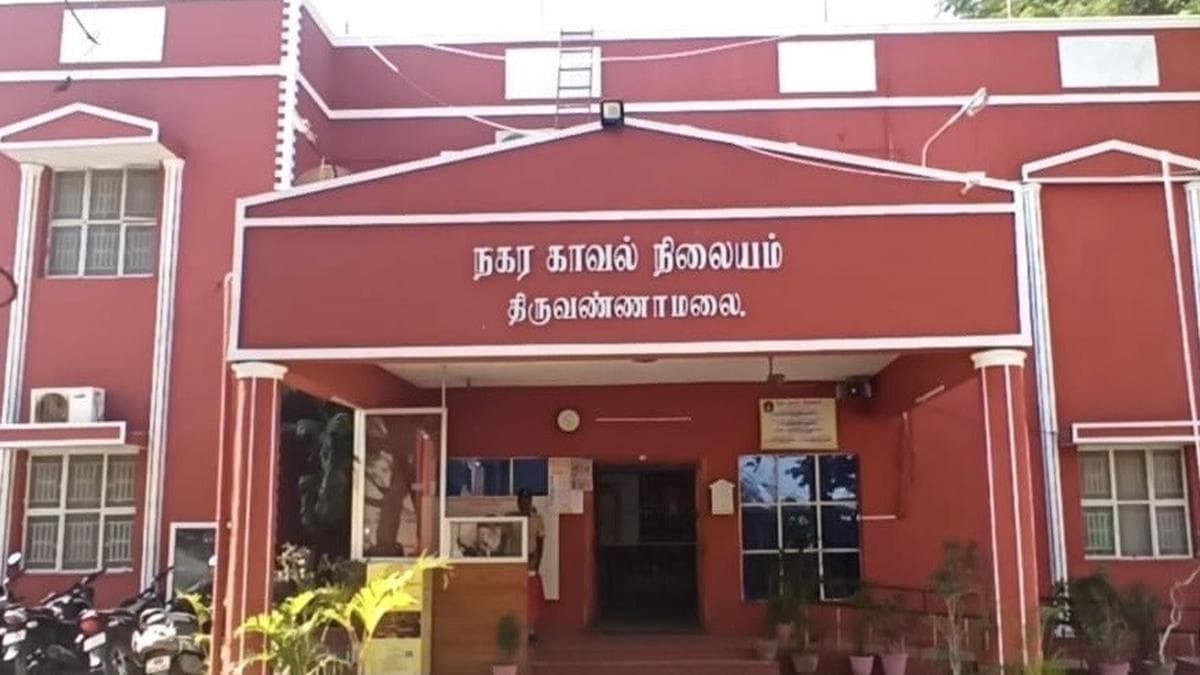
TN CM Stalin to inaugurate dedicated police station for Arunachaleswarar temple on Dec 27.
Summary
Tamil Nadu Chief Minister M.K. Stalin is scheduled to inaugurate a dedicated police station for the Arunachaleswarar temple in Tiruvannamalai on December 27. This initiative aims to bolster security and streamline law and order management at the significant religious site. It is important for competitive exams focusing on state administration, law enforcement, and prominent cultural sites in Tamil Nadu.
Key Points
- 1Tamil Nadu Chief Minister M.K. Stalin will inaugurate the dedicated police station.
- 2The inauguration is scheduled to take place on December 27.
- 3The new police station is specifically for the Arunachaleswarar temple.
- 4The Arunachaleswarar temple is a prominent religious site located in Tiruvannamalai, Tamil Nadu.
- 5The establishment aims to enhance security and improve law and order management at the temple.
In-Depth Analysis
The upcoming inauguration of a dedicated police station for the Arunachaleswarar temple in Tiruvannamalai by Tamil Nadu Chief Minister M.K. Stalin on December 27 marks a significant administrative step towards enhancing security and streamlining law and order management at one of India's most revered religious sites. This initiative reflects a growing recognition of the unique security challenges posed by major pilgrimage centers and the state's proactive role in addressing them.
**Background Context and the Significance of Arunachaleswarar Temple:**
The Arunachaleswarar Temple, nestled at the foot of the Annamalai Hills in Tiruvannamalai, Tamil Nadu, is a Pancha Bhoota Stalam, representing the element of fire (Agni). It is dedicated to Lord Shiva and is one of the largest temples in India, with a sprawling complex and towering gopurams. Historically, it has been a magnet for pilgrims and spiritual seekers for centuries, attracting millions, especially during its annual Karthigai Deepam festival. The sheer volume of devotees, coupled with the temple's vast area, valuable artifacts, and its status as a heritage site, naturally presents complex security and crowd management challenges. Past incidents at various religious sites across India, ranging from petty crimes like pickpocketing and theft to stampedes and even terror threats, underscore the critical need for robust and specialized security arrangements.
**What Happened and Key Stakeholders:**
Tamil Nadu Chief Minister M.K. Stalin is set to inaugurate this specialized police station, signifying the state government's commitment. The primary objective is to create a dedicated force with specific training and resources focused solely on the temple's security needs. Key stakeholders involved include:
* **Tamil Nadu Government:** As the overarching authority, responsible for maintaining law and order, it provides the political will and financial allocation for such initiatives. The Chief Minister's direct involvement highlights the project's importance.
* **Tamil Nadu Police Department:** The implementing agency, responsible for recruiting, training, and deploying personnel, as well as developing specific protocols for temple security, crowd control, and emergency response.
* **Hindu Religious and Charitable Endowments (HR&CE) Department:** This state department manages numerous temples in Tamil Nadu, including Arunachaleswarar. It works in coordination with the police to ensure smooth administration and security within the temple premises.
* **Local Community and Devotees:** The ultimate beneficiaries of enhanced security, their safety and peaceful worship are paramount. Their cooperation with law enforcement is crucial for effective security.
**Why This Matters for India and Future Implications:**
This initiative holds significant implications, particularly for states with numerous large pilgrimage centers:
1. **Enhanced Security and Cultural Preservation:** A dedicated police station ensures a focused approach to preventing crimes, managing large crowds during festivals, and protecting the temple's ancient artifacts and structures. This aligns with **Article 49 of the Indian Constitution**, a Directive Principle of State Policy, which mandates the state to protect monuments and places of national importance. It also complements the **Ancient Monuments and Archaeological Sites and Remains Act, 1958**, which governs the protection of such sites.
2. **Efficient Governance and Law Enforcement:** Law and order is a 'State Subject' under **Entry 2 of List II (State List) of the Seventh Schedule** of the Indian Constitution. The creation of a specialized unit demonstrates effective state administration in tailoring law enforcement to specific, high-priority needs. It allows for better resource allocation, intelligence gathering, and quicker response times, reducing the burden on general police stations.
3. **Boost to Religious Tourism and Local Economy:** A safer environment encourages more pilgrims and tourists, both domestic and international, to visit the temple. This, in turn, boosts the local economy through increased spending on accommodation, food, transport, and local businesses. This contributes to the state's tourism revenue and provides livelihoods for local residents.
4. **Addressing Unique Challenges of Religious Gatherings:** Large religious congregations present unique challenges, from managing traffic and human flow to preventing stampedes and ensuring public health. A dedicated force can develop specialized expertise in these areas, potentially serving as a model for other states grappling with similar issues at their major pilgrimage sites.
**Constitutional and Policy References:**
The state's role in temple administration is primarily governed by the **Tamil Nadu Hindu Religious and Charitable Endowments Act, 1959**, which empowers the state to supervise and manage Hindu religious institutions. While **Articles 25 and 26** of the Constitution guarantee freedom of religion and the right to manage religious affairs, the state's intervention in maintaining public order, morality, and health, as well as its role in protecting public property, is well-established. The dedicated police station is a manifestation of the state fulfilling its responsibility to ensure public order and safety within the bounds of religious freedom.
**Future Implications:** This move could set a precedent for other significant religious or tourist sites across Tamil Nadu and potentially other states. We might see the establishment of more such specialized units, leading to improved security protocols, better crowd management strategies, and enhanced protection of India's rich cultural and religious heritage. It signifies a shift towards more nuanced and site-specific security planning, acknowledging that 'one size fits all' policing may not be effective for all public spaces, especially those with unique cultural and historical significance. Such initiatives also foster better coordination between law enforcement, temple authorities, and local administration, leading to more integrated security and management frameworks.
In conclusion, the inauguration of a dedicated police station at Arunachaleswarar temple is not just a local event but a strategic administrative decision with far-reaching implications for security, heritage preservation, tourism, and state governance across India.
Exam Tips
This topic falls under 'Indian Polity' (State Administration, Law & Order, Centre-State Relations - Seventh Schedule), 'Art & Culture' (Prominent Temples, Heritage Protection), and 'Current Affairs' (State-specific initiatives).
Study related topics like the Seventh Schedule of the Indian Constitution (State List entries like Police and Public Order), the role of the HR&CE Department in Tamil Nadu, the Ancient Monuments and Archaeological Sites and Remains Act, 1958, and major pilgrimage sites and their security challenges across India.
Common question patterns include factual questions for Prelims (e.g., 'Which temple is getting a dedicated police station?', 'Police is a subject under which list?'), and analytical questions for Mains (e.g., 'Discuss the role of the state in managing religious institutions, with special reference to law and order challenges at pilgrimage sites,' or 'How do dedicated security units contribute to cultural preservation and tourism?').