



Relevant for Exams
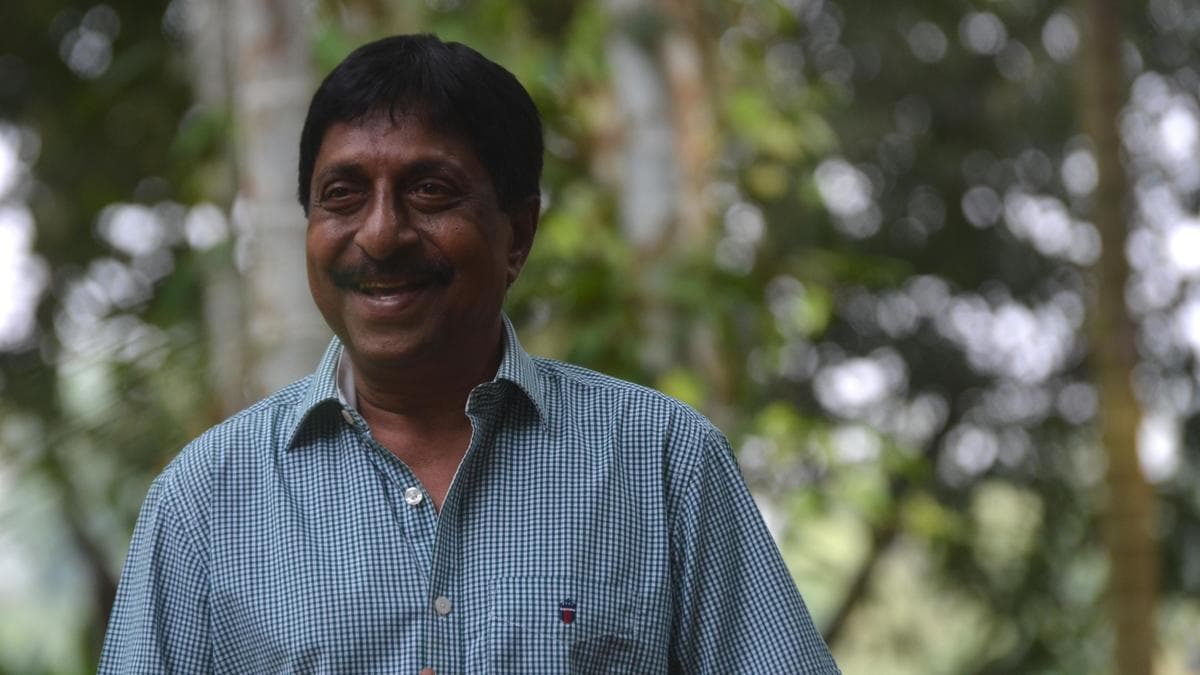
Sreenivasan: Malayalam satirist, actor, and screenwriter known for sharp political commentary.
Summary
Sreenivasan, a celebrated satirist, actor, and screenwriter, has significantly impacted the Malayalam film industry through his sharp political commentary and creation of memorable characters. His notable collaborations with filmmakers like Priyadarshan and Sathyan Anthikkad have left an indelible mark on regional cinema. This news highlights his cultural importance, relevant for general awareness sections in state-level exams.
Key Points
- 1Sreenivasan is a prominent satirist, actor, and screenwriter in the Malayalam film industry.
- 2He is widely recognized for his sharp political commentary in his cinematic works.
- 3Sreenivasan is credited with creating many memorable characters in Malayalam cinema.
- 4He has notable collaborations with acclaimed filmmaker Priyadarshan.
- 5Another key collaborator mentioned is director Sathyan Anthikkad, with whom he left an indelible mark.
In-Depth Analysis
Sreenivasan, a name synonymous with incisive wit and profound social commentary in the Malayalam film industry, represents a vital aspect of India's diverse cultural landscape. His work as a satirist, actor, and screenwriter has not merely entertained but has consistently pushed audiences to reflect on societal norms, political realities, and human foibles. Understanding Sreenivasan's impact offers a window into the power of regional cinema as a tool for cultural expression and democratic discourse.
**Background Context and Evolution of Malayalam Cinema:**
Malayalam cinema, often lauded for its artistic depth and realistic narratives, has a rich history of engaging with social issues. From the early works of Adoor Gopalakrishnan and G. Aravindan in the parallel cinema movement to commercial successes woven with strong thematic elements, Kerala's film industry has consistently been a platform for intellectual engagement. This tradition provided a fertile ground for artists like Sreenivasan, who emerged in the late 1970s and 80s. He stepped into an era where cinema was not just entertainment but a mirror reflecting the aspirations and anxieties of a rapidly changing society. His unique voice resonated deeply, especially his ability to blend humour with sharp critique, making complex social problems accessible to the common viewer.
**What Happened: Sreenivasan's Indelible Mark:**
Sreenivasan's contribution lies in his mastery of satirical storytelling. He crafted narratives that subtly, yet powerfully, critiqued political corruption, bureaucratic inefficiencies, social hypocrisy, and the struggles of the common man. His characters, often ordinary individuals navigating extraordinary circumstances, became archetypes in Malayalam culture. Films like 'Sandesham' (1991), which satirized political extremism, and 'Vadakkunokkiyantram' (1989), a poignant exploration of male insecurity, stand as testaments to his genius. His collaborations with acclaimed directors like Priyadarshan ('Kilukkam', 'Mithunam') and Sathyan Anthikkad ('Nadodikkattu', 'Pattana Pravesham') were particularly fruitful, resulting in iconic films that redefined commercial cinema by infusing it with intelligent humour and social relevance. These films achieved both critical acclaim and immense popular success, proving that meaningful cinema could also be widely appealing.
**Key Stakeholders Involved:**
At the core, **Sreenivasan** himself is the primary stakeholder, as the creative force driving these narratives. **Filmmakers** like Priyadarshan and Sathyan Anthikkad are crucial as they provided the directorial vision and platform for his scripts to come alive, ensuring widespread reach. The **Malayalam film industry** as a whole benefits from his legacy, as his work inspires new generations of writers and directors to pursue meaningful storytelling. The **audience** in Kerala and beyond are significant stakeholders, as their engagement and appreciation validate the artistic and social impact of his work. Indirectly, **cultural institutions and state governments** (e.g., Kerala State Film Development Corporation) play a role in fostering an environment where such artistic expression can thrive.
**Why This Matters for India & Broader Themes:**
Sreenivasan's legacy transcends regional boundaries, highlighting the importance of **cultural diversity** within India. Regional cinema, often overlooked in the national discourse, is a powerful repository of local narratives, languages, and socio-political commentaries. His work underscores the **role of satire in a democracy**, serving as a crucial check on power and a means for public discourse. By using humour, he could address sensitive issues without alienating audiences, making critique palatable and thought-provoking. This directly relates to **Article 19(1)(a) of the Indian Constitution**, which guarantees the fundamental right to freedom of speech and expression. Artists like Sreenivasan exercise this right, pushing boundaries and fostering critical thinking, albeit within the reasonable restrictions outlined in Article 19(2). His films also contribute to India's **soft power**, showcasing the nation's rich storytelling tradition and artistic prowess on a global stage.
**Historical Context and Constitutional Provisions:**
Historically, Indian cinema has often faced challenges related to censorship, governed by the **Cinematograph Act, 1952**, and the **Central Board of Film Certification (CBFC)**. Artists like Sreenivasan have navigated these regulatory frameworks, often finding creative ways to convey their messages. While the constitutional right to freedom of expression is paramount, the balance between artistic freedom and societal norms, as interpreted by legal provisions and certification bodies, remains a continuous dialogue. The promotion of regional languages and cultures is also implicitly supported by **Directive Principles of State Policy (DPSP)**, which advocate for the preservation of cultural heritage, though not directly tied to film content.
**Future Implications:**
Sreenivasan's enduring appeal suggests that intelligent, socially relevant cinema will always find an audience. His work sets a precedent for future filmmakers to combine entertainment with substance. In an age of increasing digital content and OTT platforms, the demand for authentic, regional stories with universal themes is growing. The challenge for the future lies in nurturing such talent, ensuring creative freedom, and providing adequate infrastructure and funding for regional cinemas to flourish amidst competition from larger industries. The legacy of satirists like Sreenivasan will continue to inspire new artists to use their craft as a mirror, a microphone, and a catalyst for change, ensuring that cinema remains a vibrant space for democratic dialogue and cultural introspection in India.
Exam Tips
This topic falls under the 'Art & Culture' and 'Current Affairs (Personality in News)' sections of competitive exams, particularly for state-level PSCs and SSC. Focus on identifying prominent personalities in regional arts and their contributions.
Study related topics such as the history and evolution of Indian cinema (especially regional cinemas like Malayalam, Bengali, Marathi), key movements (e.g., Parallel Cinema), and the role of the Central Board of Film Certification (CBFC) and the Cinematograph Act, 1952.
Common question patterns include 'Match the following' (personality with their field/notable work), 'Who wrote/directed which film?' (for iconic works), and multiple-choice questions on awards received or significant contributions to a particular art form. Be prepared for questions on the socio-political impact of art.
Understand the constitutional provisions related to freedom of speech and expression (Article 19(1)(a)) and its reasonable restrictions (Article 19(2)), as satire and political commentary directly relate to these concepts.
Familiarize yourself with government initiatives or bodies that promote regional cinema and arts, as these can be related general knowledge questions.
Related Topics to Study
Full Article
Known for his sharp political commentary and memorable characters, Sreenivasan’s work, including collaborations with notable filmmakers like Priyadarshan and Sathyan Anthikkad, has left an indelible mark on Malayalam film industry