


Relevant for Exams
PM Modi's Bengal rally post draft electoral rolls: 58.2 lakh exclusions, Matua "SIR concerns".
Summary
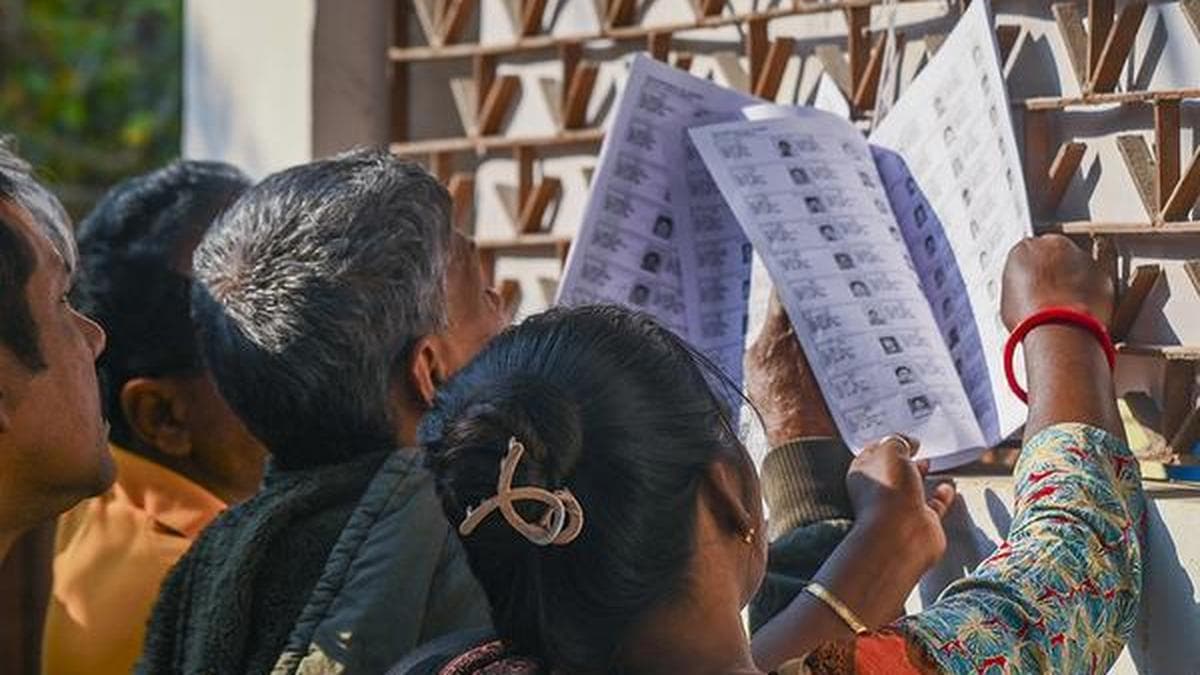
Prime Minister Narendra Modi addressed a political rally in West Bengal following the release of draft electoral rolls. These rolls indicated the exclusion of 58,20,899 names, reducing the state's total electorate to 7.08 crore. This event is significant due to the substantial number of exclusions and the prevailing "SIR concerns" of the Matua community, highlighting key issues in electoral processes and community-specific political dynamics relevant for competitive exams.
Key Points
- 1Prime Minister Narendra Modi addressed his first political rally in West Bengal after the draft electoral roll release.
- 2The draft electoral rolls published after the enumeration phase excluded 58,20,899 names.
- 3This exclusion reduced the total electorate in West Bengal to 7.08 crore.
- 4The rally and electoral roll release occurred amidst "SIR concerns" of the Matua community.
- 5The Matua community is a significant socio-political group in West Bengal.
In-Depth Analysis
The Prime Minister's rally in West Bengal, following the release of draft electoral rolls that excluded a significant 58,20,899 names, reducing the state's electorate to 7.08 crore, is a multi-layered event steeped in complex political, social, and constitutional issues relevant to India. This event primarily highlights the intersection of electoral integrity, citizenship debates, and identity politics, particularly concerning the influential Matua community.
**Background Context:**
The process of electoral roll revision is a routine exercise conducted by the Election Commission of India (ECI) to ensure accurate and updated voter lists. This involves adding new eligible voters, deleting deceased or shifted voters, and correcting errors. The publication of draft electoral rolls allows for claims and objections from the public before the final list is published. The substantial exclusion of nearly 58 lakh names in West Bengal, however, raised eyebrows and triggered political discourse. This particular revision gains heightened significance due to its timing, preceding major elections, and its direct connection to the long-standing 'SIR concerns' (Statelessness, Identity, Rights) of the Matua community.
Historically, the Matuas are a Hindu refugee community who migrated to West Bengal from East Pakistan (now Bangladesh) in waves, particularly after the Partition of India in 1947 and the 1971 Bangladesh Liberation War. Many arrived without proper documentation, leading to generations living with uncertain citizenship status. Their demand for Indian citizenship has been a prominent political issue in West Bengal for decades. The Citizenship Amendment Act (CAA), 2019, was enacted with the stated objective of granting citizenship to Hindu, Sikh, Buddhist, Jain, Parsi, and Christian migrants who entered India from Pakistan, Bangladesh, and Afghanistan before December 31, 2014, due to religious persecution. For the Matua community, the CAA represented a potential resolution to their long-standing citizenship woes, making its implementation a key electoral promise for the BJP in the state.
**What Happened & Key Stakeholders:**
Prime Minister Narendra Modi addressed a rally in West Bengal, a crucial political battleground. This rally came shortly after the draft electoral rolls were released, revealing the massive exclusion of names. The timing allowed the Prime Minister to address the electorate, including the Matua community, amidst their concerns. The **Election Commission of India (ECI)** is the primary constitutional body responsible for the preparation and revision of electoral rolls, mandated by **Article 324** of the Constitution and governed by the **Representation of the People Act, 1950**. Their role is to ensure free, fair, and accurate electoral processes. **Political parties**, primarily the ruling **Bharatiya Janata Party (BJP)** at the Centre and the **Trinamool Congress (TMC)** in West Bengal, are key stakeholders. The BJP aims to consolidate the Matua vote bank by reiterating its commitment to implementing the CAA. The TMC, while often critical of the CAA, needs to address the concerns of disenfranchisement among various communities, including those potentially affected by electoral roll exclusions. The **Matua community** itself, led by figures like the Matua Mahasangha, is a significant socio-political entity whose voting patterns can influence election outcomes in several districts of West Bengal. Their 'SIR concerns' are central to this political dynamic.
**Significance for India and Broader Themes:**
This event underscores several critical aspects of Indian democracy. Firstly, it highlights the paramount importance of accurate **electoral rolls** for the health of democratic processes, as enshrined in **Article 326** which guarantees adult suffrage. The exclusion of millions of names, even if provisional, raises questions about the robustness of the enumeration process and the potential for genuine voters to be disenfranchised. Secondly, it reignites the national debate on **citizenship**, particularly concerning the implementation of the **Citizenship Amendment Act (CAA), 2019**, and its connection to the **National Register of Citizens (NRC)**. While the CAA aims to provide citizenship, fears persist among some communities about the NRC potentially leading to statelessness if they cannot prove their lineage. This creates a complex interplay of hope and anxiety, especially in states like West Bengal and Assam with a history of migration. Thirdly, it exposes the dynamics of **federalism and Centre-State relations**, as the state government and the central government often hold divergent views on policies like the CAA and their implementation. Lastly, it exemplifies the power of **identity politics** in India, where community-specific grievances and historical injustices are leveraged by political parties to secure electoral gains.
**Future Implications:**
The implications of these developments are significant. The issue of electoral roll exclusions and the unfulfilled promise of CAA implementation are likely to be major themes in the upcoming **Lok Sabha elections 2024** and future state assembly elections in West Bengal. The BJP will push for CAA implementation to consolidate its support base among Matuas and other refugee communities, while the TMC will likely focus on administrative inefficiencies, potential disenfranchisement, and the broader implications of the CAA/NRC on all communities. The Matua community will continue to be a crucial swing vote, and their leaders will likely intensify their demands for clarity and swift action on citizenship. Furthermore, the legal challenges against the CAA, currently pending before the Supreme Court, will continue to shape the policy landscape. The entire process could lead to increased political polarization and community mobilization, impacting social cohesion in the state. The effectiveness of the ECI in addressing claims and objections during the finalization of electoral rolls will be crucial in ensuring that no eligible voter is left out, upholding the integrity of India's democratic framework.
Exam Tips
This topic falls under the 'Indian Polity and Governance' section of UPSC Civil Services Exam (Prelims & Mains GS-II), State PSCs, and other competitive exams. Focus on constitutional provisions related to elections and citizenship.
Study related topics like the functions of the Election Commission of India (ECI), the Representation of the People Act, 1950 and 1951, the Citizenship Act of 1955, the Citizenship Amendment Act (CAA) 2019, and the National Register of Citizens (NRC).
Common question patterns include MCQs on Articles 324 and 326, provisions of the CAA, and the role of ECI. For descriptive papers, questions may cover the challenges of electoral roll management, the socio-political impact of citizenship policies, and federal issues related to their implementation.
Understand the historical context of migration from East Pakistan/Bangladesh and its impact on the demographic and political landscape of West Bengal and Assam. This helps in comprehending the 'SIR concerns' of communities like the Matuas.
Be aware of the distinction between 'draft' and 'final' electoral rolls and the process of claims and objections. This highlights the procedural safeguards in place for voter registration.
Related Topics to Study
Full Article
In the draft electoral rolls published after the enumeration phase, 58,20,899 names have been excluded, reducing the electorate to 7.08 crore