



Relevant for Exams
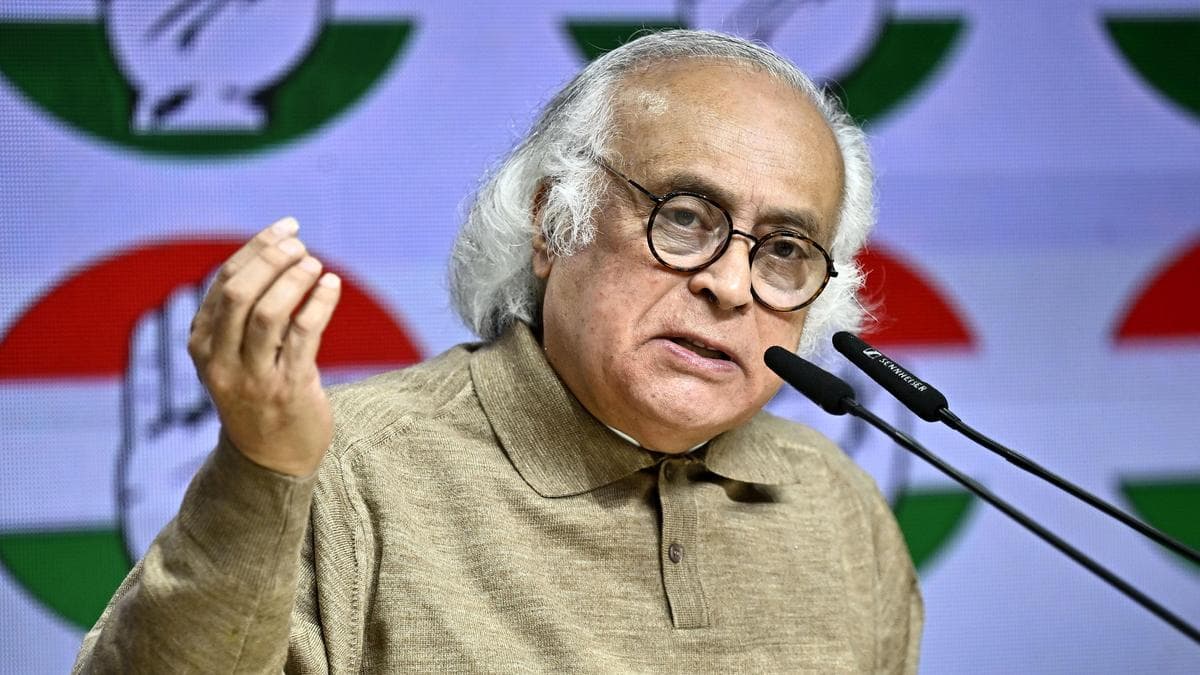
Congress's Jairam Ramesh opposes Nuclear Bill promoting private sector in nuclear power infrastructure.
Summary
Congress General Secretary Jairam Ramesh criticized the government for allegedly "bulldozing" a Nuclear Bill in Parliament, urging against promoting the private sector at the expense of the public sector in nuclear power infrastructure. This highlights a key debate on public vs. private roles in strategic sectors, crucial for understanding India's energy policy and economic direction for competitive exams.
Key Points
- 1Congress General Secretary Jairam Ramesh raised concerns over a "Nuclear Bill" in Parliament.
- 2Ramesh urged against promoting the private sector at the cost of the public sector.
- 3The specific area of concern is building nuclear power infrastructure in India.
- 4The Congress alleged the Nuclear Bill was "bulldozed" through Parliament.
- 5The debate underscores the ideological divide on public vs. private sector roles in strategic energy.
In-Depth Analysis
India's journey towards energy security and sustainable development has consistently placed nuclear power at its core. The recent concerns raised by Congress General Secretary Jairam Ramesh regarding a 'Nuclear Bill' and the alleged 'bulldozing' of private sector promotion over the public sector in nuclear infrastructure underscore a critical debate about the future direction of India's energy policy and the role of the state in strategic sectors.
**Background Context and What Happened:**
India's nuclear energy program, initiated by Dr. Homi J. Bhabha, has historically been a state-controlled enterprise, primarily driven by the Department of Atomic Energy (DAE) and executed by the Nuclear Power Corporation of India Ltd (NPCIL). The **Atomic Energy Act, 1962**, is the foundational legislation, granting the Central Government exclusive powers to develop and control atomic energy. This public sector dominance was rooted in strategic considerations, given the dual-use nature of nuclear technology and the desire for self-reliance, particularly after global sanctions following India's nuclear tests in 1974 and 1998.
However, India's burgeoning energy demands, coupled with its commitment to reducing carbon emissions as part of its Intended Nationally Determined Contributions (INDCs) under the Paris Agreement (e.g., achieving Net-Zero by 2070), have necessitated a rapid expansion of clean energy sources. Nuclear power, being a high-capacity, low-carbon option, is crucial. The capital-intensive nature and long gestation periods of nuclear projects have led to a re-evaluation of funding and execution models. While the government has significantly increased the budget for nuclear power and approved new projects, there's an increasing policy push to explore private sector involvement, not just in component manufacturing but potentially in project financing and even limited operational roles under strict regulatory oversight. The 'Nuclear Bill' mentioned by Ramesh, though not specifically named, likely refers to legislative or policy changes aimed at facilitating greater private participation, which the Congress perceives as detrimental to the established public sector framework and potentially rushed through Parliament.
**Key Stakeholders Involved:**
1. **Government of India (Executive)**: Primarily the Department of Atomic Energy (under the Prime Minister's Office) and NITI Aayog, which advocates for policy reforms to boost economic growth and infrastructure development. Their interest lies in accelerating nuclear capacity expansion to meet energy goals and climate commitments.
2. **Parliament (Legislature)**: The forum where such 'Bills' are introduced, debated, and passed. The allegation of 'bulldozing' implies a lack of adequate debate and scrutiny, a common criticism from the opposition.
3. **Congress Party (Opposition)**: Represented by Jairam Ramesh, the party champions the traditional public sector model, fearing that private sector entry might dilute strategic control, lead to profit-driven compromises on safety, and divert resources from NPCIL.
4. **Nuclear Power Corporation of India Ltd (NPCIL)**: The sole public sector entity currently operating nuclear power plants. Its future role and potential competition or collaboration with private entities are central to this debate.
5. **Private Sector Entities**: Various Indian conglomerates (e.g., L&T, Tata Power, Reliance Power) have shown interest in the nuclear sector, especially in manufacturing components or providing services. Direct investment in power generation, however, would represent a significant policy shift.
**Why This Matters for India and Future Implications:**
This debate is profoundly significant for India's energy future, economic trajectory, and strategic autonomy. Firstly, **energy security** is paramount. India aims to increase its nuclear power capacity significantly to achieve its clean energy targets. Private investment could bring much-needed capital and potentially faster project execution, helping India meet its climate goals and reduce reliance on fossil fuels. Secondly, the discussion highlights the ongoing ideological tension between **public and private sector roles** in critical infrastructure. While proponents argue for private sector efficiency, innovation, and capital infusion, critics emphasize the strategic importance, safety concerns, and long-term public good that necessitate state control, especially in a sector as sensitive as nuclear energy.
Historically, India's nuclear program has been a symbol of self-reliance. The **US-India Civil Nuclear Deal of 2008** marked a turning point, opening avenues for international cooperation and technology transfer, indirectly paving the way for discussions on broader private sector involvement. Any policy shift must also consider the **Civil Liability for Nuclear Damage Act, 2010**, which addresses operator liability in case of accidents, a crucial factor for attracting private and foreign investment.
Future implications include a potential acceleration of nuclear power project timelines, reduced financial burden on the government, and a more diversified energy mix. However, it also raises questions about regulatory oversight, safety standards, waste management, and the potential for a more complex stakeholder landscape. The government will need to balance the need for capital and efficiency with ensuring strategic control, stringent safety protocols, and public confidence. This policy direction will shape not only India's energy landscape but also its industrial policy and global standing in nuclear technology.
**Related Constitutional Articles, Acts, or Policies:**
* **Atomic Energy Act, 1962**: The fundamental law governing all aspects of nuclear energy in India. Any significant private sector involvement would require amendments or detailed policy frameworks consistent with this Act.
* **Civil Liability for Nuclear Damage Act, 2010**: Essential for defining liability in case of nuclear accidents, a critical aspect for private players considering investment.
* **Seventh Schedule of the Constitution (Union List, Entry 6)**: Atomic energy and mineral resources necessary for its production fall under the exclusive legislative domain of the Union Government, underscoring its strategic importance.
* **Directive Principles of State Policy (Part IV of the Constitution), specifically Article 39 (b) and (c)**: These articles direct the state to ensure that the ownership and control of the material resources of the community are so distributed as best to subserve the common good, and that the operation of the economic system does not result in the concentration of wealth and means of production to the common detriment. These principles often underpin arguments for public sector dominance in strategic sectors.
* **National Energy Policy and India's INDCs**: These policy documents and international commitments provide the broad framework and targets for energy development, including nuclear power expansion.
Exam Tips
This topic falls under GS Paper 3 (Economy, Infrastructure, Science & Technology, Environment & Ecology) for UPSC. Focus on energy policy, public sector reforms, and India's nuclear program.
Study related topics like India's 3-stage nuclear power program, the structure of the Department of Atomic Energy (DAE), NPCIL, and the role of regulatory bodies like AERB. Understand the difference between nuclear fission and fusion.
Expect questions on the rationale behind private sector involvement in strategic sectors, the pros and cons of public vs. private models in nuclear energy, India's energy security challenges, and its climate change commitments. Essay questions might also explore this debate.
For SSC/Banking/Railway exams, focus on factual aspects: key organizations (NPCIL, DAE, AERB), the Atomic Energy Act (year), and India's overall nuclear power capacity and targets. Basic questions on energy sources and types of power plants are common.
Understand the constitutional basis for atomic energy (Union List) and the significance of the Civil Liability for Nuclear Damage Act, 2010, for attracting investment.
Related Topics to Study
Full Article
Congress general secretary Jairam Ramesh had urged the government not to promote the private sector at the cost of the public sector in building nuclear power infrastructure