



Relevant for Exams
V-P Radhakrishnan calls for more FTAs to boost textile exports and compete with Bangladesh.
Summary
India's Vice President, V-P Radhakrishnan, addressed the Apparel Exports Promotion Council (AEPC) awards event, stressing the critical need for India to pursue more Free Trade Agreements (FTAs). This initiative is crucial for bolstering India's textile exports and enabling the country to effectively compete with nations like Bangladesh in the global market. For competitive exams, this highlights India's economic policy focus on trade pacts and the textile sector's strategic importance.
Key Points
- 1India's Vice President, V-P Radhakrishnan, advocated for more Free Trade Agreements (FTAs).
- 2The statement was made while addressing the Apparel Exports Promotion Council (AEPC) awards event.
- 3The primary goal of more FTAs is to enhance India's competitiveness in textile exports.
- 4India seeks to compete effectively with countries such as Bangladesh in the global textile market.
- 5The Apparel Exports Promotion Council (AEPC) is the organization dedicated to promoting Indian apparel exports.
In-Depth Analysis
India's Vice President, V-P Radhakrishnan's call for more Free Trade Agreements (FTAs) to boost textile exports and compete effectively with nations like Bangladesh, articulated at the Apparel Exports Promotion Council (AEPC) awards event, underscores a critical strategic shift in India's economic policy. This statement isn't just a casual remark; it reflects a deep understanding of the challenges and opportunities facing one of India's oldest and most significant industrial sectors.
The **background context** for this emphasis on FTAs is multifaceted. Historically, India has been a global leader in textiles, from ancient times to the colonial era. Post-independence, the sector remained a cornerstone of industrialization and employment. However, in recent decades, India has faced stiff competition from countries like Bangladesh, Vietnam, and even China, which have leveraged factors such as lower labour costs, preferential trade access (e.g., LDC status benefits for Bangladesh in the EU market), and efficient supply chains. Despite being the world's second-largest textile and apparel producer, India's share in global apparel exports has hovered around 4-5%, significantly lower than its potential, especially when compared to Bangladesh's 8% share. The COVID-19 pandemic further highlighted the vulnerabilities and the urgent need for diversification and strengthening of export capabilities.
**What happened** specifically was the Vice President advocating for a proactive approach to secure more FTAs. These agreements reduce or eliminate tariffs, quotas, and other trade barriers between signatory countries, making Indian goods, particularly textiles, more competitive in partner markets. For example, Bangladesh enjoys duty-free access to the European Union under its 'Everything But Arms' initiative for Least Developed Countries (LDCs), a significant advantage over Indian exports which face tariffs. India's recent Comprehensive Economic Partnership Agreement (CEPA) with the UAE and Economic Cooperation and Trade Agreement (ECTA) with Australia are steps in this direction, showing the government's commitment to this strategy.
**Key stakeholders** involved in this push include the **Government of India**, particularly the Ministry of Commerce and Industry and the Ministry of Textiles, which are responsible for negotiating and implementing trade policies. The **Apparel Exports Promotion Council (AEPC)**, as the apex body for apparel exporters, plays a crucial role in representing the industry's interests, providing market intelligence, and facilitating export promotion. The **Indian textile industry**, comprising millions of farmers (cotton growers), weavers, manufacturers, and garment workers, is directly impacted. Lastly, **international trading partners** are crucial, as their willingness to engage in FTAs directly influences India's ability to expand its market access.
**Why this matters for India** is profound. The textile and apparel sector is the second-largest employer in India after agriculture, providing livelihoods to over 45 million people directly and 100 million indirectly. It is a significant contributor to India's manufacturing GDP and foreign exchange earnings. Boosting textile exports through FTAs can lead to massive job creation, particularly for women, and contribute to the 'Make in India' and 'Atmanirbhar Bharat' initiatives by encouraging domestic manufacturing and value addition. It also helps in achieving the government's ambitious target of $100 billion in textile exports and $1 trillion in overall merchandise exports by 2030. Furthermore, successful FTAs enhance India's diplomatic ties and strategic influence on the global stage.
From a **historical context**, India's trade policies have evolved significantly since economic liberalization in 1991. Initially, there was a greater focus on multilateral agreements through the WTO. However, the rise of regional trade blocs and the slow pace of multilateral negotiations have shifted attention towards bilateral and plurilateral FTAs. India's textile sector has seen various policy interventions, from the National Textile Policy to schemes like the Scheme for Integrated Textile Park (SITP) and the Production Linked Incentive (PLI) Scheme for Textiles, all aimed at enhancing competitiveness and scale.
The **future implications** are promising, but also challenging. More FTAs could unlock significant growth potential for the textile sector, attracting investment and modernizing infrastructure. However, India must also address domestic issues such as high logistics costs, fragmented supply chains, skill gaps, and the need for labour reforms to fully capitalize on these agreements. The government's vision, supported by policies like the PM MITRA (Mega Integrated Textile Region and Apparel) Parks scheme, aims to create world-class infrastructure to make the textile industry globally competitive.
**Related constitutional articles, acts, or policies** are central to understanding the legal framework. **Article 253** of the Indian Constitution empowers Parliament to make any law for implementing any international treaty, agreement, or convention. This provides the legal basis for enacting domestic laws necessary to give effect to FTAs. **Article 246** and **Schedule VII (Union List, Entry 14 and 41)** assign the Union government the exclusive power to legislate on matters related to 'entering into treaties and agreements with foreign countries' and 'trade and commerce with foreign countries'. The **Foreign Trade (Development and Regulation) Act, 1992**, further governs foreign trade in India, providing the framework for export and import policies. Government policies like the **Foreign Trade Policy (FTP)**, updated periodically, outline the specific strategies and incentives for promoting exports, including the pursuit of FTAs. The **National Textile Policy** also sets the broad objectives for the sector's growth and global integration.
Exam Tips
This topic falls under UPSC GS Paper III (Indian Economy: issues relating to planning, mobilization of resources, growth, development and employment; Industrial Policy, Trade Policy) and also GS Paper II (International Relations: bilateral, regional and global groupings and agreements involving India). For SSC/Banking/State PSC exams, it's crucial for General Awareness (Economy, Current Affairs, Government Schemes).
Study related topics such as the structure and challenges of India's textile industry, various government schemes for textile promotion (e.g., PLI Scheme for Textiles, PM MITRA Parks), the concept and types of Free Trade Agreements (FTAs), India's major FTAs (e.g., with UAE, Australia, UK, EU), the role of the World Trade Organization (WTO), and India's Foreign Trade Policy.
Common question patterns include: (a) Direct questions on the benefits/challenges of FTAs for India's economy, (b) Questions comparing India's textile export competitiveness with other countries like Bangladesh and Vietnam, (c) Policy-based questions on government initiatives to boost exports, (d) Questions on the role of bodies like AEPC, and (e) Questions linking constitutional provisions (e.g., Article 253) to international agreements.
Related Topics to Study
Full Article
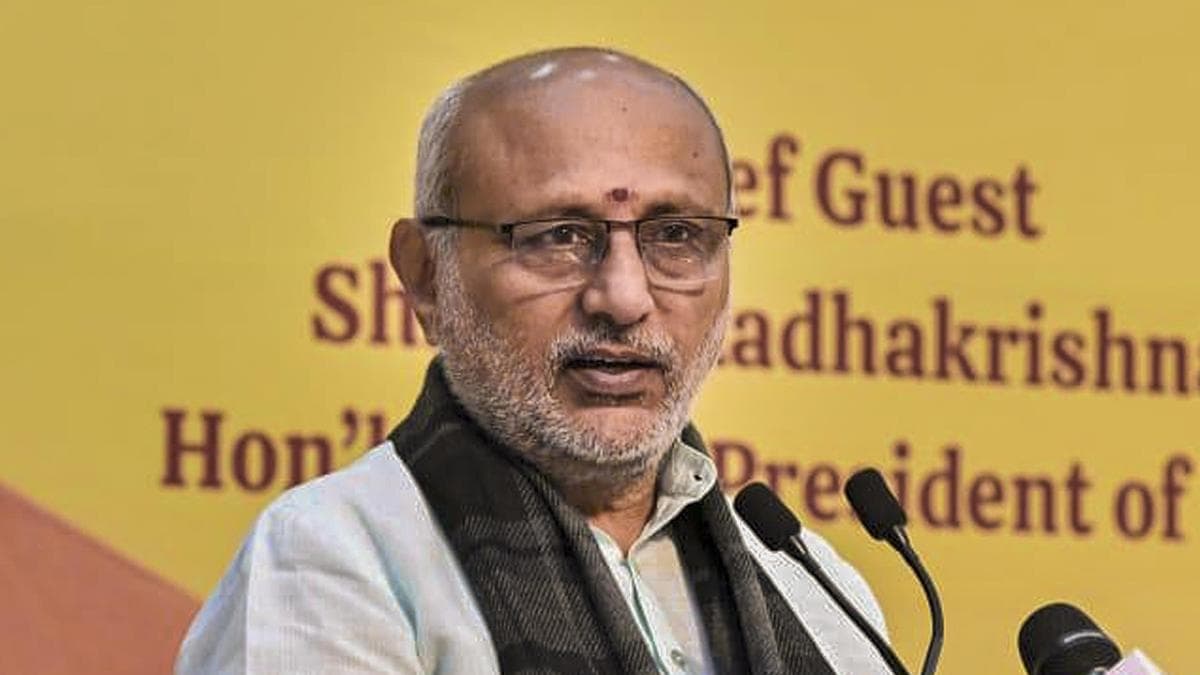
The Vice President was addressing the Apparel Exports Promotion Council (AEPC) awards event