



Relevant for Exams
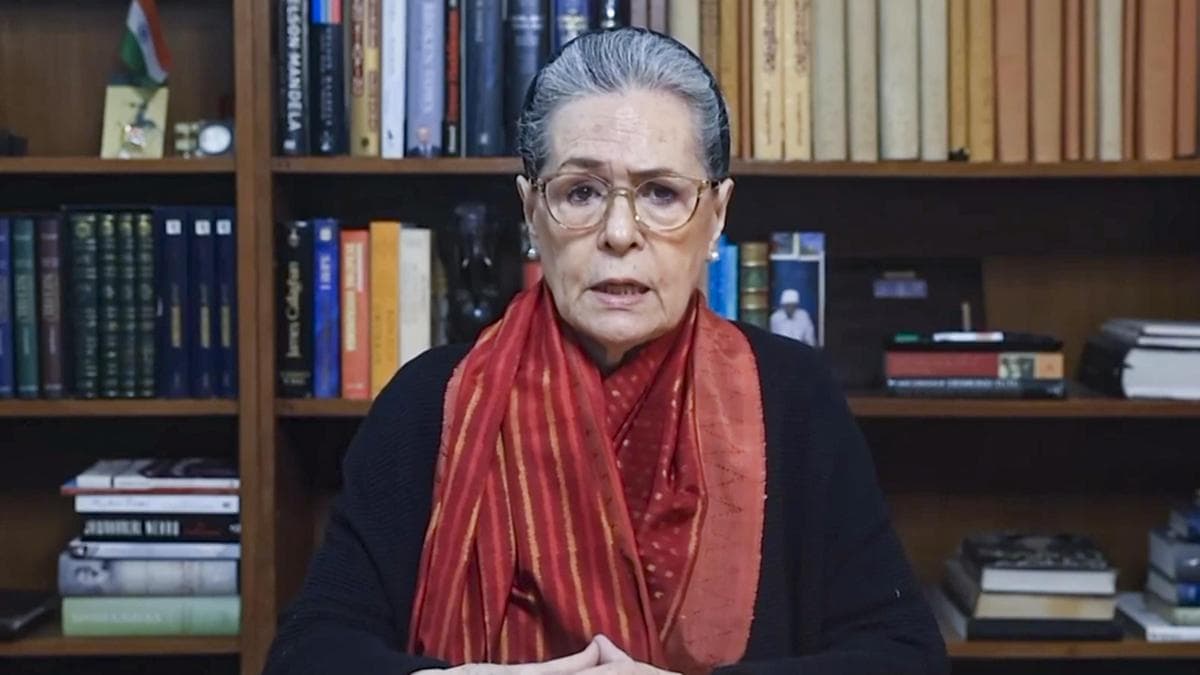
Sonia Gandhi accuses Modi govt of 'bulldozing' MGNREGA, vows fight against 'black law'.
Summary
Sonia Gandhi criticized the Modi Government for allegedly weakening the Mahatma Gandhi National Rural Employment Guarantee Act (MGNREGA), stating it has attacked the interests of millions of farmers, labourers, and landless people. This highlights the ongoing political debate surrounding key social welfare schemes. For competitive exams, understanding the provisions and significance of MGNREGA is crucial, as are the criticisms and reforms related to such major government initiatives.
Key Points
- 1Sonia Gandhi criticized the Modi Government for weakening the Mahatma Gandhi National Rural Employment Guarantee Act (MGNREGA).
- 2MGNREGA was enacted on August 25, 2005, guaranteeing 100 days of wage employment to rural households.
- 3The scheme aims to enhance livelihood security by providing at least 100 days of guaranteed wage employment for unskilled manual work.
- 4MGNREGA is a demand-driven scheme, considered one of the world's largest social welfare programs.
- 5The scheme is implemented by the Ministry of Rural Development, with funding shared between Central and State governments.
In-Depth Analysis
The statement by Sonia Gandhi, criticizing the Modi government for allegedly 'bulldozing' and 'weakening' the Mahatma Gandhi National Rural Employment Guarantee Act (MGNREGA), brings to the forefront a crucial debate surrounding India's social safety net and rural development policies. This isn't merely a political skirmish; it delves into the core philosophy of welfare economics, the role of the state, and the well-being of millions of rural Indians.
**Background Context and What Happened:**
MGNREGA, originally enacted as the National Rural Employment Guarantee Act (NREGA) on August 25, 2005, and later renamed in 2009, is a landmark legislation that guarantees 100 days of wage employment in a financial year to any rural household whose adult members volunteer to do unskilled manual work. Conceived during the UPA government's tenure, its primary objective was to enhance livelihood security in rural areas by providing a legal guarantee for employment, thereby reducing rural poverty, preventing distress migration, and creating durable assets. It is a demand-driven scheme, making it unique in its approach. Sonia Gandhi's recent remarks suggest that under the current Modi government, the scheme's efficacy has been undermined through various means, including potentially reduced budgetary allocations, delayed wage payments, and administrative reforms that allegedly create hurdles for beneficiaries, thus 'attacking the interests of millions of farmers, labourers, and landless people.'
**Key Stakeholders Involved:**
* **The Government (Ruling Party - BJP):** The Modi government has often emphasized efficiency, transparency, and targeted delivery in welfare schemes. While not outright dismantling MGNREGA, criticisms often point to a shift in focus, with an emphasis on creating durable assets and integrating technology (like Aadhaar-based payments and Direct Benefit Transfer - DBT) to reduce leakages. They argue these measures improve the scheme's effectiveness.
* **The Opposition (Congress - Sonia Gandhi):** As the architect of MGNREGA, the Congress party views any perceived weakening of the scheme as an ideological attack on a fundamental right-based welfare program. Their critique often centers on the potential for exclusion due to technology, reduced funding leading to unmet demand, and the overall dilution of the scheme's protective essence.
* **Beneficiaries:** Millions of rural labourers, small and marginal farmers, and landless people are the primary stakeholders. Their access to guaranteed employment, timely wage payments, and the ease of scheme participation directly impacts their livelihoods and economic security.
* **State Governments and Bureaucracy:** They are crucial for implementing the scheme on the ground, from registering job card holders and sanctioning works to ensuring timely payments. Challenges often arise from capacity issues, political will, and inter-departmental coordination.
* **Civil Society Organizations and Activists:** These groups often play a vital role in monitoring MGNREGA's implementation, highlighting discrepancies, advocating for workers' rights, and pushing for policy reforms to strengthen the scheme.
**Significance for India and Historical Context:**
MGNREGA holds immense significance for India. It represents a paradigm shift from discretionary welfare to a rights-based approach, embodying the spirit of the Directive Principles of State Policy (DPSP) in the Constitution, particularly **Article 41 (Right to Work)**, **Article 38 (Social Order)**, and **Article 39 (Right to Livelihood)**. Historically, India has had various employment generation programs, but MGNREGA's legal guarantee and demand-driven nature set it apart. It has served as a critical safety net, especially during economic downturns and crises like the COVID-19 pandemic, providing much-needed income support to rural households. Its impact extends beyond individual incomes, contributing to rural asset creation, women's empowerment, and local governance through Gram Panchayats. The political debate around MGNREGA thus reflects broader ideological differences on state intervention, fiscal prudence, and social justice in India.
**Future Implications:**
The ongoing political discourse highlights the need for continuous evaluation and adaptation of MGNREGA. Future implications could include further reforms aimed at improving efficiency and transparency, such as enhanced use of technology (e.g., georeferencing of assets, real-time monitoring). However, there is a constant tension between these efficiency drives and the potential for exclusion, particularly for marginalized groups who may lack digital literacy or access. The scheme's funding will remain a critical point of contention, impacting its ability to meet demand. The debate will likely continue to shape rural development policy, emphasizing the balance between fiscal sustainability and the constitutional mandate of providing a safety net for the most vulnerable. The scheme's resilience as a counter-cyclical measure will also be crucial in future economic shocks, making its robust implementation vital for India's socio-economic stability.
**Related Constitutional Articles, Acts, or Policies:**
* **National Rural Employment Guarantee Act, 2005 (later MGNREGA):** The foundational legislation.
* **Directive Principles of State Policy (Part IV of the Constitution):** Specifically, Article 38 (State to secure a social order for the promotion of welfare of the people), Article 39 (certain principles of policy to be followed by the State, including adequate means of livelihood), and Article 41 (Right to work, to education and to public assistance in certain cases).
* **Public Finance Management System (PFMS) and Direct Benefit Transfer (DBT):** Key mechanisms used for wage disbursement, often cited for transparency but also criticized for potential exclusion.
* **Aadhaar (Targeted Delivery of Financial and Other Subsidies, Benefits and Services) Act, 2016:** Relevant due to the linkage of Aadhaar with MGNREGA payments.
Exam Tips
This topic falls under 'Indian Economy' (Poverty, Unemployment, Government Schemes) and 'Indian Polity' (Directive Principles of State Policy, Social Justice) sections of competitive exam syllabi. Focus on the scheme's objectives, key provisions, funding pattern, and implementation mechanism.
Study related topics like other social welfare schemes (e.g., National Food Security Act, PM-KISAN), rural development initiatives, and the concept of fiscal federalism (Centre-State financial relations) as MGNREGA is a shared-funding scheme. Understand the role of technology like DBT and Aadhaar in welfare delivery.
Common question patterns include direct questions on MGNREGA's features, its constitutional backing (DPSP), its role in poverty alleviation, and critical analysis of its challenges (e.g., delayed payments, administrative issues, impact of technology). Be prepared to compare it with other employment generation programs.
Related Topics to Study
Full Article
“By weakening MGNREGA, the Modi Government had attacked the interests of millions of farmers, labourers, and landless people,” says Sonia Gandhi