



Relevant for Exams
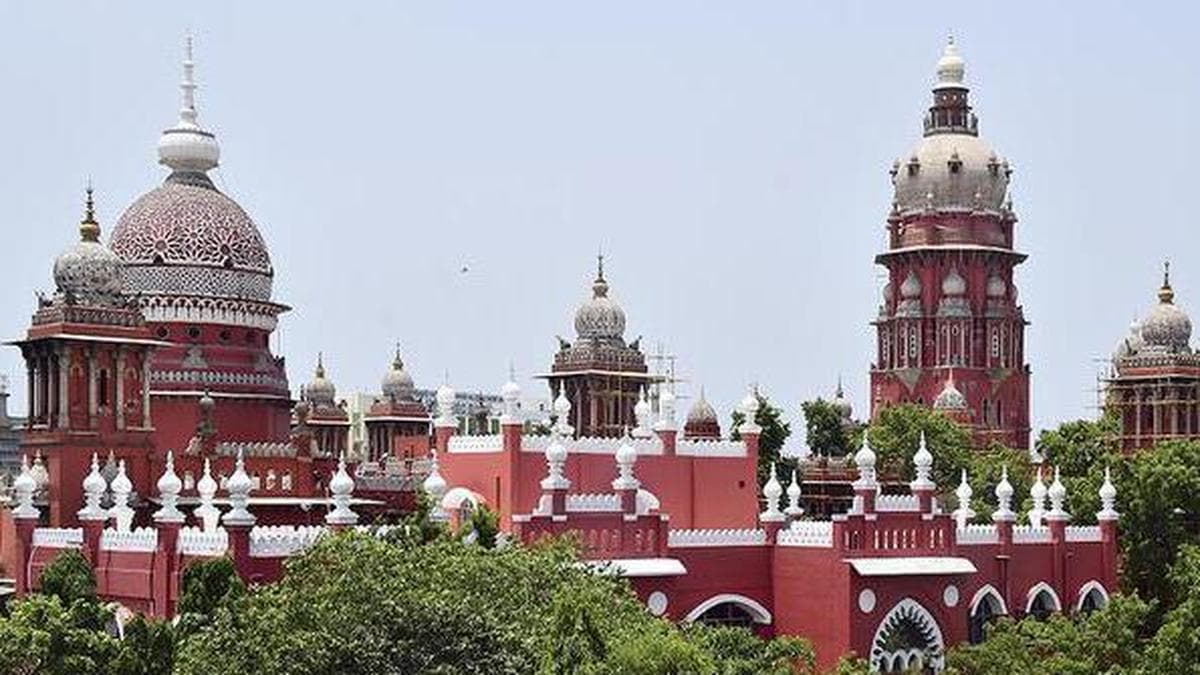
Madras HC directs SACON to study impact of Coimbatore lake revitalisation on bird nesting.
Summary
The Madras High Court, through Justices N. Sathish Kumar and D. Bharatha Chakravarthy, has directed the Salim Ali Centre for Ornithology and Natural History (SACON) to study the revitalisation of Ukkadam and Valankulam lakes in Coimbatore. This directive aims to assess if development activities have adversely affected nesting patterns of migratory and inhabitant birds. This highlights judicial activism in environmental protection and the importance of ecological impact assessments, crucial for UPSC and State PSC exams focusing on environment and judiciary.
Key Points
- 1The Madras High Court requested a study on the revitalisation of Ukkadam and Valankulam lakes.
- 2The study is to be conducted by the Salim Ali Centre for Ornithology and Natural History (SACON).
- 3The lakes, Ukkadam and Valankulam, are located in Coimbatore, Tamil Nadu.
- 4The study's purpose is to assess the impact of development activities on nesting by migratory and inhabitant birds.
- 5The directive was issued by Madras High Court Justices N. Sathish Kumar and D. Bharatha Chakravarthy.
In-Depth Analysis
The Madras High Court's directive to the Salim Ali Centre for Ornithology and Natural History (SACON) to study the revitalisation of Ukkadam and Valankulam lakes in Coimbatore is a significant development, underscoring the delicate balance between urban development and environmental conservation in India. This move by Justices N. Sathish Kumar and D. Bharatha Chakravarthy highlights judicial vigilance in protecting natural ecosystems, particularly urban wetlands.
**Background Context:** Urban lakes and wetlands are vital ecological hotspots, acting as natural sponges for flood control, groundwater recharge zones, and critical habitats for a diverse range of flora and fauna, including migratory birds. However, rapid urbanization, industrialization, and unchecked development have led to severe degradation, encroachment, and pollution of these water bodies across India. Many cities, including Coimbatore, have undertaken 'revitalisation' or 'beautification' projects for their lakes, often involving desilting, embankment construction, and creation of recreational amenities. While these projects aim to improve the aesthetic and recreational value of lakes, they sometimes overlook or inadvertently harm the ecological functions and biodiversity, especially bird nesting patterns and feeding grounds. The Ukkadam and Valankulam lakes in Coimbatore are examples of such urban water bodies that have undergone development activities, prompting concerns from environmentalists and local communities regarding their ecological impact.
**What Happened:** The Madras High Court intervened in this matter, directing SACON, a renowned institution for ornithological research, to conduct a comprehensive study. The primary objective of this study is to ascertain whether the recent development and revitalisation activities on Ukkadam and Valankulam lakes have adversely affected the nesting patterns and overall well-being of both migratory and inhabitant bird species. This judicial order reflects a proactive approach, seeking scientific validation of environmental impacts rather than relying solely on project proponents' assessments.
**Key Stakeholders Involved:**
* **Madras High Court (Judiciary):** The primary initiator of the study, acting as a custodian of environmental laws and fundamental rights, upholding the 'Public Trust Doctrine' by ensuring natural resources are protected for public good.
* **Salim Ali Centre for Ornithology and Natural History (SACON):** An autonomous institution under the Ministry of Environment, Forest and Climate Change, SACON is the scientific expert tasked with conducting the impartial ecological assessment. Its involvement lends scientific credibility to the study.
* **Coimbatore Corporation/Local Administration:** The body responsible for initiating and executing the lake revitalisation projects. Their actions are under scrutiny.
* **Environmental Activists and Local Residents:** Likely the original petitioners or concerned parties who brought the issue of ecological disturbance to the court's attention.
* **Migratory and Inhabitant Birds:** The direct beneficiaries or victims of the development activities, whose habitats and nesting grounds are at stake.
**Why This Matters for India:** This directive is significant for several reasons. Firstly, it reiterates the robust role of the Indian judiciary in environmental governance and its commitment to the principles of sustainable development. It sets a precedent for other urban development projects to undergo stringent ecological impact assessments. Secondly, it highlights the importance of integrating scientific expertise (like SACON's) into policy and project implementation, ensuring that 'development' does not come at the cost of irreversible ecological damage. Thirdly, it underscores India's commitment to biodiversity conservation, especially in urban landscapes which are often overlooked. The protection of urban wetlands and their avian populations is crucial for maintaining ecological balance and providing vital ecosystem services. This case also reinforces the 'polluter pays' principle and the 'precautionary principle' in environmental law, guiding future development endeavors.
**Historical Context:** India's journey in environmental protection gained significant momentum after the Stockholm Conference of 1972. This led to the enactment of cornerstone legislations like the Wildlife (Protection) Act, 1972, and the Environment (Protection) Act, 1986. The judiciary, especially the Supreme Court and High Courts, has played a pivotal role in interpreting and enforcing these laws, often through landmark judgments (e.g., M.C. Mehta cases) that have expanded the scope of environmental rights, linking them to Article 21 (Right to Life). The concept of 'judicial activism' in environmental matters has evolved significantly, compelling the executive to act on environmental degradation.
**Future Implications:** The outcome of SACON's study could have far-reaching implications. If adverse impacts are confirmed, it could lead to directives for mitigation measures, project modifications, or even restoration efforts. It might also influence future urban planning guidelines, making Environmental Impact Assessments (EIAs) more rigorous and mandatory for lake revitalization projects. This could pave the way for a more holistic approach to urban infrastructure development that prioritizes ecological integrity alongside human needs. Furthermore, it could empower more scientific bodies to play a crucial advisory role in environmental policy-making, ensuring evidence-based decision-making.
**Related Constitutional Articles, Acts, or Policies:**
* **Article 48A of the Indian Constitution (DPSP):** "The State shall endeavour to protect and improve the environment and to safeguard the forests and wild life of the country." This directive principle guides state action towards environmental protection.
* **Article 51A(g) of the Indian Constitution (Fundamental Duty):** "to protect and improve the natural environment including forests, lakes, rivers and wild life, and to have compassion for living creatures." This places a duty on every citizen to contribute to environmental conservation.
* **Wildlife (Protection) Act, 1972:** Provides for the protection of wild animals, birds, and plants, and for matters connected therewith or ancillary or incidental thereto. Urban lakes often fall under this for protecting avian species.
* **Environment (Protection) Act, 1986:** A comprehensive umbrella legislation that empowers the Central Government to take measures to protect and improve the environment.
* **Wetlands (Conservation and Management) Rules, 2017:** These rules regulate activities in wetlands, aiming to protect, conserve, and manage them by prohibiting certain activities and regulating others. The Ukkadam and Valankulam lakes would fall under the purview of these rules.
* **Public Trust Doctrine:** Although not explicitly stated in the Constitution, this doctrine, adopted by the Supreme Court in cases like M.C. Mehta v. Kamal Nath (1997), holds that the state is the trustee of natural resources like air, water, and forests, and must protect them for the benefit of the general public.
Exam Tips
This topic falls under GS-III (Environment & Ecology, Biodiversity) and GS-II (Indian Polity - Judiciary, Governance) for UPSC and State PSC exams. Focus on the interplay between development and conservation.
Study related topics like Judicial Activism, Environmental Impact Assessment (EIA) process, Wetlands (Conservation and Management) Rules, 2017, and the significance of Ramsar Sites. Understand the constitutional provisions (Articles 48A, 51A(g)) and key environmental acts.
Common question patterns include: 'Discuss the role of the Indian judiciary in environmental protection,' 'Analyze the challenges of urban wetland conservation in India,' 'Evaluate the effectiveness of environmental legislations in balancing development and ecology,' or case-study based questions on specific environmental issues.
Related Topics to Study
Full Article
Justices N. Sathish Kumar and D. Bharatha Chakravarthy want to know whether the development activities had in any way affected nesting by migratory and inhabitant birds