



Relevant for Exams
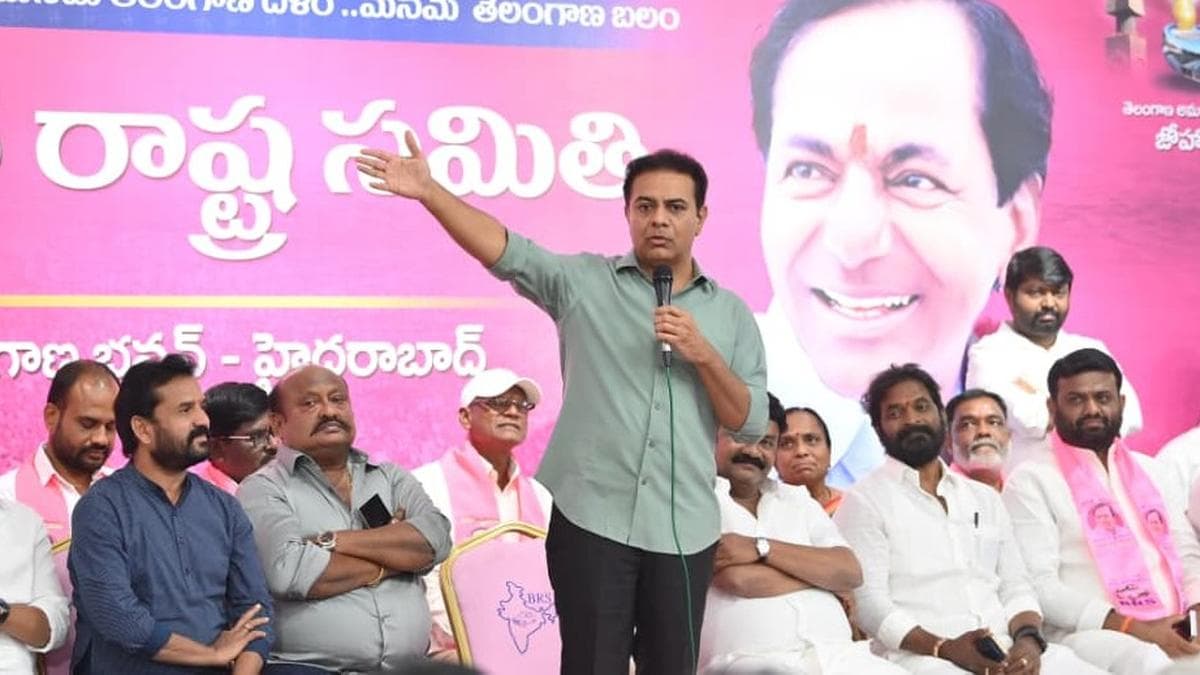
KTR states KCR to lead people's movement against Telangana Congress government; 'honeymoon period' over.
Summary
BRS working president K. T. Rama Rao (KTR) announced that former Chief Minister K. Chandrashekar Rao (KCR) will soon lead a people's movement, declaring the 'honeymoon period' of the Congress government in Telangana as over. This statement signifies the intensification of opposition politics in Telangana, crucial for understanding state-level political dynamics for State PSC exams. It highlights the ongoing political rivalry between the BRS and the ruling Congress party.
Key Points
- 1The statement was made by K. T. Rama Rao (KTR), who is the working president of the Bharat Rashtra Samithi (BRS).
- 2KTR announced that former Chief Minister K. Chandrashekar Rao (KCR) would lead a 'people's movement'.
- 3The movement is directed against the incumbent Congress government in the state of Telangana.
- 4KTR explicitly stated that the 'honeymoon period' of the Congress government has concluded.
- 5The BRS is the primary opposition party in Telangana, following its loss to the Congress in the recent state assembly elections.
In-Depth Analysis
The statement by BRS working president K. T. Rama Rao (KTR) announcing former Chief Minister K. Chandrashekar Rao (KCR) will lead a 'people's movement' against the Congress government in Telangana is a significant development in state politics, signaling an intensified opposition strategy. This move comes after the Bharat Rashtra Samithi (BRS), formerly Telangana Rashtra Samithi (TRS), lost power to the Indian National Congress (INC) in the November 2023 Telangana Assembly elections.
**Background Context:**
Telangana was carved out of Andhra Pradesh on June 2, 2014, after a prolonged statehood movement primarily spearheaded by K. Chandrashekar Rao and his party, the TRS. KCR became the first Chief Minister of the new state and led the TRS to two consecutive victories in 2014 and 2018, establishing a strong regional dominance. Under his leadership, the state saw several welfare schemes like Rythu Bandhu, Kaleshwaram Lift Irrigation Project, and Dalit Bandhu. However, anti-incumbency, allegations of family rule, and unfulfilled promises gradually eroded public trust. The Congress party, revitalized under the leadership of Revanth Reddy, effectively campaigned on a platform of 'Six Guarantees' and managed to unseat the BRS, securing 64 out of 119 seats in the 2023 elections. The Congress victory marked a significant shift, ending a decade of BRS rule and ushering in a new political era for the state.
**What Happened:**
KTR's declaration that the 'honeymoon period' of the Congress government is over and KCR will soon lead a 'people's movement' signifies a clear strategic shift by the BRS. Having been in power for ten years, the BRS is now adapting to its role as the principal opposition. The 'honeymoon period' typically refers to the initial phase of a new government when public goodwill is high, and opposition criticism is muted. By declaring it over, the BRS intends to put the Congress government under immediate and sustained pressure, holding it accountable for its pre-election promises and perceived governance failures. A 'people's movement' implies street protests, public meetings, and grassroots mobilization, aiming to tap into any growing dissatisfaction among the populace.
**Key Stakeholders Involved:**
1. **Bharat Rashtra Samithi (BRS):** As the primary opposition party, led by KCR and KTR, their objective is to regain political relevance, expose the perceived shortcomings of the ruling Congress, and rebuild their electoral base for future elections, including the upcoming Lok Sabha polls and the next state assembly elections. KCR, with his history of leading successful movements, is seen as the natural choice to spearhead this new agitation.
2. **Indian National Congress (INC):** The ruling party, led by Chief Minister Revanth Reddy, is currently focused on implementing its 'Six Guarantees' and consolidating its power. They will be the direct target of the BRS's movement and will need to demonstrate effective governance and fulfill promises to counter the opposition's narrative.
3. **The People of Telangana:** The ultimate stakeholders. Their support or dissatisfaction will determine the success or failure of the BRS's movement and the public perception of the Congress government. Their expectations regarding welfare schemes, employment, and development are paramount.
4. **Other Political Parties (e.g., BJP):** While BRS and Congress are the main players, parties like the BJP also seek to expand their footprint in Telangana. The political instability or heightened opposition activity might create opportunities for them to gain ground.
**Why This Matters for India:**
This development is crucial for understanding the dynamics of Indian federalism and multi-party democracy. It highlights the vital role of a strong opposition in holding the government accountable, a cornerstone of democratic governance. For India, it showcases:
* **Vibrant State Politics:** The intense political rivalry in Telangana reflects the healthy, albeit sometimes confrontational, nature of state-level politics, which is often a precursor to national political trends.
* **Democratic Accountability:** The concept of a 'people's movement' underscores the right to protest and demand accountability from elected representatives, a fundamental aspect enshrined in India's democratic framework.
* **Impact on National Elections:** Telangana, with its 17 Lok Sabha seats, is politically significant. The ongoing state-level political tussle can influence voter sentiment in the upcoming 2024 General Elections, potentially impacting the national political landscape and alliance formations.
* **Policy and Governance:** Sustained opposition pressure can influence the ruling party's policy decisions and implementation, potentially leading to more responsive governance or, conversely, administrative paralysis if the conflict becomes too intense.
**Historical Context:**
KCR's political career is deeply intertwined with the Telangana statehood movement. From launching the TRS in 2001 with the sole agenda of a separate Telangana state, to achieving it in 2014, he has a proven track record of mobilizing public sentiment and leading successful agitations. This historical precedent gives weight to the BRS's current call for a 'people's movement', evoking memories of past struggles and popular participation.
**Future Implications:**
We can expect increased political agitation, rallies, and protests across Telangana. The BRS will likely focus on issues like the implementation of Congress's 'Six Guarantees', alleged failures in governance, and other public grievances. This will put the Congress government under immense pressure to deliver on its promises and manage public perception effectively. The outcome of this intensified political rivalry will significantly influence the Lok Sabha elections in Telangana, where both parties will vie for dominance. It also presents a challenge for the BRS to rejuvenate its cadre and re-establish its connect with the masses after an electoral defeat, while the Congress must prove its administrative capability under constant scrutiny.
**Related Constitutional Articles, Acts, or Policies:**
* **Article 19(1)(b):** Guarantees the right to assemble peacefully and without arms, which is fundamental to any 'people's movement' or public protest. This right is subject to reasonable restrictions in the interests of public order or the sovereignty and integrity of India.
* **Article 19(1)(d):** Guarantees the right to move freely throughout the territory of India, enabling public participation in movements across the state.
* **Article 326:** Establishes universal adult suffrage, underpinning the democratic process and the significance of electoral outcomes that lead to changes in government and opposition roles.
* **Role of Opposition:** While not explicitly codified in a single article, the role of a vigilant opposition is an inherent and crucial part of India's parliamentary democratic structure, ensuring checks and balances on the ruling government. The conduct of state legislatures and the rights of MLAs (Members of Legislative Assembly) to question the government are also relevant here.
This political development in Telangana is a dynamic case study of post-election opposition politics and its implications for governance and democratic functioning in a federal setup.
Exam Tips
This topic falls under 'Indian Polity & Governance' and 'Current Events of National and International Importance' for UPSC, State PSC, and SSC exams. Focus on the role of opposition, federal structure, and state election dynamics.
Study related topics like the functions of political parties, electoral reforms, the concept of anti-incumbency, and the constitutional provisions related to freedom of speech, assembly, and protest (Articles 19, 20, 21).
Common question patterns include: 'Discuss the role of opposition in a democracy with reference to recent political developments,' 'Analyze the impact of state-level political shifts on national elections,' or direct questions on the constitutional rights related to public movements and protests.
Related Topics to Study
Full Article
Honeymoon period of the Congress government is over, says BRS working president