



Relevant for Exams
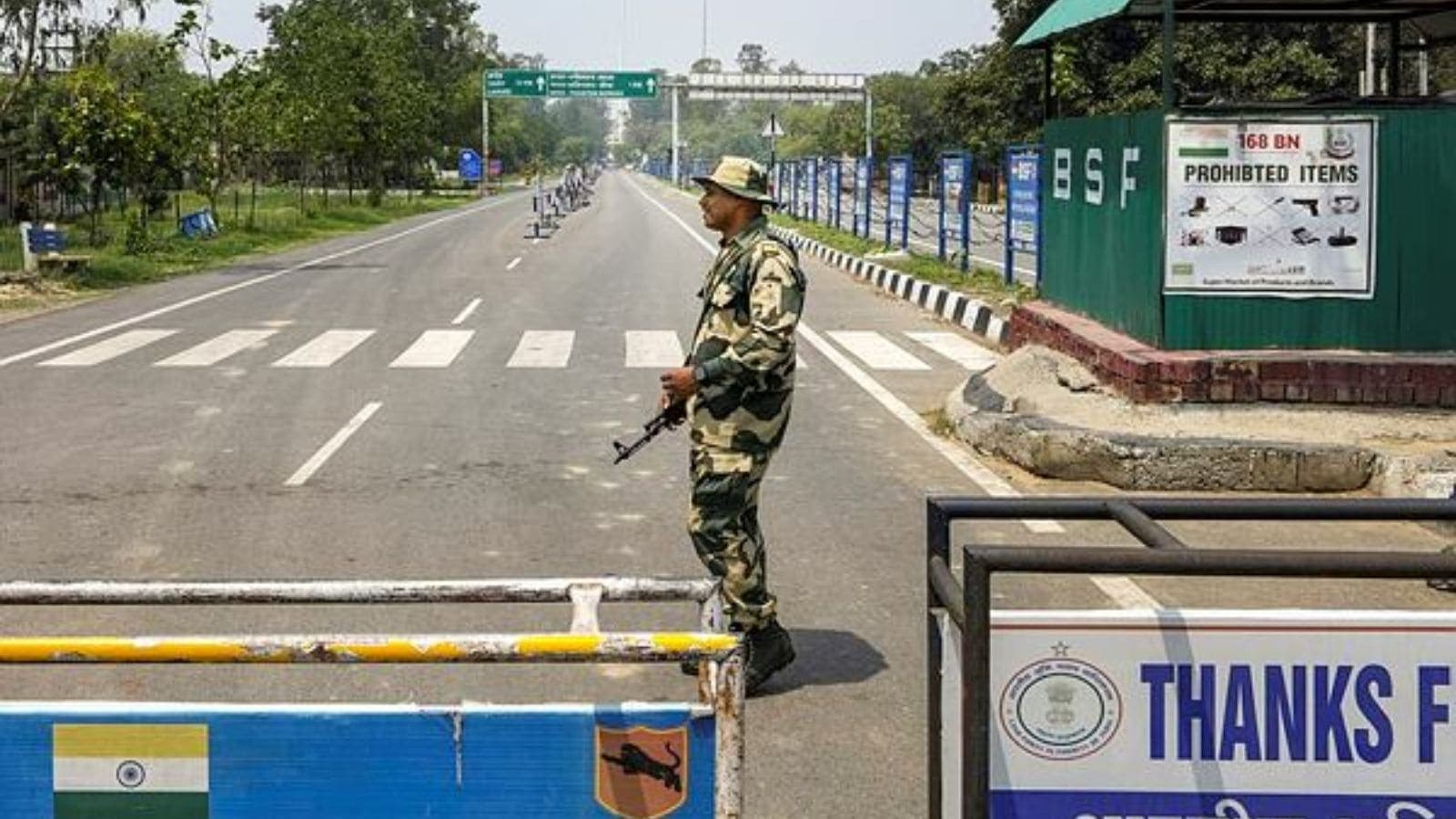
India launches major sweep operation along IB and LoC to counter Pakistan infiltration.
Summary
A sweep operation has reportedly commenced along India's International Border and Line of Control with Pakistan. This initiative aims to counter infiltration attempts, which are a persistent national security challenge. For exams, understanding India's border management strategies and challenges posed by cross-border infiltration is crucial, making this a relevant topic.
Key Points
- 1A significant sweep operation has been initiated by Indian security forces.
- 2The operation covers both the International Border (IB) and the Line of Control (LoC).
- 3The primary objective is to counter and prevent infiltration attempts originating from Pakistan.
- 4This measure aims to enhance border security and maintain territorial integrity.
- 5Such operations are a crucial component of India's national security strategy against cross-border threats.
In-Depth Analysis
The news of a significant sweep operation along India's International Border (IB) and Line of Control (LoC) with Pakistan underscores the perennial national security challenge posed by cross-border infiltration. This proactive measure by Indian security forces is a critical component of India's broader strategy to safeguard its territorial integrity and counter persistent threats emanating from across the border.
**Background Context and Historical Roots:**
India shares a complex and often volatile border with Pakistan, spanning approximately 3,323 km. This border is delineated into two primary segments: the International Border (IB) and the Line of Control (LoC). The IB, primarily in Punjab, Rajasthan, and Gujarat, is a settled, demarcated boundary. The LoC, however, is a de facto military control line that emerged from the 1948 ceasefire and was formally recognized after the 1972 Simla Agreement, dividing the erstwhile princely state of Jammu & Kashmir. This distinction is crucial because the nature of infiltration and security challenges differs significantly across these segments. Historically, cross-border infiltration has been a primary tool for Pakistan-backed terrorist groups to destabilize India, particularly in Jammu and Kashmir. Following the partition in 1947, and subsequent conflicts in 1947-48, 1965, 1971, and the Kargil War in 1999, the border region has remained a flashpoint. Pakistan's strategy, often termed 'bleed India with a thousand cuts,' involves supporting and facilitating terrorist organizations to infiltrate Indian territory, perpetrate violence, and foment insurgency.
**What Happened and Key Stakeholders:**
This 'sweep operation' is an intensive, coordinated effort by various Indian security agencies to sanitize areas along the border, detect hidden caches, track infiltration routes, and neutralize infiltrators. Such operations typically involve enhanced surveillance, patrolling, intelligence gathering, and cordon and search operations. The primary objective is to create a robust multi-layered defense against infiltration. Key stakeholders involved are:
1. **Indian Army:** Primarily responsible for managing the LoC, counter-insurgency operations, and responding to direct military threats.
2. **Border Security Force (BSF):** The primary border guarding force for the International Border, responsible for preventing smuggling and infiltration across the IB.
3. **Other Central Armed Police Forces (CAPFs) like CRPF:** Often deployed for internal security duties and counter-insurgency operations in the hinterland of border areas.
4. **Intelligence Agencies (RAW, IB, Military Intelligence):** Crucial for providing actionable intelligence on infiltration attempts, routes, and sleeper cells.
5. **Local Police and Administration:** Essential for law enforcement, intelligence gathering from local populations, and maintaining civil order.
6. **Pakistan (Army, ISI, Terrorist Outfits):** Though not a stakeholder in India's operation, they are the primary source of the infiltration challenge, actively supporting and facilitating cross-border movement of terrorists and illegal activities.
**Significance for India and Broader Themes:**
This operation holds immense significance for India's national security. Persistent infiltration attempts threaten India's sovereignty and territorial integrity. They fuel terrorism, disrupt peace, cause loss of life, and divert significant resources from socio-economic development towards defence. Economically, instability in border regions deters investment and tourism, impacting local livelihoods and national growth. Politically, it strains India-Pakistan relations, hindering regional cooperation efforts like SAARC. Socially, it can exacerbate communal tensions and radicalization. This sweep operation is a clear signal of India's zero-tolerance policy towards terrorism and its commitment to securing its borders.
**Constitutional and Policy References:**
India's constitutional framework empowers the Union government to ensure national security. **Article 355** mandates the Union to protect every State against external aggression and internal disturbance, providing the constitutional basis for deploying central forces like the Army and BSF for border management and counter-infiltration operations. The **Armed Forces (Special Powers) Act (AFSPA)**, though controversial, has been in force in 'disturbed areas' along the LoC and parts of Jammu & Kashmir, granting special powers to the armed forces to maintain public order, which aids in counter-infiltration efforts. Furthermore, various government policies like the **Integrated Border Management System (IBMS)** aim to enhance surveillance and response mechanisms using technology. The **Border Area Development Programme (BADP)** also plays an indirect but vital role by developing infrastructure and improving living conditions in border areas, thereby fostering goodwill and cooperation from local populations, which is crucial for intelligence gathering and security.
**Future Implications:**
The ongoing sweep operation highlights India's evolving border management strategy, which increasingly emphasizes proactive measures, intelligence-led operations, and technological integration. In the future, we can expect a continued focus on smart fencing, drone surveillance, and advanced sensor technologies to create an impenetrable border. This will also necessitate greater inter-agency coordination and real-time intelligence sharing. The success of such operations could lead to a reduction in terror incidents, fostering greater stability in border regions and potentially creating an environment conducive to dialogue, although Pakistan's continued support for cross-border terrorism remains a significant hurdle. India's firm stance also sends a message to the international community about its resolve to combat terrorism, impacting its diplomatic engagements and global counter-terrorism partnerships.
In essence, these operations are not merely about physical security but about upholding the rule of law, preserving national identity, and ensuring the safety and prosperity of its citizens against external threats. They reflect a dynamic and adaptive approach to one of India's most enduring security challenges.
Exam Tips
This topic falls under GS Paper 3 (Internal Security) of the UPSC Civil Services Exam. Focus on challenges to internal security, border area management, and the role of various security forces and agencies. For SSC and State PSCs, factual questions on border guarding forces and their mandates are common.
Study related topics such as the geographical features of India's borders (LoC, IB, LAC), various border guarding forces (BSF, ITBP, SSB, Assam Rifles), India's counter-terrorism policy, and the historical context of India-Pakistan relations and the Kashmir issue.
Common question patterns include analytical questions on the challenges of border management in India, the effectiveness of various border security strategies, the role of technology in enhancing border security, and policy-oriented questions on how to tackle cross-border infiltration and terrorism.