



Relevant for Exams
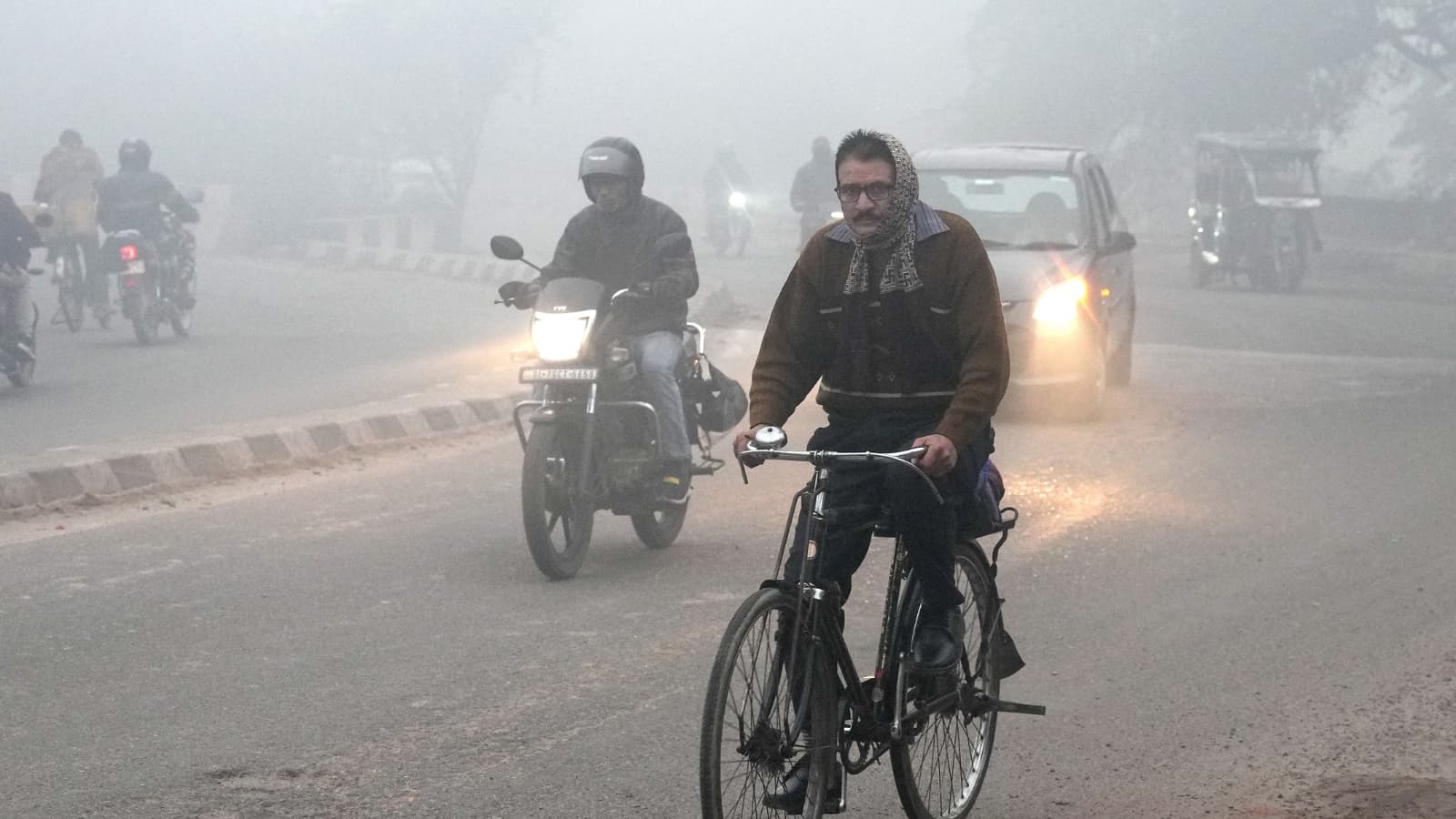
North India faces dense fog and cold wave; Srinagar shivers at 0.4°C ahead of Chill-e-Kalan.
Summary
Dense fog and cold wave conditions are persisting in parts of North India, with Srinagar recording a minimum temperature of 0.4 degrees Celsius. This severe weather event is significant as it precedes 'Chill-e-Kalan', the harshest winter period in Kashmir. For competitive exams, understanding regional climatic phenomena, specific geographical locations, and associated local terms like Chill-e-Kalan is crucial for general awareness and geography sections.
Key Points
- 1Dense fog and cold wave conditions are currently prevalent across parts of North India.
- 2Srinagar, located in North India, recorded a minimum temperature of 0.4 degrees Celsius.
- 3The ongoing cold conditions are occurring just before the onset of 'Chill-e-Kalan'.
- 4'Chill-e-Kalan' is the local term for the 40-day harshest winter period experienced in the Kashmir Valley.
- 5Such extreme weather events in North India frequently lead to disruptions in transportation and daily life.
In-Depth Analysis
The news of dense fog and persistent cold wave conditions across North India, with Srinagar recording a chilling 0.4 degrees Celsius ahead of 'Chill-e-Kalan', brings into sharp focus the complex interplay of geography, climate, and human resilience in the region. This annual phenomenon, while expected, carries significant implications for various facets of Indian life.
**Background Context and What Happened:** North India's winter climate is largely influenced by a combination of geographical factors and atmospheric phenomena. Dense fog, particularly prevalent over the vast Indo-Gangetic Plains (IGP), forms due to a mix of moisture (from water bodies, irrigation), low temperatures, light winds, and stable atmospheric conditions that trap pollutants and water droplets close to the surface. Often, advection fog, where warm, moist air moves over a colder surface, contributes significantly. Cold waves, on the other hand, are typically associated with the passage of Western Disturbances (WDs) – extra-tropical storms originating in the Mediterranean region that bring sudden winter rain and snow to the northwestern parts of the Indian subcontinent. After the passage of a WD, clear skies and incursions of cold, dry air from the Himalayas lead to a sharp drop in temperatures, resulting in cold wave conditions. Srinagar, nestled in the Kashmir Valley, is particularly susceptible to severe cold due to its high altitude and geographical bowl-like structure, which traps cold air. The term 'Chill-e-Kalan' is a local Kashmiri phrase denoting the 40-day harshest period of winter, usually from December 21 to January 31. It is characterized by sub-zero temperatures, heavy snowfall, and the freezing of water bodies. The current conditions, preceding 'Chill-e-Kalan', suggest an early and potentially intense start to the winter season.
**Key Stakeholders Involved:** Several entities are directly and indirectly involved in managing and experiencing these extreme weather events. The **India Meteorological Department (IMD)** serves as the primary scientific agency, providing crucial forecasts, warnings, and weather advisories to the public and government agencies. **State Governments** of Jammu & Kashmir, Punjab, Haryana, Uttar Pradesh, Rajasthan, and Delhi bear the primary responsibility for implementing relief measures, managing public health, and ensuring smooth transportation. The **local populace**, especially the vulnerable sections like the homeless and daily wage earners, are directly impacted in their daily lives and health. **Farmers** face a dual challenge: while the cold and associated moisture are beneficial for Rabi crops like wheat and mustard, extreme frost can damage horticulture and certain crops. The **transportation sector** (airlines, railways, roadways) suffers significant disruptions, leading to delays, cancellations, and economic losses. Finally, **disaster management authorities** at national (NDMA) and state levels (SDMAs) coordinate emergency responses.
**Why This Matters for India:** The persistence of dense fog and cold waves has profound implications. **Economically**, agricultural output can be affected; while some crops benefit, others suffer from frost damage or reduced sunlight. Transport disruptions lead to massive economic losses through delayed goods movement and reduced productivity. The tourism sector, particularly in regions like Kashmir, sees both a dip (due to travel difficulties) and a surge (for winter sports enthusiasts). **Socially**, there's a significant health burden, with increased cases of respiratory illnesses, hypothermia, and cardiovascular issues, especially among the elderly and children. School closures disrupt education, and daily life is severely impacted, with increased risks of accidents due to poor visibility. **Politically and Administratively**, the state machinery is tested on its preparedness, responsiveness, and ability to provide relief and maintain essential services.
**Historical Context and Future Implications:** North India has a long history of experiencing severe winters. However, in recent decades, there's growing concern about the changing patterns and increased frequency of extreme weather events, often linked to **climate change**. While specific cold waves might seem counter-intuitive in a warming world, climate change can lead to more volatile weather patterns, including more intense cold spells in certain regions. This necessitates enhanced **disaster preparedness** and **climate adaptation strategies**. Future implications include the need for more resilient infrastructure, improved early warning systems, public awareness campaigns on cold-weather safety, and agricultural research into cold-resistant crop varieties. Urban planning must also consider designing spaces and housing that can better withstand extreme temperatures.
**Related Constitutional Articles, Acts, or Policies:** The state's responsibility in managing these events is underscored by several legal frameworks. The **Disaster Management Act, 2005**, is paramount, providing the legal and institutional framework for effective management of disasters, including natural calamities like cold waves and fog. It mandates the establishment of the National Disaster Management Authority (NDMA), State Disaster Management Authorities (SDMAs), and District Disaster Management Authorities (DDMAs) to coordinate response and mitigation efforts. **Article 21 of the Constitution (Right to Life and Personal Liberty)** implicitly includes the right to a dignified life, which necessitates the state's responsibility to protect citizens from the adverse impacts of natural disasters. Furthermore, subjects like public health, sanitation, agriculture, and relief for the disabled and unemployed fall under the **State List (Schedule VII, List II)**, making state governments the primary actors in dealing with the immediate aftermath. The **National Action Plan on Climate Change (NAPCC)**, launched in 2008, outlines India's strategy to address climate change, and its various missions, such as the National Mission for Sustaining the Himalayan Ecosystem (NMSHE), are directly relevant to understanding and mitigating the long-term impacts on regions like Kashmir.
Exam Tips
This topic falls under 'Indian Geography' (Climatology, Physiography, Weather Phenomena) and 'Environment & Ecology' (Climate Change, Disaster Management) sections of UPSC Prelims and Mains (GS Paper I & III), SSC, State PSCs, and Railway exams. Focus on understanding the scientific reasons behind fog and cold waves.
Study related topics like Western Disturbances, Jet Streams, El Niño/La Niña effects on Indian monsoon and winter, types of fog, and IMD's classification of cold waves. Understand regional terms like 'Chill-e-Kalan' and their significance.
Common question patterns include: identifying causes of dense fog in IGP; linking Western Disturbances to winter precipitation and cold waves; asking about the institutional framework for disaster management (NDMA, SDMA); and understanding the socio-economic impacts of extreme weather events. Map-based questions on affected regions are also possible.
Be prepared for questions on government initiatives and policies related to disaster preparedness and climate change adaptation, such as the Disaster Management Act, 2005, and the National Action Plan on Climate Change (NAPCC).