



Relevant for Exams
Delhi court dismisses Rabri Devi's plea to transfer IRCTC scam, cash-for-jobs cases from judge.
Summary
A Delhi court dismissed former Bihar Chief Minister Rabri Devi's plea seeking to transfer ongoing cases from Judge Vishal Gogne, citing allegations of bias. The judge is currently presiding over high-profile cases involving her family, including the alleged IRCTC scam, a cash-for-jobs case, and associated money laundering proceedings. This development is significant for competitive exams as it highlights ongoing legal battles involving prominent political figures and the functioning of the judicial system in handling corruption charges.
Key Points
- 1The Delhi court dismissed a plea filed by former Bihar CM Rabri Devi.
- 2The plea sought to transfer ongoing cases from Judge Vishal Gogne, alleging bias.
- 3Judge Vishal Gogne is handling the alleged IRCTC scam case.
- 4He is also presiding over the cash-for-jobs case involving Rabri Devi's family.
- 5Additionally, the judge is dealing with money laundering proceedings linked to the family.
In-Depth Analysis
The recent decision by a Delhi court to dismiss former Bihar Chief Minister Rabri Devi's plea, which sought to transfer ongoing cases from Judge Vishal Gogne citing allegations of bias, is a significant development in India's ongoing legal battles against corruption. This incident underscores critical aspects of the Indian judicial system, the fight against political corruption, and the principle of judicial independence.
The background to this development lies in a series of high-profile corruption cases involving prominent political figures from Bihar, particularly the family of RJD chief Lalu Prasad Yadav. Two major cases are at the heart of this matter: the alleged IRCTC scam and the cash-for-jobs scam. The IRCTC scam, which came to light around 2017, pertains to alleged irregularities in the allotment of tenders for the maintenance of two IRCTC hotels in Ranchi and Puri to a private company in 2006, when Lalu Prasad Yadav was the Union Railway Minister. It is alleged that in exchange for these tenders, a prime plot of land in Patna was transferred to a company linked to Lalu Prasad Yadav's family. The second, more recent, is the alleged land-for-jobs or cash-for-jobs scam, where it is claimed that appointments were made in the Indian Railways in exchange for land parcels gifted or sold to Lalu Prasad Yadav's family at highly discounted rates between 2004 and 2009, again during his tenure as Railway Minister. Both cases involve allegations of money laundering, prompting investigations by both the Central Bureau of Investigation (CBI) and the Enforcement Directorate (ED).
What precisely happened was that Rabri Devi, a former Chief Minister and wife of Lalu Prasad Yadav, approached a Delhi court with a plea to transfer these critical cases – the alleged IRCTC scam, the cash-for-jobs case, and associated money laundering proceedings – from the court of Special Judge Vishal Gogne. Her plea was predicated on allegations of bias against the presiding judge. However, the Delhi court, after due consideration, dismissed her application. This dismissal implies that the court found insufficient grounds or evidence to substantiate the claim of bias against Judge Gogne, thereby affirming its confidence in the judge's impartiality to continue presiding over these sensitive matters.
Key stakeholders involved in this intricate legal and political saga include Rabri Devi herself, who is a petitioner and an accused in these cases. Her husband, Lalu Prasad Yadav, and son, Tejashwi Yadav (currently the Deputy Chief Minister of Bihar), are also significant accused parties, whose political futures are intertwined with the outcomes of these trials. Judge Vishal Gogne is a central figure, as his impartiality and judicial conduct were directly questioned. The Delhi court, as the dismissing authority, played a crucial role in upholding procedural integrity. Beyond these, the Central Bureau of Investigation (CBI) and the Enforcement Directorate (ED) are critical stakeholders, being the primary investigating agencies that have filed chargesheets and are prosecuting these cases. Finally, the Rashtriya Janata Dal (RJD), the political party led by the Yadav family, faces significant political implications from these ongoing legal battles.
This development matters immensely for India for several reasons. Firstly, it reinforces the principle of the rule of law and judicial independence. The judiciary's ability to adjudicate cases involving powerful political figures without succumbing to external pressures or unsubstantiated allegations of bias is fundamental to a democratic system. The dismissal of the transfer plea indicates the court's commitment to ensuring a fair trial while simultaneously safeguarding the integrity of judicial proceedings. Secondly, it highlights India's persistent struggle against corruption in public life. The alleged scams underscore the challenges in maintaining transparency and accountability, especially in high-level government appointments and contract allotments. The ongoing investigations and trials serve as a crucial mechanism for holding public servants accountable, irrespective of their political clout. Thirdly, there are significant political implications, particularly for Bihar politics. The Yadav family and the RJD are major political forces, and the outcome of these cases could significantly impact their electoral prospects and leadership dynamics, especially in the run-up to future elections. The opposition parties often leverage such legal proceedings to question the integrity of political rivals.
Historically, India has witnessed numerous corruption cases involving political leaders, from the Bofors scandal in the late 1980s to the Fodder Scam of the 1990s (which also involved Lalu Prasad Yadav), and more recently, the 2G and Coal allocation scams. These cases consistently test the robustness of India's legal framework and its investigating agencies. The legal battle against the Yadav family is a continuation of this long-standing effort to curb corruption and ensure accountability in governance. The constitutional provisions and acts relevant here include **Article 14** of the Indian Constitution, which guarantees equality before the law, ensuring that no individual, regardless of their position, is above legal scrutiny. The right to a fair trial, though not explicitly stated as a single article, is enshrined within **Article 21** (Right to Life and Personal Liberty) and is a fundamental aspect of natural justice. The specific laws governing these investigations are the **Prevention of Corruption Act, 1988**, which deals with corruption by public servants, and the **Prevention of Money Laundering Act (PMLA), 2002**, which empowers the ED to investigate financial crimes. The Code of Criminal Procedure (CrPC) contains provisions for the transfer of cases (e.g., Sections 406-411), which Rabri Devi's plea sought to invoke, but these require strong grounds to be met.
The future implications are manifold. The cases against the Yadav family will continue under Judge Gogne's purview, potentially leading to convictions or acquittals that could reshape the political landscape. The dismissal of this plea also sets a precedent regarding the high bar required for proving judicial bias, thereby protecting judges from frivolous transfer requests aimed at delaying proceedings or seeking more favourable benches. It reinforces the notion that the legal process, while ensuring fairness, must not be subjected to tactical maneuvers designed to impede justice. Furthermore, these ongoing trials highlight the need for continuous electoral reforms and greater transparency in political funding and appointments to prevent such alleged malpractices. The resolution of these cases will contribute to the public's perception of the judiciary's effectiveness in combating high-level corruption and upholding ethical governance in India.
Exam Tips
This topic falls under GS Paper II (Polity and Governance - Judiciary, Anti-corruption mechanisms) and GS Paper III (Internal Security - Money Laundering, Role of Central Agencies). Be prepared to discuss the independence of the judiciary, the role of central investigative agencies like CBI and ED, and anti-corruption laws.
Study related topics such as judicial accountability, the powers and limitations of the CBI and ED, the Prevention of Corruption Act, 1988, and the Prevention of Money Laundering Act (PMLA), 2002. Understand the provisions for transfer of cases in CrPC and the principles of natural justice (rule against bias).
Common question patterns include direct questions on the functions of CBI/ED, the constitutional provisions related to a fair trial, or case studies on corruption. You might also encounter analytical questions on the challenges to judicial independence or the effectiveness of anti-corruption bodies in India.
Related Topics to Study
Full Article
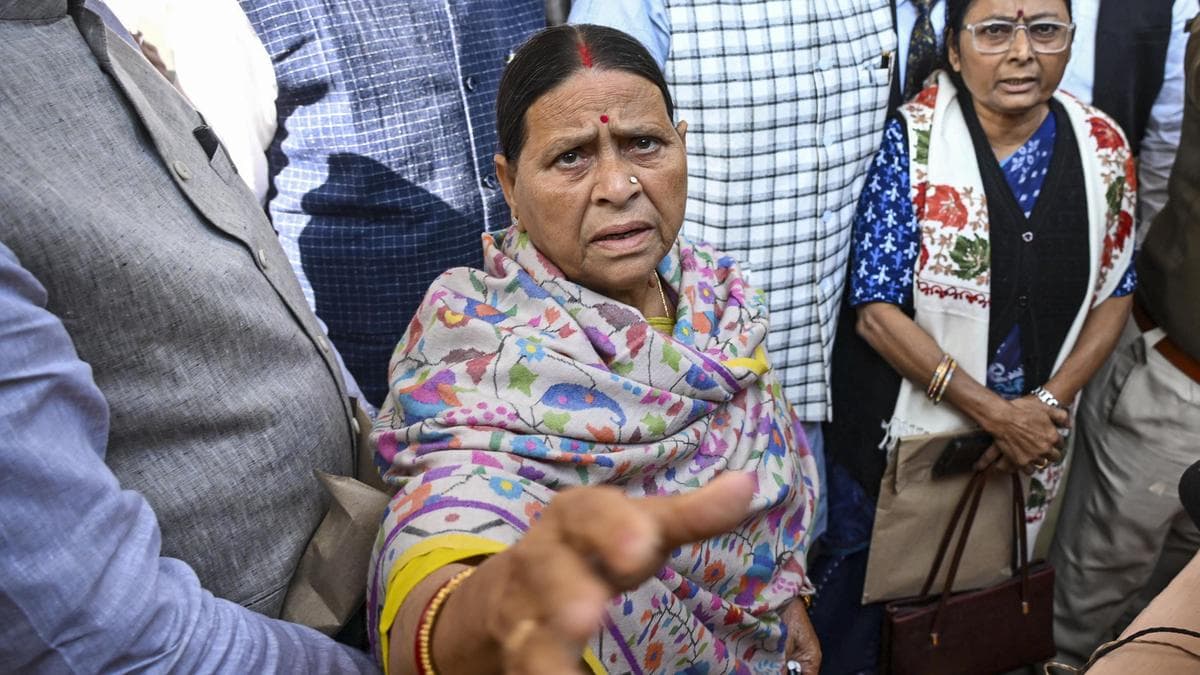
Judge Vishal Gogne is currently dealing with alleged IRCTC scam, cash-for-jobs case and the money laundering proceedings associated with the family