



Relevant for Exams
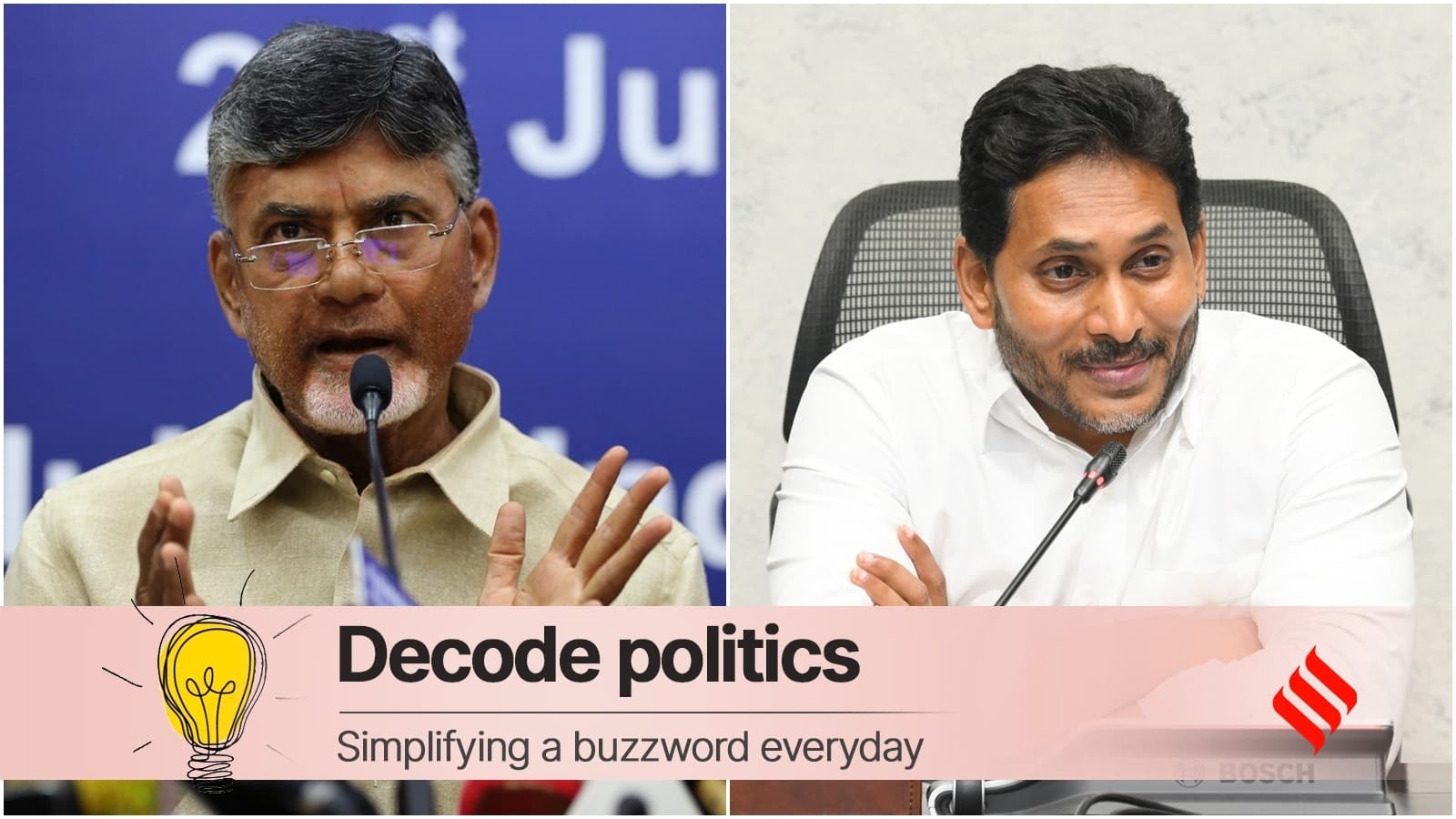
TDP and YSRCP clash over PPP vs. privatisation of medical colleges in Andhra Pradesh.
Summary
The news highlights a political conflict in Andhra Pradesh between the Telugu Desam Party (TDP) and YSR Congress Party (YSRCP) concerning the development and management of medical colleges. The core of the dispute centers on whether to adopt a Public-Private Partnership (PPP) model or pursue complete privatisation. This issue is significant for understanding state-level political dynamics and policy debates in Andhra Pradesh, particularly regarding healthcare infrastructure.
Key Points
- 1The political dispute is occurring in the Indian state of Andhra Pradesh.
- 2The primary political parties involved are the Telugu Desam Party (TDP) and the YSR Congress Party (YSRCP).
- 3The core of the disagreement revolves around the management and development of medical colleges.
- 4The specific models under debate are Public-Private Partnership (PPP) and outright privatisation.
- 5This issue represents a significant policy and political divergence between the ruling and opposition parties in the state.
In-Depth Analysis
The political dispute in Andhra Pradesh regarding the development and management of medical colleges, specifically the debate between Public-Private Partnership (PPP) and outright privatisation, offers a crucial lens through which to understand the complexities of healthcare infrastructure development, state-level governance, and the ideological divides in Indian politics. This issue, pitting the then-ruling YSR Congress Party (YSRCP) against the Telugu Desam Party (TDP), is not merely a state-specific squabble but reflects broader national dilemmas concerning public welfare, fiscal responsibility, and the role of the private sector.
**Background Context and What Happened:**
India faces a persistent shortage of medical professionals and adequate healthcare infrastructure, particularly in rural and semi-urban areas. To address this, successive governments have explored various models for expanding medical education. Andhra Pradesh, post its bifurcation in 2014, has been particularly keen on bolstering its healthcare and educational facilities. The YSRCP government, under Chief Minister Jagan Mohan Reddy, had initiated plans to establish new medical colleges, often aiming for 'one medical college per district' to improve access to medical education and healthcare services. The core of the dispute arose when the YSRCP government's proposed model, which likely involved significant government funding and perhaps a PPP approach, was challenged by the opposition TDP. While the summary doesn't detail specific proposals, the conflict suggests the YSRCP was advocating for a model that the TDP either found insufficient, fiscally imprudent, or ideologically misaligned, preferring a more direct or different form of private sector involvement or criticising the government's chosen PPP framework.
**Key Stakeholders Involved:**
1. **YSR Congress Party (YSRCP):** As the then-ruling party, it was responsible for formulating and implementing healthcare policies, including the establishment of medical colleges. Their approach likely aimed at expanding access and potentially maintaining a degree of state control or oversight, even under a PPP model.
2. **Telugu Desam Party (TDP):** As the principal opposition, the TDP scrutinized government policies, highlighted potential flaws, and advocated for alternative approaches. Their stance on 'privatisation' versus 'PPP' could stem from a belief in greater efficiency through private enterprise or a critique of the specific terms of the YSRCP's PPP proposals.
3. **National Medical Commission (NMC):** This statutory body, established under the NMC Act, 2019, is the apex regulatory authority for medical education and medical professionals in India. Any new medical college, regardless of its funding model, must adhere to NMC norms regarding infrastructure, faculty, and curriculum. The NMC ensures quality and standards.
4. **Private Investors/Corporations:** These are potential partners in PPP projects or outright owners in a fully privatised model. Their motivations include profit generation, market expansion, and contributing to corporate social responsibility initiatives.
5. **Citizens/Public:** The ultimate beneficiaries or sufferers of these policies. Their concerns revolve around accessibility, affordability, and quality of healthcare and medical education. The financial burden on students (fees) and patients (treatment costs) is a critical factor.
**Significance for India and Historical Context:**
This debate is highly significant for India as it touches upon the fundamental question of the state's role in social sectors like healthcare and education. Historically, post-independence, India adopted a socialist model where the state was the primary provider of healthcare and education. However, with economic liberalisation in 1991, the private sector's role expanded significantly. This led to a hybrid system where both government and private institutions coexist. The challenge has been to balance accessibility and affordability (often associated with public institutions) with efficiency and quality (often attributed to private players). The 'PPP vs. privatisation' debate reflects this ongoing struggle. While PPP aims to leverage private sector efficiency and capital while retaining some public control and social objectives, outright privatisation shifts the primary responsibility and risk to the private entity, potentially leading to higher costs but theoretically better services due to market competition. For a developing country like India, with a vast population and diverse socio-economic strata, choosing the right model is critical for achieving universal healthcare.
**Future Implications:**
The chosen model will have profound implications for Andhra Pradesh and potentially serve as a precedent for other states. If a robust PPP model is successfully implemented, it could accelerate the establishment of medical colleges, increase the doctor-patient ratio, and improve healthcare access. Conversely, a poorly designed model could lead to financial burden on the state, compromised quality of education, or unaffordable healthcare for the masses. The political ramifications are also significant; the party that successfully addresses healthcare needs will likely gain public trust. The debate also highlights the need for a clear, transparent policy framework for private sector involvement in social infrastructure. Furthermore, it underscores the importance of regulatory oversight by bodies like the NMC to ensure that quality and ethical standards are not compromised, irrespective of the funding model.
**Related Constitutional Articles, Acts, or Policies:**
1. **Seventh Schedule (Article 246):** This schedule delineates legislative powers between the Union and States. 'Public Health and Sanitation; hospitals and dispensaries' falls under **List II (State List - Entry 6)**, granting states primary legislative and executive authority. However, 'Education, including technical education, medical education and universities' is in **List III (Concurrent List - Entry 25)**, allowing both Union and States to legislate. Furthermore, 'Coordination and determination of standards in institutions for higher education or research and scientific and technical institutions' is under **List I (Union List - Entry 66)**, giving the Union government a crucial role in regulating standards, exemplified by the NMC.
2. **Article 21 (Right to Life and Personal Liberty):** The Supreme Court has expansively interpreted this article to include the 'right to health' and 'right to a healthy environment,' placing an obligation on the state to provide adequate healthcare facilities.
3. **Article 47 (Directive Principles of State Policy):** This article states that the 'State shall regard the raising of the level of nutrition and the standard of living of its people and the improvement of public health as among its primary duties.' This provides a constitutional directive for state intervention in healthcare.
4. **National Medical Commission (NMC) Act, 2019:** This Act replaced the Medical Council of India (MCI) and is the primary legislation governing medical education, establishing norms for setting up and operating medical colleges, faculty requirements, and fee regulation. Its regulations significantly influence both public and private medical institutions.
5. **National Health Policy (NHP) 2017:** This policy document acknowledges the need for strategic partnerships with the private sector to achieve universal healthcare coverage while emphasizing the state's role in regulating and ensuring quality and affordability. This policy framework often guides state-level initiatives.
Exam Tips
This topic falls under GS Paper II (Polity & Governance, Social Justice - Health, Education) and GS Paper III (Economy - Infrastructure, Investment Models, Fiscal Policy). Expect questions on the role of the state in social sectors and different models of public service delivery.
Study the constitutional provisions related to health and education (Seventh Schedule, Articles 21, 47) thoroughly. Also, understand the evolution and role of regulatory bodies like the National Medical Commission (NMC).
Prepare for analytical questions comparing and contrasting PPP models with outright privatization in the context of social infrastructure (pros, cons, challenges, best practices). Be ready to discuss the implications for accessibility, affordability, and quality of services.
Understand the concept of fiscal federalism – how state governments finance their social sector initiatives and the role of central government schemes (like Ayushman Bharat) in supporting state efforts.
Be aware of recent government policies and initiatives related to healthcare infrastructure and medical education, such as the 'one medical college per district' goal or specific schemes for boosting healthcare workforce.