



Relevant for Exams
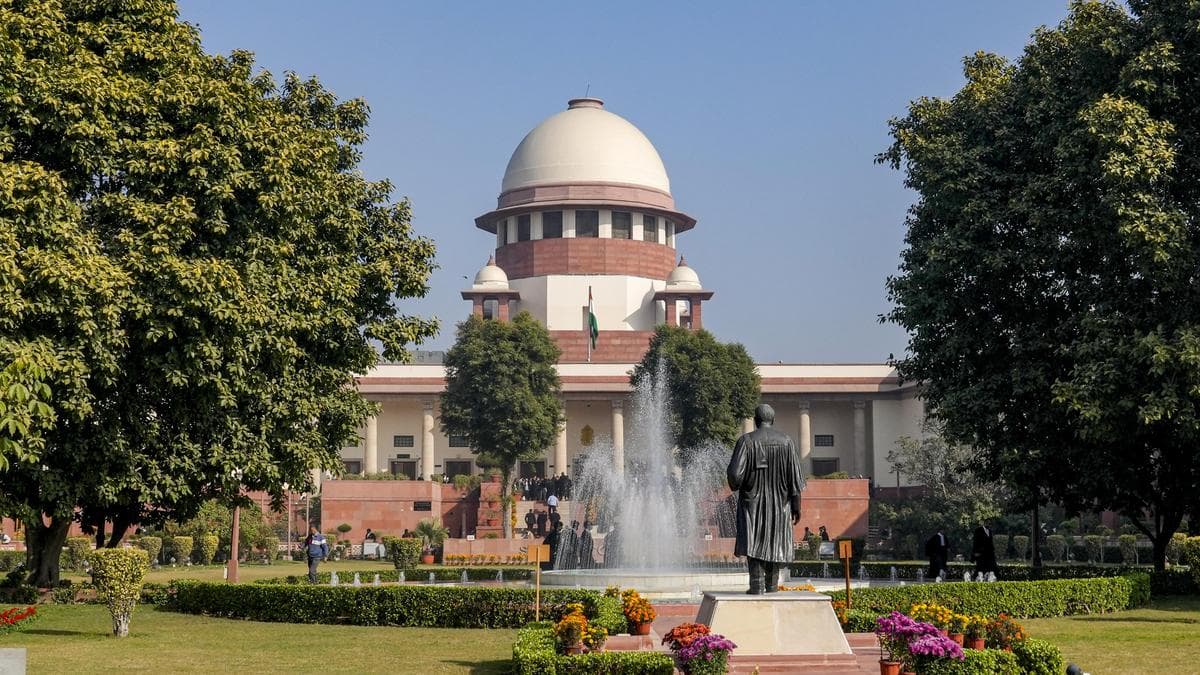
SC: Courts to prioritize animals as "silent victims" in commercial ventures, defers Nilgiris hotel case.
Summary
The Supreme Court deferred a hearing on petitions from hotel and resort owners in the Nilgiris, stating that courts will lean towards animals as "silent victims" of commercial ventures. This pronouncement underscores the judiciary's increasing focus on environmental protection and animal rights, setting a significant precedent for balancing commercial interests with ecological concerns. It's crucial for understanding judicial activism and environmental law in India for competitive exams.
Key Points
- 1The Supreme Court declared that courts will prioritize animals, viewing them as "silent victims" in commercial ventures.
- 2The ruling came in the context of a batch of petitions filed by owners of hotels and resorts.
- 3The specific geographical area involved in the petitions is the Nilgiris region.
- 4The Supreme Court Bench deferred the hearing on these petitions to January.
- 5The deferment was made to allow for a "detailed consideration" of the complex issue.
In-Depth Analysis
Imagine a pristine mountain range, home to unique flora and fauna, now increasingly dotted with concrete structures. This is the background to the Supreme Court's significant observation that courts will lean towards animals as "silent victims" of commercial ventures. This ruling, made while deferring a hearing on petitions from hotel and resort owners in the Nilgiris, is not just a passing remark; it's a powerful statement reinforcing India's commitment to environmental protection and animal rights, setting a crucial precedent for balancing commercial interests with ecological concerns.
**Background Context: The Nilgiris and the Elephant Corridors**
The Nilgiris, part of the Western Ghats, is a UNESCO World Heritage site and a biodiversity hotspot. It's renowned for its unique shola forests, grasslands, and rich wildlife, including elephants, tigers, and various endemic species. A critical aspect of its ecology is the presence of elephant corridors – specific pathways that elephants use to move between different habitats, essential for their survival and genetic diversity. Over the past few decades, rapid and often unregulated commercial development, particularly in the form of hotels, resorts, and private properties, has encroached upon these corridors. This encroachment has led to habitat fragmentation, increased human-wildlife conflict, and disruption of elephant migration patterns, posing a severe threat to these majestic animals. The current batch of petitions before the Supreme Court stems from previous legal battles and orders aimed at protecting these corridors, including directions for the demolition of illegal structures and regulation of commercial activities in these sensitive zones.
**What Happened: Judicial Scrutiny and the 'Silent Victims' Doctrine**
The Supreme Court Bench was hearing a series of petitions filed by hotel and resort owners in the Nilgiris, challenging earlier orders from the Madras High Court and a Supreme Court-appointed expert committee. These orders had mandated the sealing or demolition of properties built on elephant corridors. The Apex Court, while deferring the hearing for a detailed consideration, unequivocally stated its stance: when commercial interests clash with the welfare of animals, especially those impacted by human activities, the courts will side with the animals. The term "silent victims" is particularly poignant, highlighting that animals cannot articulate their suffering in legal forums, thus placing a greater responsibility on the judiciary to protect their interests.
**Key Stakeholders Involved:**
1. **The Supreme Court of India:** As the highest judicial body, it acts as the ultimate protector of constitutional values, including environmental protection and fundamental rights. Its pronouncements set legal precedents for lower courts and guide policy. This ruling exemplifies judicial activism in environmental governance.
2. **Hotel and Resort Owners:** These are commercial entities whose business interests are directly impacted by environmental regulations and court orders. They represent the economic development aspect, often arguing for property rights and livelihoods.
3. **Wildlife and Animals (especially elephants):** While not direct parties, they are the primary beneficiaries of such rulings. Their survival and ecological well-being are at the core of the dispute.
4. **Environmental Activists and NGOs:** Groups like the Wildlife Trust of India, Worldwide Fund for Nature (WWF), and local environmental organizations have historically played a crucial role in bringing these issues to public and judicial notice, advocating for wildlife protection and sustainable development.
5. **Tamil Nadu Government and Forest Department:** They are responsible for implementing environmental laws, managing wildlife, and regulating development in ecologically sensitive areas. Their actions and policies are often scrutinized in such cases.
**Significance for India: A Paradigm Shift in Environmental Jurisprudence**
This observation holds immense significance for India. Firstly, it reinforces the principle of **sustainable development**, emphasizing that economic progress cannot come at the cost of ecological destruction. Secondly, it elevates **animal rights** and **environmental protection** to a higher plane in judicial consideration, possibly setting a new standard for Environmental Impact Assessments (EIAs) and regulatory approvals for projects in ecologically sensitive zones across the country. This can have far-reaching implications for the tourism industry, real estate development, and infrastructure projects in biodiversity-rich regions like the Western Ghats, the Himalayas, and the North-Eastern states. It underscores the judiciary's proactive role in interpreting and enforcing environmental laws, often stepping in where executive action might be perceived as insufficient or compromised.
**Constitutional Provisions and Legal Framework:**
The Supreme Court's stance is deeply rooted in the Indian Constitution and various environmental statutes:
* **Article 48A (Directive Principles of State Policy):** Mandates the State to "endeavour to protect and improve the environment and to safeguard the forests and wildlife of the country." While not directly enforceable, it guides state policy.
* **Article 51A(g) (Fundamental Duties):** Enjoins every citizen "to protect and improve the natural environment including forests, lakes, rivers and wildlife, and to have compassion for living creatures." This imposes a duty on citizens, which courts often reference.
* **Wildlife (Protection) Act, 1972:** Provides for the protection of wild animals, birds, and plants and for matters connected therewith or ancillary or incidental thereto. It establishes protected areas (national parks, sanctuaries) and regulates hunting and trade of wildlife.
* **Prevention of Cruelty to Animals Act, 1960:** Aims to prevent the infliction of unnecessary pain or suffering on animals.
* **Environmental (Protection) Act, 1986:** A comprehensive legislation providing for the protection and improvement of environment. The court's ruling aligns with the broader spirit of these acts, invoking the doctrine of **public trust** (where the state holds natural resources in trust for the public) and the precautionary principle.
**Broader Themes and Future Implications:**
This ruling connects to broader themes of **environmental governance**, **human-wildlife conflict mitigation**, and the role of **judicial review** in a democracy. It signals a potential increase in judicial scrutiny of development projects, especially those in vulnerable ecosystems. Future implications include stricter implementation of existing environmental laws, a potential re-evaluation of land use policies in ESAs, and a greater emphasis on ecological restoration. It could also encourage more Public Interest Litigations (PILs) seeking to protect animal habitats. This judicial stance will likely push policymakers to devise more sustainable tourism models and development strategies that integrate ecological considerations from the outset, rather than as an afterthought. It's a clear message that the long-term health of the environment and its inhabitants cannot be sacrificed for short-term commercial gains, fostering a more compassionate and environmentally conscious approach to development in India.
Exam Tips
**GS-II (Polity & Governance) & GS-III (Environment & Ecology):** This topic directly falls under Judicial Activism, Environmental Laws, and Sustainable Development. Understand the role of the Supreme Court in interpreting and enforcing environmental protection. For GS-III, focus on the conflict between development and conservation, particularly in ecologically sensitive areas.
**Related Topics to Study:** Link this to the concept of Ecologically Sensitive Areas (ESAs), the Western Ghats ecology expert panel reports (Gadgil and Kasturirangan), the Wildlife (Protection) Act, 1972, and the concept of 'public trust doctrine' in environmental law. Also, study the role of the National Green Tribunal (NGT) and various environmental impact assessment (EIA) processes.
**Common Question Patterns:** Expect analytical questions in Mains exams (UPSC, State PSCs) on the judiciary's role in environmental protection, balancing development vs. environment, or the effectiveness of environmental laws. In Prelims, questions might focus on specific constitutional articles (48A, 51A(g)), key environmental acts, or important judgments related to animal rights and conservation.
Related Topics to Study
Full Article
The Bench deferred the hearing on a batch of petitions filed by the owners of hotels and resorts in the Nilgiris to January, saying the issue required detailed consideration