



Relevant for Exams
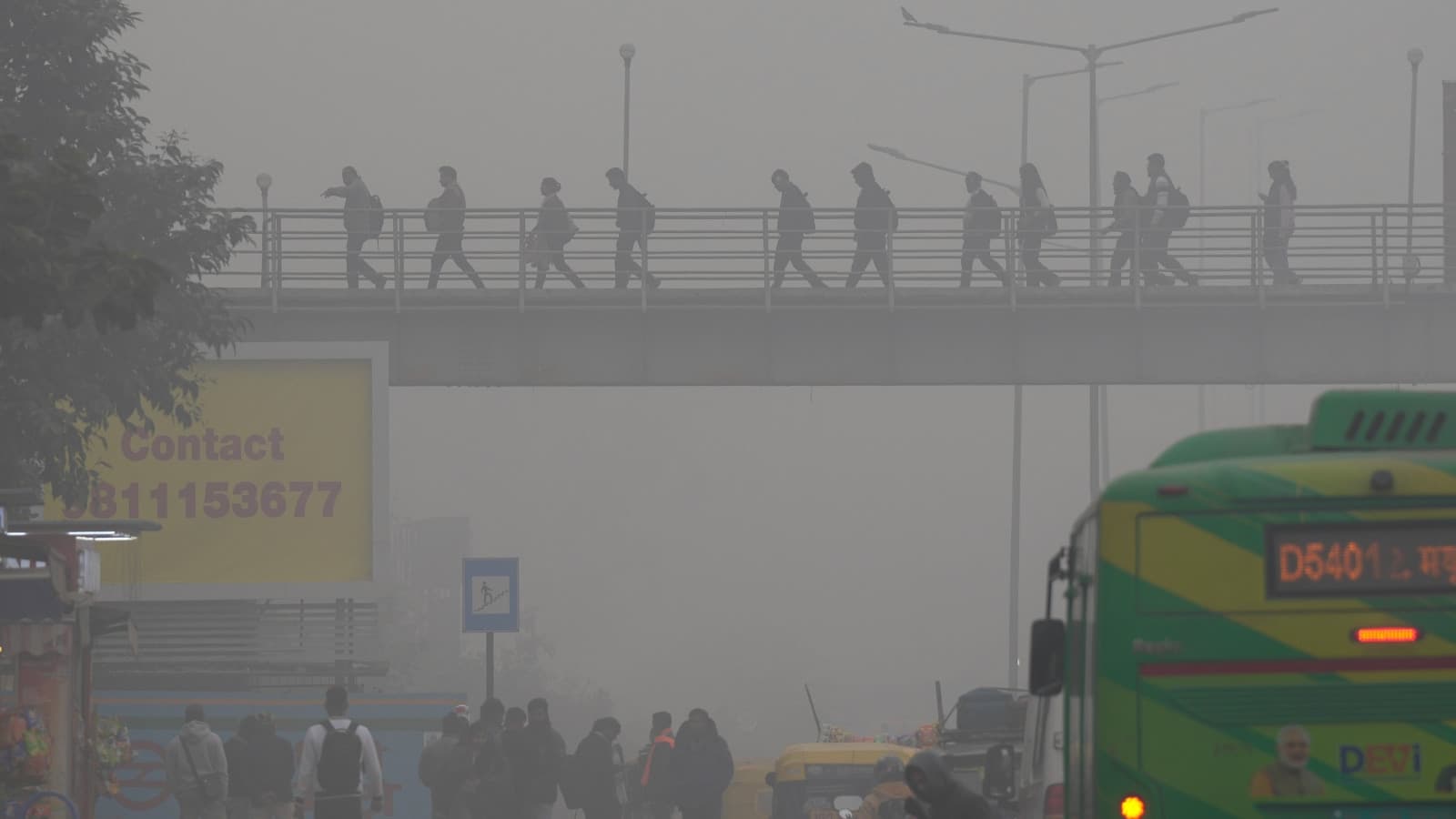
Cold wave and thick smog cause flight disruptions across North India, impacting Delhi-NCR.
Summary
A severe cold wave combined with thick smog significantly impacted North India, particularly the Delhi-NCR region, leading to widespread flight disruptions. Airlines issued advisories due to low visibility. This recurring environmental challenge highlights issues of air pollution and its effects on transportation infrastructure, crucial for exam topics like geography, environment, and disaster management.
Key Points
- 1North India experienced a severe cold wave, affecting daily life and infrastructure.
- 2Thick smog blanketed the Delhi-NCR region, drastically reducing visibility.
- 3Flight operations were significantly impacted at airports in the affected areas.
- 4Airlines issued passenger advisories regarding potential delays and cancellations due to weather.
- 5The combination of cold wave and smog is a recurring annual challenge for the region's transport and environment.
In-Depth Analysis
The recurring phenomenon of a severe cold wave combined with thick smog blanketing North India, particularly the Delhi-NCR region, represents a multi-faceted environmental and governance challenge with significant implications for the nation. This annual occurrence, which often leads to widespread flight disruptions and impacts daily life, is a critical issue for competitive exam aspirants to understand in depth.
**Background Context:**
North India experiences distinct winter conditions. The 'cold wave' is primarily driven by the advection of cold, dry air from the Himalayas, often facilitated by the passage of Western Disturbances, which are extra-tropical storms originating in the Mediterranean region. These systems bring moisture and precipitation to the northern parts of India, and post their passage, the clear skies and snow-covered mountains lead to intense cooling. The 'smog,' a portmanteau of smoke and fog, is a more complex issue. It is an anthropogenic phenomenon, exacerbated by meteorological conditions. The major contributors to air pollution in Delhi-NCR include vehicular emissions, industrial pollution, construction dust, biomass burning (especially during winter for heating), and critically, stubble burning in the agricultural fields of Punjab and Haryana during the post-monsoon harvesting season (October-November). During winter, a meteorological phenomenon called 'temperature inversion' traps pollutants closer to the ground, preventing their dispersal and leading to the formation of a dense, toxic blanket of smog. Delhi's geographical location in a landlocked basin further aggravates the problem, as pollutants get trapped with limited avenues for dispersion.
**What Happened & Key Stakeholders:**
As highlighted, the recent incident saw a severe cold wave intensify the impact of thick smog, leading to drastically reduced visibility across Delhi-NCR. This directly translated into significant disruptions in air travel, with numerous flights delayed or cancelled at Indira Gandhi International Airport (IGIA) and other regional airports. Airlines promptly issued advisories, a standard operating procedure to inform passengers and ensure safety. Key stakeholders in this crisis are numerous. The **Central Government**, through ministries like Environment, Forest and Climate Change (MoEFCC) and Civil Aviation, plays a crucial role in policy formulation and infrastructure management. **State Governments** of Delhi, Punjab, Haryana, and Uttar Pradesh are frontline actors responsible for implementing pollution control measures and managing agricultural practices. The **Supreme Court of India** and the **National Green Tribunal (NGT)** have consistently intervened, issuing directives and monitoring compliance. The **Commission for Air Quality Management (CAQM)**, established by an Act of Parliament in 2021, is a dedicated body mandated to coordinate efforts across these states. **Local Municipal Corporations** are responsible for waste management and dust control. **Airlines and Airport Authorities** are directly impacted and must manage operations safely. Finally, **citizens and farmers** are both contributors to and sufferers of this environmental challenge.
**Significance for India:**
This recurring crisis has profound implications for India. **Economically**, flight disruptions lead to significant financial losses for airlines, airports, and passengers due to delays, cancellations, and missed connections. Reduced visibility also affects road and rail transport, impacting supply chains and productivity. The health costs associated with air pollution are enormous, burdening the public health system and reducing the workforce's efficiency. **Socially**, the health impact is severe, leading to a rise in respiratory illnesses, cardiovascular diseases, and premature deaths, particularly affecting vulnerable populations like children and the elderly. It diminishes the quality of life and creates public discontent. **Environmentally**, it represents a failure to protect fundamental environmental rights and achieve sustainable development goals. **Politically and in terms of governance**, it highlights challenges in inter-state coordination, policy implementation, and enforcement mechanisms. The inability to effectively tackle this annual crisis often leads to blame games between states and the centre, undermining cooperative federalism.
**Constitutional Provisions and Policies:**
India's constitutional framework indirectly supports environmental protection. **Article 21** (Right to Life and Personal Liberty) has been interpreted by the Supreme Court to include the right to a clean environment. **Article 48A** (Directive Principles of State Policy) mandates the State to 'endeavour to protect and improve the environment and to safeguard the forests and wildlife of the country.' **Article 51A(g)** (Fundamental Duties) makes it a duty of every citizen 'to protect and improve the natural environment including forests, lakes, rivers and wildlife, and to have compassion for living creatures.'
Specific legislative measures include the **Environment (Protection) Act, 1986**, a comprehensive umbrella legislation, and the **Air (Prevention and Control of Pollution) Act, 1981**, specifically designed to address air pollution. The establishment of the **Commission for Air Quality Management in National Capital Region and Adjoining Areas Act, 2021**, underscores the severity and the need for a dedicated, legally empowered body. Furthermore, the **Graded Response Action Plan (GRAP)**, implemented by CAQM, outlines emergency measures to be taken based on the severity of air pollution levels.
**Future Implications:**
The future demands a multi-pronged, sustained approach. This includes promoting cleaner fuels and electric vehicles, upgrading industrial emission standards, managing construction dust, and finding sustainable alternatives to stubble burning (e.g., bio-decomposers, crop diversification). Enhanced inter-state cooperation and strict enforcement of environmental laws are paramount. Climate change may exacerbate these extreme weather events, making the combined challenge of cold waves and pollution more intense. India's commitment to international climate goals, such as the Paris Agreement, also necessitates robust domestic action on air quality. Failure to address this persistently will not only continue to harm public health and the economy but also tarnish India's global image, especially with Delhi frequently ranking among the world's most polluted cities. A long-term vision integrating urban planning, agricultural policy, and public health initiatives is crucial for a sustainable future.
Exam Tips
This topic primarily falls under General Studies Paper I (Geography - Climatology, Environmental Geography) and Paper III (Environment & Ecology, Disaster Management, Internal Security - related to public health crises) for UPSC. For SSC/State PSCs, it's relevant for General Awareness sections covering Environment, Geography, and Current Affairs.
When studying, focus on the 'why' and 'how': understand the meteorological reasons for cold waves (Western Disturbances, temperature inversion) and the anthropogenic causes of smog (stubble burning, vehicular pollution). Relate these to specific government policies and acts like the CAQM Act, GRAP, and constitutional articles (21, 48A, 51A(g)).
Common question patterns include: identifying the primary causes of air pollution in Delhi-NCR; explaining the role of specific bodies like CAQM or NGT; discussing the constitutional provisions related to environmental protection; and analyzing the socio-economic impacts of such environmental events. Be prepared for both factual recall and analytical/essay-type questions.
Practice drawing connections between environmental issues and governance challenges, economic impacts, and public health. For instance, how does stubble burning impact inter-state relations or farmer livelihoods?