



Relevant for Exams
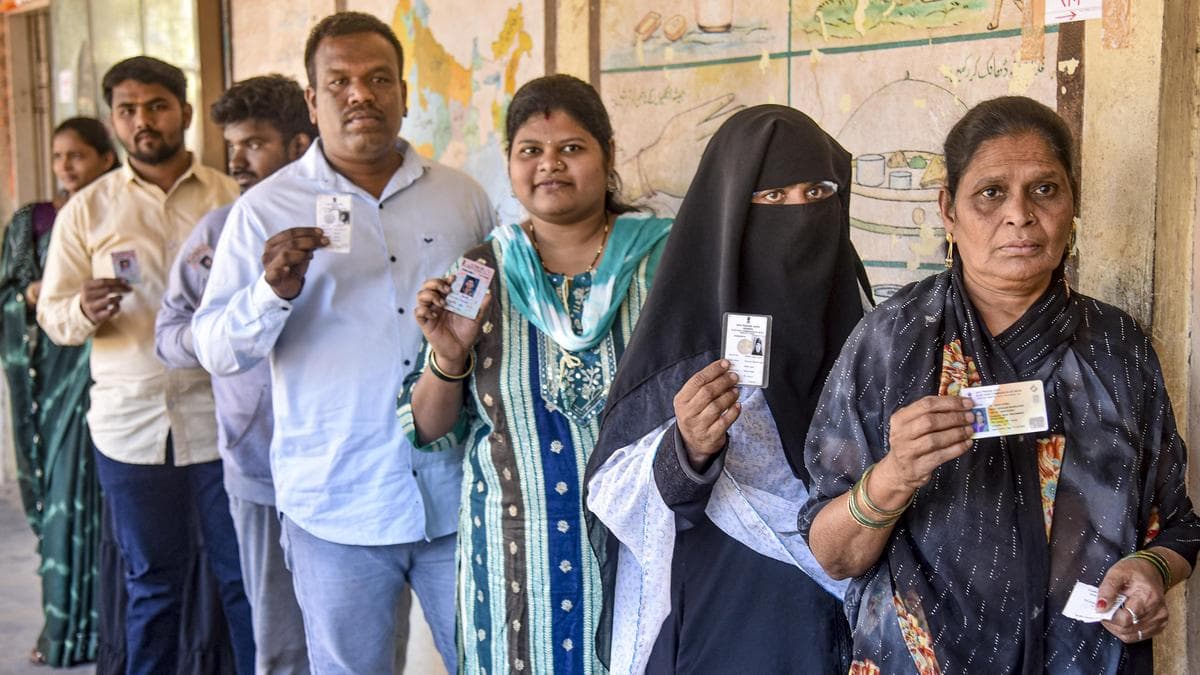
Maharashtra local body polls marred by fake vote and fraud claims; investigations launched.
Summary
Local body polls in Maharashtra were marred by widespread allegations of fake votes and electoral fraud, prompting special investigations and police action across several districts. This incident highlights critical issues in maintaining the integrity of electoral processes at the grassroots level. For competitive exams, it underscores the challenges in local governance and the role of election authorities in ensuring fair polls, relevant for polity and current affairs sections. Results for all 286 municipal councils and nagar panchayats are expected on December 21.
Key Points
- 1Allegations of fake votes and electoral fraud emerged during local body polls in Maharashtra.
- 2Special investigations and police action have been launched in several districts of Maharashtra.
- 3The affected elections pertain to municipal councils and nagar panchayats.
- 4Results are expected for a total of 286 municipal councils and nagar panchayats.
- 5The results for these local bodies are anticipated to be declared on December 21.
In-Depth Analysis
The allegations of fake votes and electoral fraud marring local body polls in Maharashtra are a stark reminder of the persistent challenges faced by India's democratic framework, particularly at the grassroots level. This incident, involving municipal councils and nagar panchayats, underscores the critical importance of maintaining the integrity of electoral processes for the health of decentralized governance.
**Background Context: The Pillars of Local Governance**
India's journey towards democratic decentralization took a monumental step with the 73rd and 74th Constitutional Amendment Acts of 1992. These amendments constitutionalized Panchayati Raj Institutions (PRIs) in rural areas and Urban Local Bodies (ULBs) in urban areas, respectively. Their primary objective was to empower local communities by devolving powers, functions, and finances, thereby enabling self-governance. These local bodies are responsible for a wide array of public services, from sanitation and water supply to local infrastructure development. Regular, free, and fair elections are the bedrock upon which the legitimacy and effectiveness of these institutions rest. The State Election Commissions (SECs), mandated by Article 243K (for Panchayats) and Article 243ZA (for Municipalities), are entrusted with the superintendence, direction, and control of these elections, operating independently of the Election Commission of India (ECI) which handles parliamentary and state assembly elections.
**The Incident in Maharashtra: A Breach of Trust**
The recent allegations in Maharashtra point to a disturbing trend where the democratic process at the local level is being undermined by malpractices such as fake votes and electoral fraud. The fact that special investigations and police action have been launched across several districts highlights the severity and potential widespread nature of these issues. Such incidents not only disrupt the immediate electoral outcome but also sow seeds of distrust among the electorate, questioning the very fairness of the system. The affected elections for 286 municipal councils and nagar panchayats represent a significant segment of local governance, making the integrity of their results paramount.
**Key Stakeholders and Their Interplay**
Several key stakeholders are directly involved in and affected by such incidents. The **State Election Commission (SEC)** is the primary constitutional body responsible for conducting these elections. Its autonomy and ability to enforce electoral laws without political interference are crucial. Allegations of fraud challenge its authority and effectiveness. **Political parties and individual candidates** are direct participants, often accused of instigating or benefiting from malpractices in their fierce competition for local power. Their actions significantly influence the fairness of the polls. **Voters**, the ultimate sovereign in a democracy, are directly impacted; their right to choose their representatives freely is compromised, and their trust in the democratic process erodes. Finally, **law enforcement agencies** (the police) and **investigative bodies** play a critical role in probing allegations, gathering evidence, and bringing offenders to justice, thereby upholding the rule of law.
**Significance for India: The Health of Grassroots Democracy**
This incident has profound implications for India. Firstly, it directly threatens the fabric of **decentralized democracy**. If local elections are perceived as fraudulent, the entire purpose of the 73rd and 74th Amendments – to empower local bodies and bring governance closer to the people – is jeopardized. Secondly, it erodes **public trust in democratic institutions**. When citizens believe their votes don't count or that elections are rigged, their participation might dwindle, or they might become cynical about the system. Thirdly, it impacts **good governance**. Representatives elected through unfair means may lack legitimacy and accountability, potentially leading to corruption and inefficient administration at the local level, which directly affects the delivery of essential services to citizens. Historically, India has strived for robust electoral reforms, from the introduction of Electronic Voting Machines (EVMs) to Voter Verifiable Paper Audit Trails (VVPATs) by the ECI, reflecting a continuous commitment to free and fair elections. Incidents like these at the local level underscore that vigilance and reform are needed across all tiers of governance.
**Future Implications and the Path Ahead**
Addressing these challenges requires a multi-pronged approach. Firstly, there is a need to **strengthen the independence and capacity of State Election Commissions**. This includes ensuring adequate financial resources, security of tenure for SECs, and insulating them from political pressures. Secondly, **electoral reforms** must be continuously pursued, focusing on robust voter identification and verification mechanisms, purification of electoral rolls, and stricter penalties for electoral offenses. The use of technology, such as biometric verification and advanced data analytics to detect anomalies in voter lists, could be explored. Thirdly, **public awareness and civic education** are vital to empower voters to report malpractices and demand accountability. Finally, swift and impartial investigations, followed by exemplary punishment for those found guilty, are essential to deter future attempts at electoral fraud. The outcome of the investigations in Maharashtra will be a crucial test case, potentially setting precedents for how electoral malpractices are addressed in local body elections across the country, reinforcing faith in India's democratic resilience.
Exam Tips
This topic falls under the 'Indian Polity' and 'Current Affairs' sections of competitive exams like UPSC, SSC, and State PSCs. Focus on the constitutional provisions related to local self-government and election bodies.
Study the 73rd and 74th Constitutional Amendment Acts (1992) in detail, specifically focusing on the establishment, powers, and functions of Panchayati Raj Institutions and Urban Local Bodies, and the role of the State Election Commission (Articles 243K and 243ZA).
Prepare for analytical questions on challenges to free and fair elections, the importance of electoral integrity at the grassroots, and potential reforms needed to strengthen local democracy. Be ready to discuss the differences and similarities between the Election Commission of India and State Election Commissions.
Be aware of specific facts such as the number of phases/bodies involved, the constitutional articles, and the general timeline if provided. Questions might test your understanding of the decentralization process and its challenges.
Understand common electoral malpractices (e.g., booth capturing, bogus voting, voter intimidation, misuse of state machinery) and their impact on democratic processes. Relate these to broader themes of governance, transparency, and accountability.
Related Topics to Study
Full Article
Special investigations and police action launched in several districts over poll chaos and electoral fraud allegations; results for all 286 municipal councils and nagar panchayats expected on December 21