



Relevant for Exams
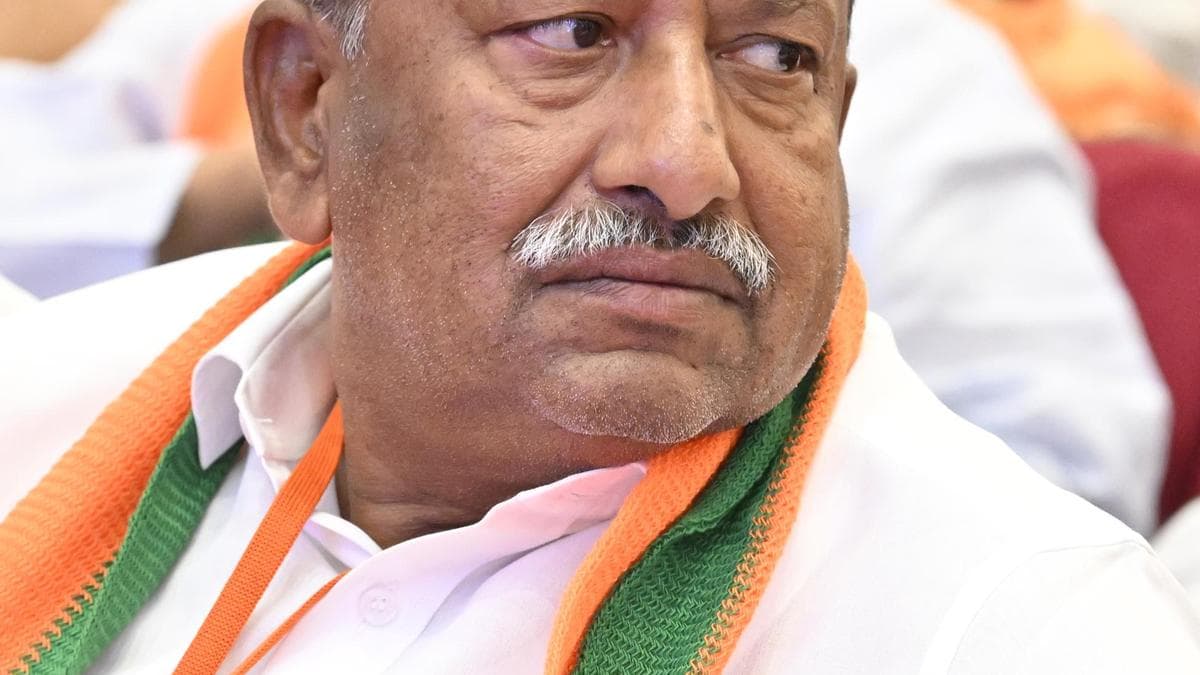
CID searches for BJP MLA Byrathi Basavaraj in murder case.
Summary
A state's Criminal Investigation Department (CID) has initiated a search for BJP MLA Byrathi Basavaraj in connection with a murder case. This development underscores the legal scrutiny faced by public representatives under criminal law. While primarily a regional crime story, it highlights the ongoing efforts to address the criminalization of politics, making it relevant for state-level competitive exams and general awareness.
Key Points
- 1The investigating agency involved in the case is the Criminal Investigation Department (CID).
- 2The political figure being searched is BJP MLA Byrathi Basavaraj.
- 3The specific criminal charge prompting the search is a murder case.
- 4Byrathi Basavaraj holds the position of a Member of Legislative Assembly (MLA).
- 5The action taken by the CID is a 'search' operation for the MLA.
In-Depth Analysis
The news of a state's Criminal Investigation Department (CID) initiating a search for BJP MLA Byrathi Basavaraj in connection with a murder case, while a specific regional incident, opens a crucial window into the persistent challenge of criminalization of politics in India. This development is not merely a local crime story but a potent reminder of the ongoing struggle to uphold the integrity of democratic institutions and ensure accountability among public representatives.
**Background Context and What Happened:**
India, the world's largest democracy, has long grappled with the alarming trend of individuals with criminal backgrounds entering legislative bodies. Various reports, notably from the Association for Democratic Reforms (ADR), consistently highlight that a significant percentage of Members of Parliament (MPs) and Members of Legislative Assemblies (MLAs) face criminal charges, including serious ones like murder, attempt to murder, kidnapping, and crimes against women. This background sets the stage for understanding the gravity of an MLA being sought in a murder case. While the specifics of the murder case involving Byrathi Basavaraj are not detailed in the provided context, the action taken by the CID signifies a formal legal process initiated against a sitting legislator, underscoring that the law is, in principle, applicable to everyone, irrespective of their political stature.
**Key Stakeholders Involved:**
1. **Criminal Investigation Department (CID):** As a specialized investigative arm of the state police, the CID plays a critical role in probing complex and serious crimes. Their involvement signifies the seriousness of the allegations and their mandate to ensure justice by apprehending suspects, even if they are powerful political figures.
2. **Byrathi Basavaraj (BJP MLA):** As an elected representative, an MLA is entrusted with the responsibility of law-making and serving their constituents. Facing a murder charge brings into question the moral and ethical standards expected of public servants and places immense pressure on their political career and public image. The fact that he belongs to the ruling BJP party at the center adds a layer of political sensitivity to the investigation.
3. **The Judiciary:** While not directly involved in the search operation, the courts are the ultimate arbiters of justice. They will oversee the legal process, from potential arrest and bail hearings to trial and conviction, ensuring due process and the rule of law.
4. **Political Parties (BJP):** Such incidents pose significant challenges for political parties, forcing them to address questions of integrity, candidate selection, and accountability to the electorate. The party's response, whether in supporting, distancing itself, or initiating internal action against the MLA, is closely watched by the public.
5. **The Electorate/Public:** The citizens, who elect their representatives, are crucial stakeholders. Their trust in the democratic process is eroded when elected officials face serious criminal charges, prompting demands for greater transparency and cleaner politics.
**Why This Matters for India and Historical Context:**
The criminalization of politics has profound implications for India's democracy. It undermines the rule of law, corrupts governance, and can lead to a nexus between crime and politics, affecting policy decisions and resource allocation. Historically, concerns about this issue led to significant electoral reforms. The Election Commission of India (ECI) and the Supreme Court have consistently pushed for greater transparency, mandating candidates to declare their criminal antecedents, assets, and liabilities. Landmark judgments, such as *Lily Thomas v. Union of India* (2013), struck down Section 8(4) of the Representation of the People Act (RPA), 1951, which allowed convicted legislators to continue in office if an appeal was filed. This judgment mandated immediate disqualification upon conviction for certain offenses, reinforcing the principle that elected representatives are not above the law.
**Related Constitutional Articles, Acts, and Policies:**
* **Representation of the People Act (RPA), 1951:** This crucial act governs elections and disqualification of members. Sections 8, 8A deal with disqualification on conviction for various offenses. The *Lily Thomas* judgment directly impacted Section 8(4).
* **Article 102(1)(e) and Article 191(1)(e) of the Constitution:** These articles empower Parliament to make laws for disqualification of its members (MPs) and state legislators (MLAs), respectively, for various reasons, including those specified in the RPA, 1951.
* **Criminal Procedure Code (CrPC) and Indian Penal Code (IPC):** The CrPC outlines the procedure for investigation, arrest, and trial, which the CID is following. The IPC defines offenses like murder (Section 302).
* **Model Code of Conduct:** While primarily for elections, the spirit of ethical conduct is expected from public representatives at all times.
**Future Implications:**
The immediate future will likely see continued legal proceedings, potentially leading to the MLA's arrest, charges being framed, and a trial. A conviction could lead to disqualification from the legislative assembly under the RPA, 1951, and the *Lily Thomas* judgment. Beyond this specific case, such incidents reinforce the urgent need for comprehensive electoral reforms, including fast-tracking trials of cases against politicians and greater scrutiny by political parties during candidate selection. It also highlights the judiciary's vital role in upholding the rule of law and the ongoing challenge for law enforcement agencies to act impartially against powerful individuals. The long-term implication is a continuous public discourse on transparency, accountability, and the integrity of India's democratic fabric, pushing for a 'cleaner' political landscape.
**Broader Themes:**
This incident is intrinsically linked to broader themes of good governance, ethical leadership, and the strengthening of democratic institutions. It underscores the tension between political power and legal accountability, and the continuous effort required to ensure that public office is not misused or tainted by criminal activities. It serves as a reminder that robust investigative agencies and an independent judiciary are pillars for maintaining faith in the democratic system.
Exam Tips
This topic falls under 'Indian Polity and Governance' in the UPSC Civil Services Syllabus (GS-II), State PSCs, and other competitive exams. Focus on constitutional provisions related to disqualification of legislators.
Study related topics like electoral reforms, the role and powers of the Election Commission of India (ECI), significant Supreme Court judgments on criminalization of politics (e.g., Lily Thomas case, Public Interest Foundation case), and the structure and functions of investigative agencies (CID, CBI).
Common question patterns include: direct questions on RPA provisions for disqualification, analysis of the impact of criminalization on Indian democracy, the role of judiciary/ECI in curbing this menace, and procedural aspects of investigation against public figures.