



Relevant for Exams
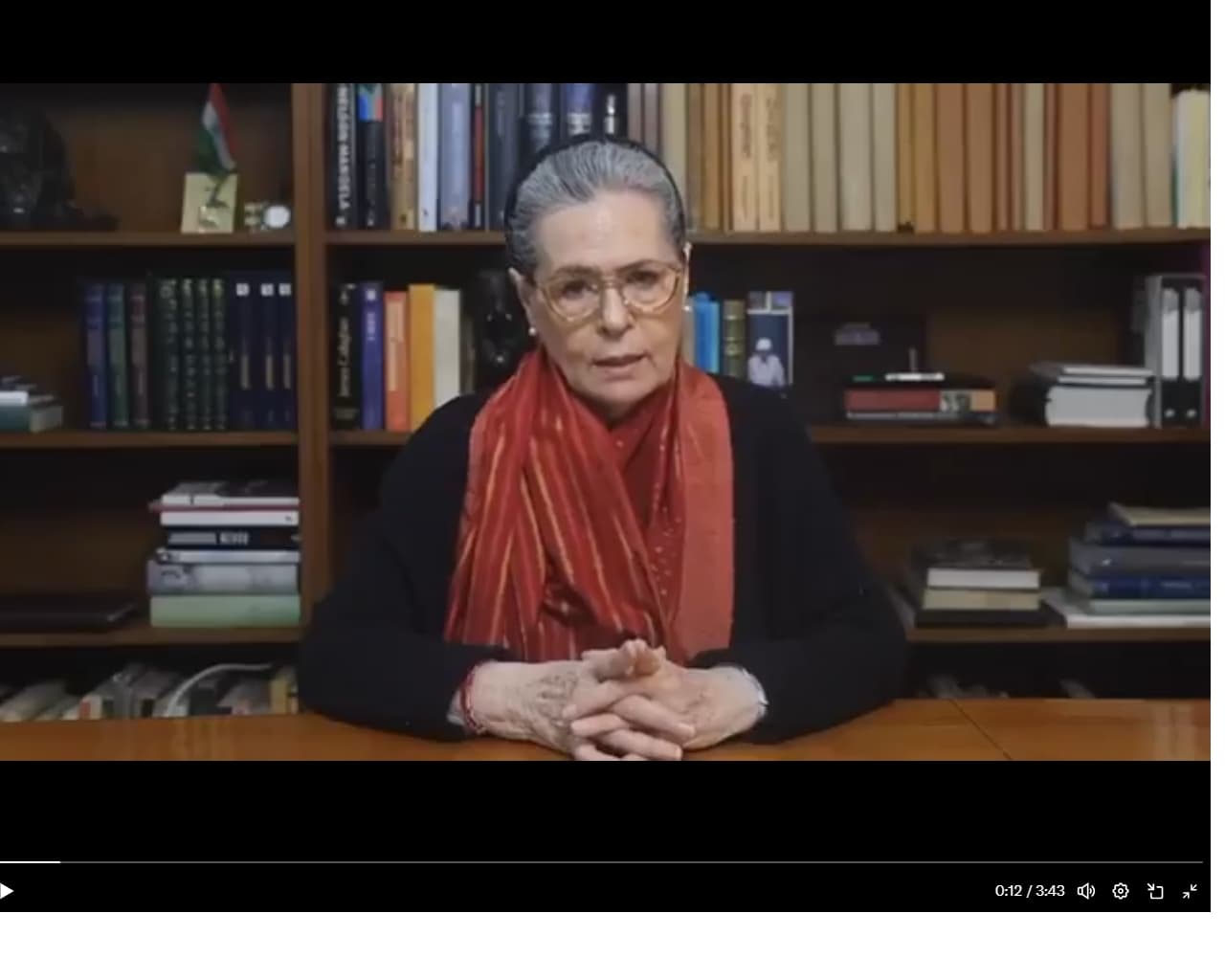
Sonia Gandhi vows to counter 'attack on MGNREGA', signaling Congress's strategic pivot on rural welfare.
Summary
Sonia Gandhi has vowed to counter perceived 'attacks' on the Mahatma Gandhi National Rural Employment Guarantee Act (MGNREGA), indicating a potential strategic pivot by the Congress party. This development highlights the ongoing political significance of social welfare schemes and rural employment in India. For competitive exams, understanding the provisions, objectives, and political debates surrounding MGNREGA is crucial.
Key Points
- 1Sonia Gandhi, a prominent leader of the Indian National Congress, has committed to countering perceived threats to MGNREGA.
- 2The Mahatma Gandhi National Rural Employment Guarantee Act (MGNREGA) was enacted in August 2005.
- 3MGNREGA guarantees 100 days of wage employment in a financial year to adult members of any rural household willing to do unskilled manual work.
- 4The scheme's primary objective is to enhance livelihood security in rural areas and reduce distress migration.
- 5Political debates surrounding MGNREGA often focus on its funding, implementation challenges, and overall impact on rural economies.
In-Depth Analysis
The Mahatma Gandhi National Rural Employment Guarantee Act (MGNREGA), enacted in August 2005, stands as one of India's most significant social welfare legislations, guaranteeing 100 days of wage employment in a financial year to adult members of any rural household willing to do unskilled manual work. Sonia Gandhi's recent vow to counter perceived 'attacks' on MGNREGA signals a strategic political pivot by the Indian National Congress, aiming to re-emphasize its commitment to social safety nets and rural livelihoods, especially in the run-up to crucial elections.
**Background Context and What Happened:**
MGNREGA emerged from a long history of employment guarantee schemes, notably inspired by the Maharashtra Employment Guarantee Scheme. It was conceptualized to address chronic rural poverty, seasonal unemployment, and distress migration, particularly among vulnerable sections of society. The Act was a flagship program of the United Progressive Alliance (UPA) government, led by the Congress party, and has since become synonymous with the party's welfare agenda. Sonia Gandhi's statement reflects a political strategy to highlight the scheme's importance and defend it against criticisms or perceived attempts to dilute its provisions or funding. This move suggests that the Congress party intends to make rural employment and social security a central theme of its political discourse, positioning itself as the protector of the rural poor.
**Key Stakeholders Involved:**
Several key stakeholders are intricately linked with MGNREGA. The **Union Government** is responsible for formulating policies, providing financial support (75% for wages, 100% for materials, 60:40 split for SC/ST), and overall monitoring. **State Governments** are crucial for implementation, identifying projects, disbursing wages, and ensuring transparency. **Rural Households and Workers** are the primary beneficiaries, whose right to work and livelihood security is enshrined in the Act. **Gram Panchayats** play a pivotal role at the grassroots level, responsible for planning, executing, and monitoring works. **Political Parties**, particularly the Congress and the ruling Bharatiya Janata Party (BJP), often engage in debates over the scheme's efficacy, funding, and impact. While the Congress champions it as a success, the BJP, despite continuing the scheme, has often criticized its implementation challenges like corruption and asset quality. **Civil Society Organizations** and activists have been instrumental in advocating for the scheme's proper implementation, transparency, and workers' rights, often highlighting issues like wage payment delays and administrative bottlenecks.
**Significance for India:**
MGNREGA holds immense significance across economic, social, and political dimensions for India. Economically, it acts as a crucial safety net, providing guaranteed income during lean agricultural seasons, thereby reducing rural poverty and boosting local demand. It also contributes to the creation of durable assets like roads, water conservation structures, and irrigation canals, which can enhance rural infrastructure and agricultural productivity. Socially, the scheme has been a powerful tool for women's empowerment, as it mandates equal wages for men and women and often sees a high participation rate of women. It helps in reducing distress migration to urban areas and provides a sense of dignity and financial independence to marginalized communities. Politically, MGNREGA remains a potent electoral issue. Its success or failure significantly impacts public perception of governance and commitment to welfare, making it a recurring theme in national and state elections.
**Historical Context and Constitutional Provisions:**
The idea of an employment guarantee is rooted in the Directive Principles of State Policy (DPSP) in the Indian Constitution. Specifically, **Article 38** mandates the state to secure a social order for the promotion of the welfare of the people, striving to minimize inequalities. **Article 39(a)** directs the state to secure for all citizens the right to an adequate means of livelihood, and **Article 41** states that the state shall, within the limits of its economic capacity and development, make effective provision for securing the right to work, to education, and to public assistance in cases of unemployment, old age, sickness, and disablement. MGNREGA is a direct legislative embodiment of these DPSP, transforming the 'right to work' from a directive into a legal entitlement for rural households. Its implementation also indirectly upholds the spirit of **Article 21 (Right to Life and Personal Liberty)** by ensuring a dignified livelihood.
**Future Implications:**
Sonia Gandhi's stance implies a renewed political focus on social welfare schemes. In the future, we can expect intensified debates around MGNREGA's funding allocations, with calls for increased budgetary support, especially during economic downturns or natural calamities. There will likely be continued discussions on improving its efficiency, transparency, and reducing implementation challenges such as delayed wage payments, which are often linked to technological issues and administrative capacity. The integration of MGNREGA with other rural development schemes, skill development initiatives, and the use of technology like Aadhaar-based payments and geo-tagging for asset creation will remain crucial. The political discourse may also shift towards expanding the scope of work, improving the quality of assets created, and ensuring its sustainability in a fiscally constrained environment. This political signaling suggests that welfare economics will remain a critical battleground in India's political landscape, influencing policy decisions and electoral outcomes.
Exam Tips
**UPSC Civil Services Exam (General Studies Paper II & III):** This topic falls under 'Governance', 'Social Justice', and 'Indian Economy'. Focus on the objectives, features, implementation challenges, impact on poverty and rural development, and its constitutional basis (DPSP). Expect questions comparing MGNREGA with other welfare schemes or analyzing its role in achieving inclusive growth.
**SSC CGL/CHSL & State PSC Exams (General Awareness/General Studies):** Prepare factual questions on the date of enactment (August 2005), the number of days of guaranteed employment (100 days), the ministry responsible (Ministry of Rural Development), and its primary objectives. Also, understand the basic mechanism of how it works and its benefits for the rural population.
**Banking & Railway Exams (General Awareness/Current Affairs):** Focus on the current status of MGNREGA, recent budgetary allocations, any new policy changes or technological integrations (e.g., Aadhaar linkage, DBT), and its role in boosting rural consumption and financial inclusion. Be aware of any recent government reports or Supreme Court observations related to the scheme.
**Related Topics to Study Together:** Link MGNREGA with other government schemes for rural development (e.g., PMGSY, NRLM, PMAY-G), poverty alleviation programs, and social security initiatives. Understand the concept of 'right to work' and its evolution in India. Familiarize yourself with the role of DPSP in guiding social welfare legislation.
**Common Question Patterns:** Questions often ask about the 'salient features of MGNREGA', 'challenges in its implementation', 'its role in women empowerment', 'constitutional provisions supporting such schemes', or 'how it contributes to sustainable rural development'. Be prepared for both descriptive and objective questions.