



Relevant for Exams
Pala's independent collective plans 'Janasabha' to assess support, eyes UDF alliance.
Summary
An independent collective in Pala, Kerala, is preparing for a 'Janasabha' after its oath-taking ceremony. This event aims to gauge community support before the collective finalises its political stance. Speculation suggests a potential alliance with the United Democratic Front (UDF), highlighting evolving regional political dynamics. This development is relevant for understanding local political shifts, particularly for state-level competitive exams.
Key Points
- 1The political activity is centered in Pala, a region within Kerala, India.
- 2A key entity involved is an 'Independent collective' which recently completed an oath-taking ceremony.
- 3The collective plans to hold a 'Janasabha' (public assembly) to gather community feedback.
- 4There is speculation regarding a possible political alliance with the United Democratic Front (UDF).
- 5The primary objective of the 'Janasabha' is to assess community support before the collective determines its final political position.
In-Depth Analysis
The political landscape of Kerala, traditionally dominated by two major fronts – the Left Democratic Front (LDF) and the United Democratic Front (UDF) – often witnesses dynamic shifts and the emergence of new political actors. The recent developments in Pala, concerning an 'Independent collective' and its proposed 'Janasabha', offer a fascinating insight into these evolving regional political dynamics. Pala, a significant constituency in Kottayam district, has historically been a stronghold for specific political entities and has seen intense electoral battles.
The 'Independent collective' in Pala, having recently completed its oath-taking ceremony, is poised to hold a 'Janasabha' (public assembly). This move is crucial as it aims to gauge community support before the collective finalises its political stance. The concept of a 'Janasabha' is deeply rooted in Indian democratic tradition, embodying direct public engagement and grassroots democracy. It allows a political entity to test the waters, understand local sentiments, and build a mandate from the ground up, rather than imposing decisions from the top. This approach reflects a growing trend where local issues and community aspirations increasingly shape political movements, sometimes independent of established party lines.
Key stakeholders in this unfolding political narrative include, first and foremost, **the Independent Collective** itself. While the article doesn't specify its leadership or detailed agenda, its very existence suggests a response to local needs, dissatisfaction with existing political options, or a desire for alternative representation. Their decision to hold a 'Janasabha' underscores a commitment to community-driven politics. Secondly, the **community of Pala** is a vital stakeholder; their feedback will directly influence the collective's future. Their support or lack thereof will determine the viability and direction of this new political force. Thirdly, the **United Democratic Front (UDF)**, a Congress-led alliance, is a crucial player. The speculation of a possible alliance with the UDF indicates the front's strategic interest in consolidating its position in the region, potentially by absorbing or collaborating with emerging local forces. Such alliances are common in Indian politics, especially at the state level, where broad coalitions are often necessary to secure electoral majorities. The UDF's principal rival, the Left Democratic Front (LDF), is an implicit stakeholder, as any strengthening of the UDF through new alliances would directly impact the LDF's electoral prospects in the region.
This development holds significant implications for India's democratic fabric, particularly at the state level. It highlights the fluidity of regional politics and the continuous negotiation between established parties and emerging independent movements. For Kerala, it could signal a shift in electoral strategies, with major fronts increasingly looking to local collectives to bolster their strength. The rise of independent groups often reflects specific local grievances or aspirations that mainstream parties might have overlooked. Such alliances can lead to more inclusive governance by bringing diverse voices into the political mainstream, but they can also pose challenges in terms of policy coherence and stability.
Historically, Kerala has a rich tradition of coalition politics. Since its formation in 1956, the state has rarely seen a single party secure an absolute majority, leading to the dominance of the UDF and LDF fronts. Independent candidates and smaller regional parties have often played the role of kingmakers or crucial allies. The current situation in Pala is a continuation of this tradition, where local political entities seek leverage by aligning with larger fronts, or vice-versa. This dynamic is enshrined within the broader framework of India's multi-party democracy, where the **Representation of the People Act, 1951**, governs the conduct of elections, the registration of political parties, and the participation of independent candidates. Articles like **Article 170** of the Indian Constitution, which deals with the composition of Legislative Assemblies, provide the structural context for how these elected representatives would function. Furthermore, the very act of forming a collective and holding a public assembly is protected under **Article 19(1)(c)**, the fundamental right to form associations or unions, and **Article 19(1)(b)**, the right to assemble peaceably and without arms, which are cornerstones of Indian democracy.
Looking ahead, a potential alliance between the independent collective and the UDF could significantly impact the upcoming local body elections and, subsequently, the state assembly elections in Kerala. If successful, it could set a precedent for other regions, encouraging more independent movements to emerge and seek alliances. This could lead to a more fragmented, yet potentially more representative, political landscape. However, it also presents challenges: how will the UDF accommodate the collective's distinct identity and agenda? What will be the long-term impact on the UDF's internal dynamics? The 'Janasabha' will be a critical litmus test, and its outcome will not only determine the collective's immediate future but also offer valuable insights into the evolving political preferences of the electorate in Pala and potentially beyond.
Exam Tips
This topic falls under the 'Indian Polity' and 'Current Affairs' sections of competitive exams, particularly relevant for state-level PSCs. Focus on the role of regional parties, coalition politics, and electoral dynamics.
Study related topics like the functions of the Election Commission of India (Article 324), the Representation of the People Act, 1951, Anti-defection Law (Tenth Schedule), and the concept of grassroots democracy/local self-governance.
Common question patterns include factual questions about specific political parties/alliances in Kerala, conceptual questions on the role of independent candidates, the significance of 'Janasabhas', and the impact of regional political shifts on state governance.
Understand the difference between pre-election alliances and post-election mergers, and their implications for political stability and party identity. Pay attention to the constitutional provisions governing these processes.
Be aware of the political history of Kerala, particularly the alternating power between UDF and LDF, and how smaller parties and independents have historically influenced electoral outcomes and government formation.
Related Topics to Study
Full Article
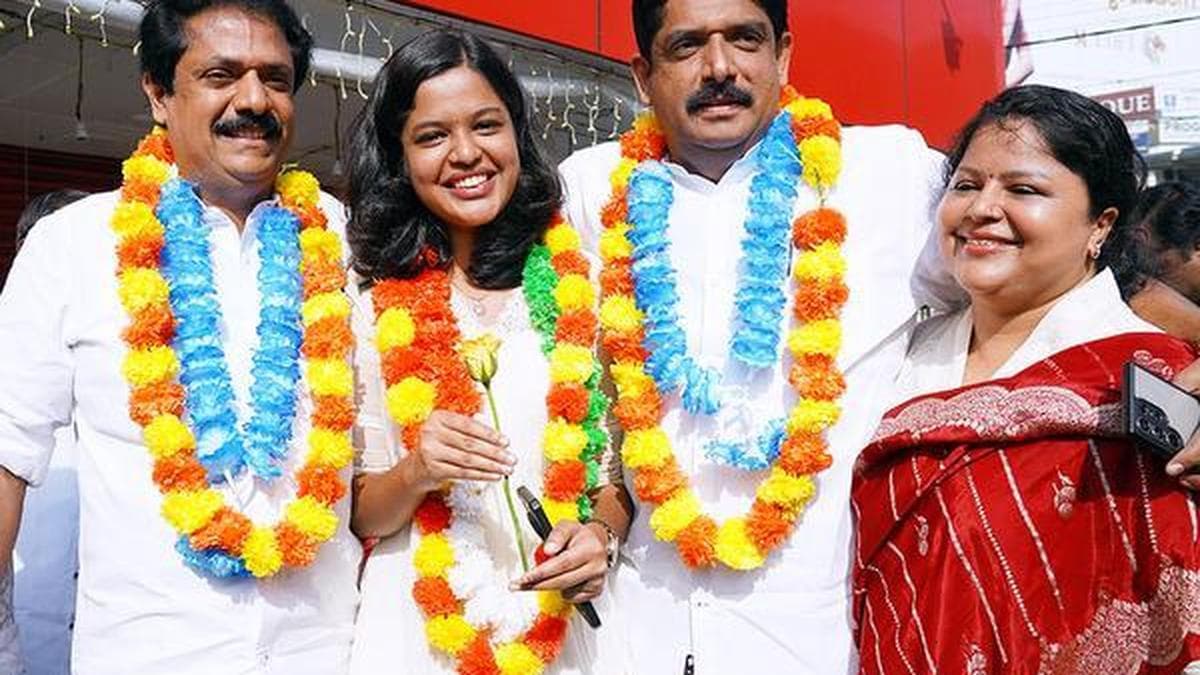
After the oath-taking, the collective plans a ‘Janasabha’ to assess community support before finalising its political stance, amid speculation of a possible alliance with the UDF.